
Insane Hydraulics
Bold and audacious blog about fluid power


Everybody knows that hydraulic pumps are expensive, especially closed loop pumps. And everybody is aware that hydraulic circuits are dirt-sensitive, especially closed loops. Those who already performed the thrilling task of mounting an extensive closed loop hydraulic transmission from scratch (e.g. winch circuit aboard a BIG ship) know that it is time and effort consuming process. In fact, you should think twice before you utter anything even remotely suggesting a slightest possibility of having to remove the recently mounted "400kg pumping unit" to the team who had just taken two days to fit it in place with the help of a couple of chain hoists, a torch, a sledgehammer, the God and God knows what, if you want to keep your health and looks intact. And don't forget that apart from time and effort a closed loop set-up also consumes tons of money - which is why it is so important to make sure that everything works OK the first-time.
The most important part of a closed loop start-up preparation is the thorough cleaning and flushing of the entire circuit. Most of the times a simple flushing procedure with pressure filters and sensitive components by-passing is enough. I am smiling now, I just said "simple flushing"... it is never simple. But sometimes, when the piping is extensive, welded or exposed to the elements and used as ash-tray/toilet during months of construction, the cleaning should be yet thorough-er.
I, myself, have already performed such an exciting super-flushing operation, when we first used special acid solution pumped by an external centrifugal pump, then an alkaline (acid removing) solution, then water, then oil, then oil again, and lots and lots of F-bombs during the process... Believe me, the cost of those pumps (both on main and auxiliary engines) and motors left no margin for error. The start up went smoothly in a "by the book" fashion.
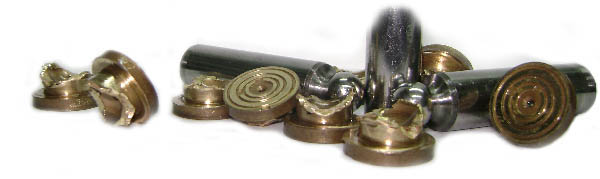
However, sometimes the cleaning is overlooked, practically guarateeing an expensive overhaul of the main loop components, and we (pump/motor guys) get to celebrate, because we just happen to be on the receiving end of the "expensive" part! Check out the pictures. This pump has clocked around thirty minutes, not more. In the end it stopped responding to the control signal because the Pressure Control Pilot valve screen got completely clogged into this elegantly ballooned shape. Some measurements were made, the PCP was dismounted from the control valve and the filter exposed. At this time I suggested that further pump testing was senseless, and still the client insisted on a bench test. O.K says I! PCP gets a new filter, four hours later the pump does respond to the external signal but... looses all charge pressure at 100 bar load. Well, told you...
Exposing the insides revealed severe scoring and many small metal balls, originated from welding sparks. Want to take a wild guess on how the piping had been made?
It was welded, dah!
The pump, parts of which you see on the pictures, was the first one from the set of four...., and all four went the same way... Quite a kick in the nuts, don't you agree?