
Insane Hydraulics
Bold and audacious blog about fluid power
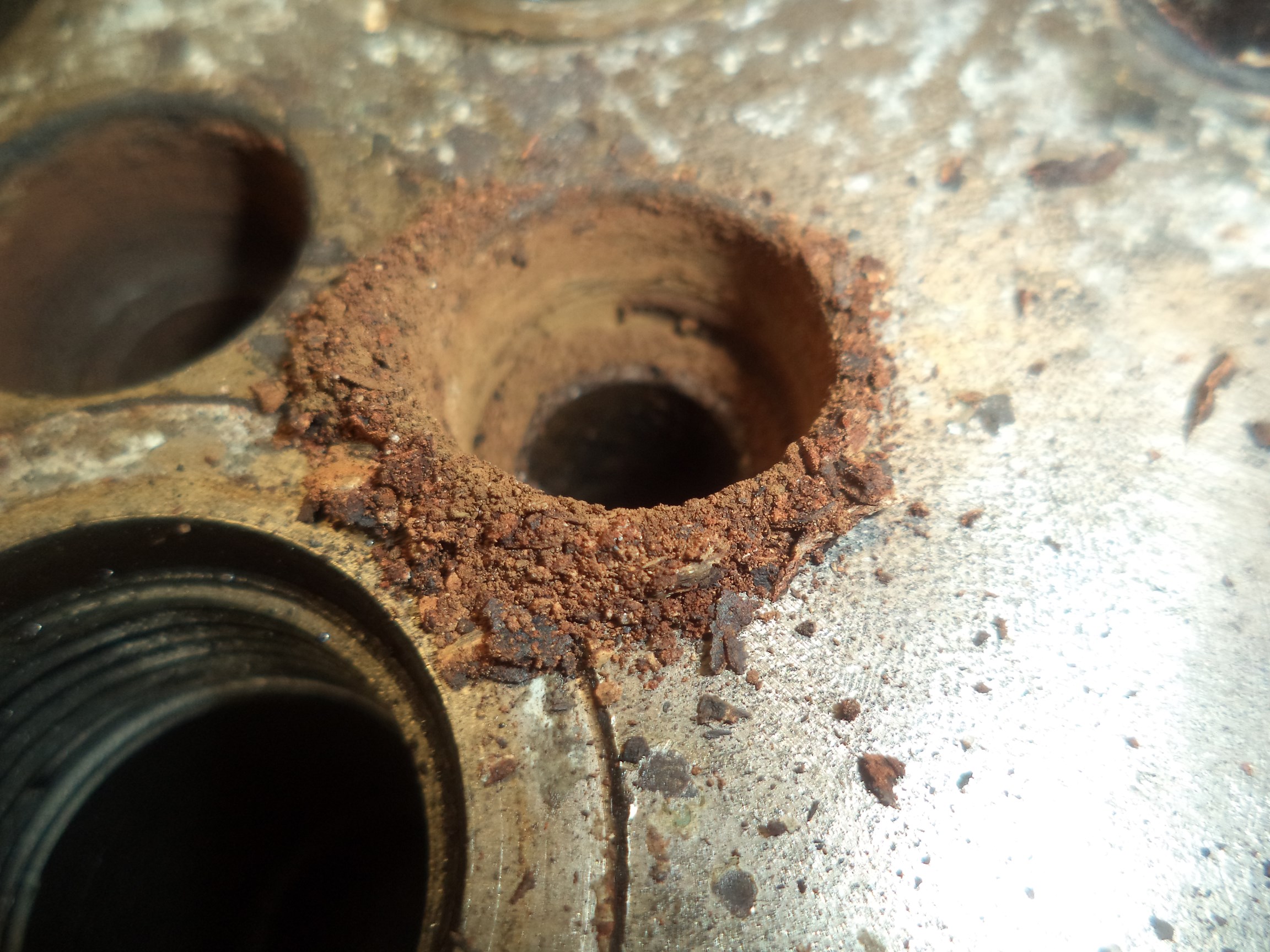
We are located next to the Neves-Corvo mining complex, and consequently, most of the hydraulic components that we overhaul come with a touch of "underground treatment" that makes removing (sometimes even locating) bolts a serious challenge. I am talking about stuff that looks like this:
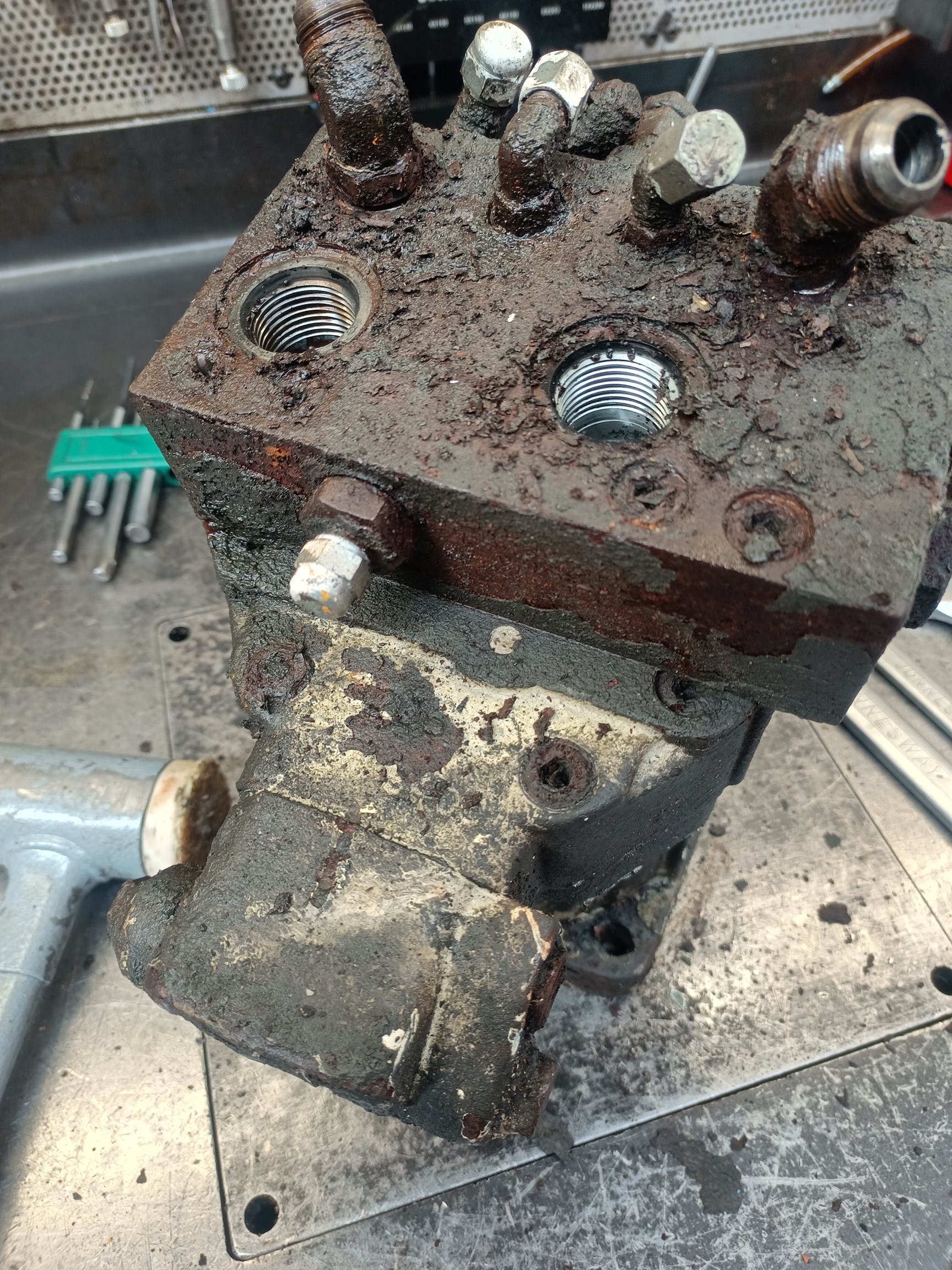
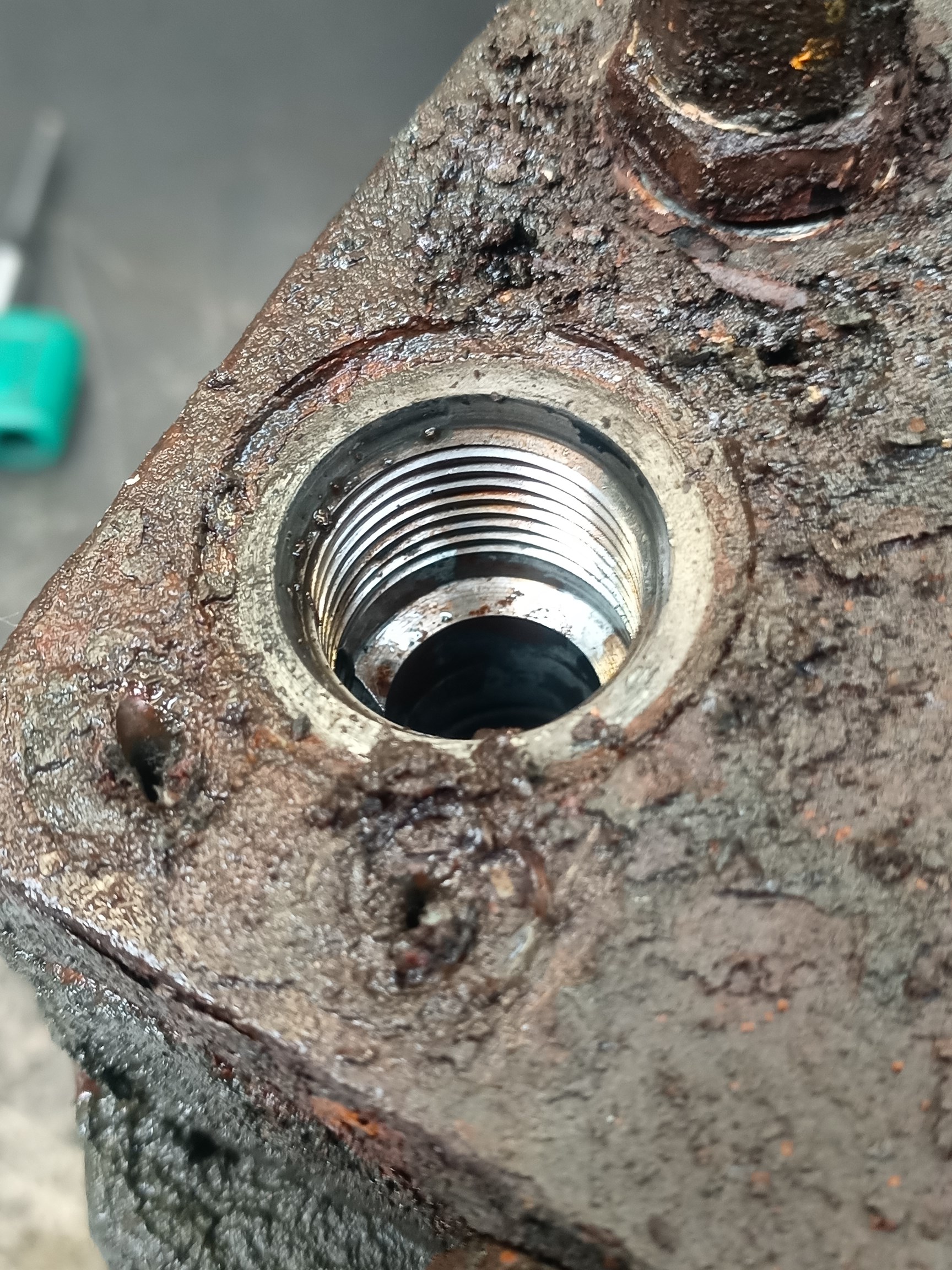
The water in the mine is extremely active, and when components (mostly hydraulic motors) are regularly exposed to it for more than a couple of months - every socket head screw made of steel loses most of the hexagonal recess to corrosion and becomes, essentially, a threaded rivet with its head glued to the counter-bore with tightly-packed rust.
My traditional approach to undoing such fasteners has been the combination of an oxy-acetylene torch and WD-40 for softening the "rust cement" and an adequately-sized impact Torx bit hammered into the leftover bolt head for the grip. This works for most of the bolts, especially when I leave the heads soak in WD-40 overnight. And "especially stubborn" bolts get the drill:

But boy, is this a draining exercise! And ever since I gave the electrolytic rust removal a try, I've been wanting to try it on one of such extra-corroded motors to see how much of a difference it would make for the rusted bolts. But you know how it is always the case with such "someday/maybe" projects - you either never have time or you never "feel like it". Luckily for me - fate intervened, and this week I got just the right specimen for the test (which made me recall that I was going to do it someday in the first place) and then my wife said to me: "Hey, I just saw these large 160-liter plastic buckets at Lidl. Weren't you needing one for one of your crazy experiments?" And I said to myself: "I've got the rusted motors, and I've got the large plastic bucket - I'll be damned if I don't try the electrolytic trick right here and right now!"
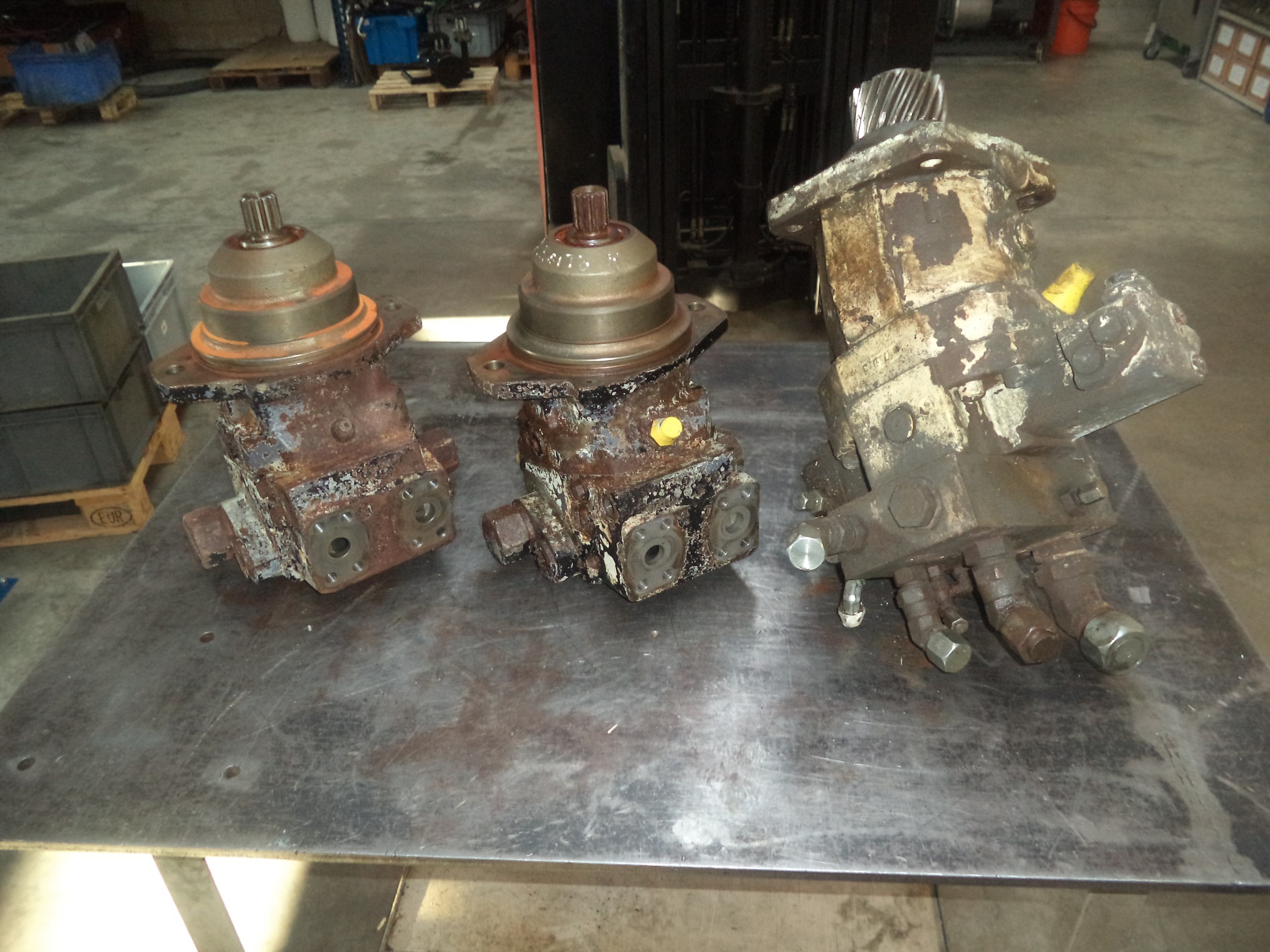
Let me show you the "clients" first. If I were to pick the worst (in terms of corrosion) places for a hydraulic motor to work in a mine, I would name two - first - the drilling head of a core-drilling rig (because the motors get constantly splashed with water and drilling chemicals), and second - the tracks of a mining crawler (because these motors are often submerged in water and very abrasive mud for days in a row). And this is exactly what you see resting on my bench - a motor from a core-drilling rig (I bet some of you will recognize the manifold) and two track motors from a crawler. Lovely!
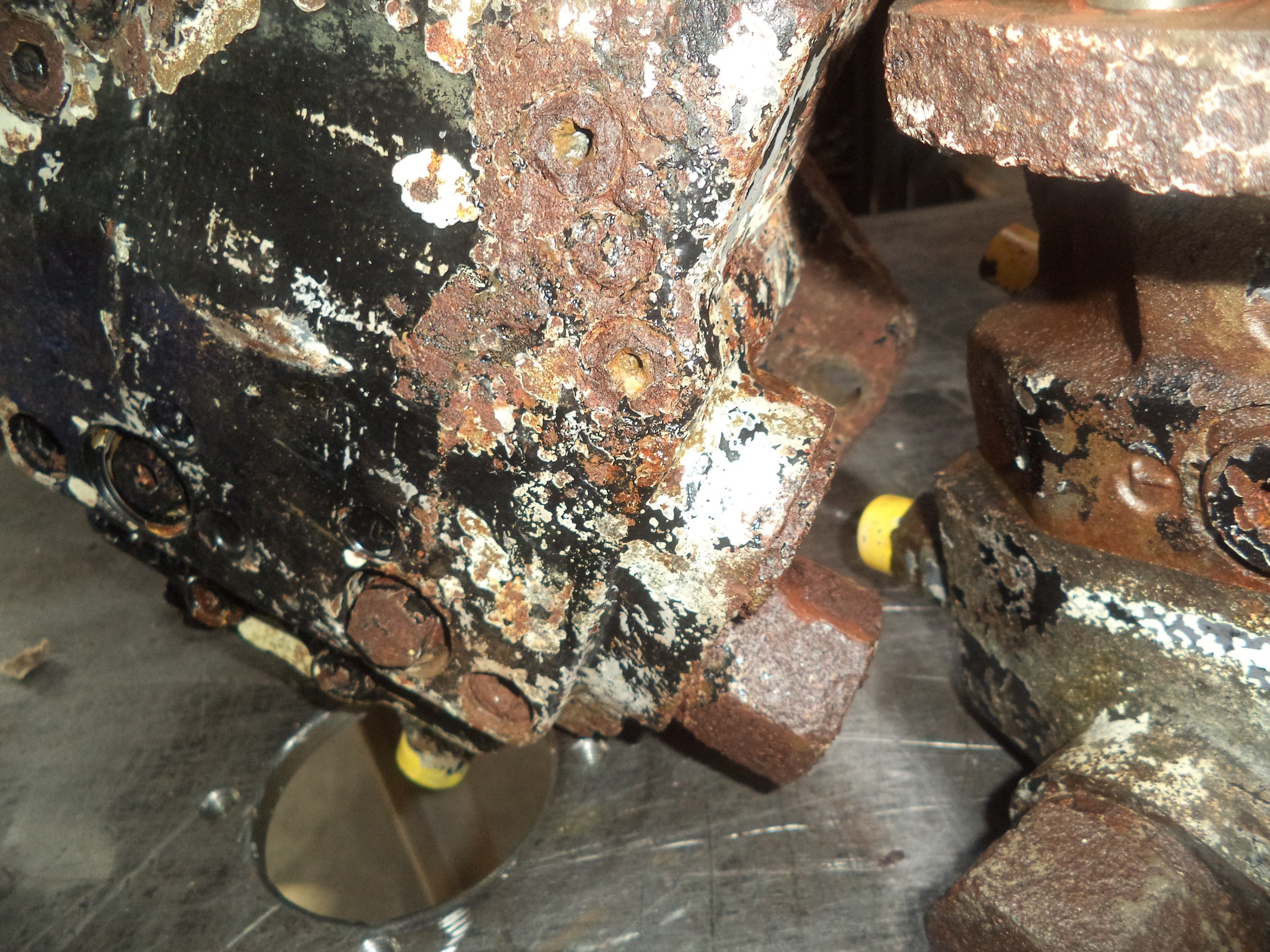
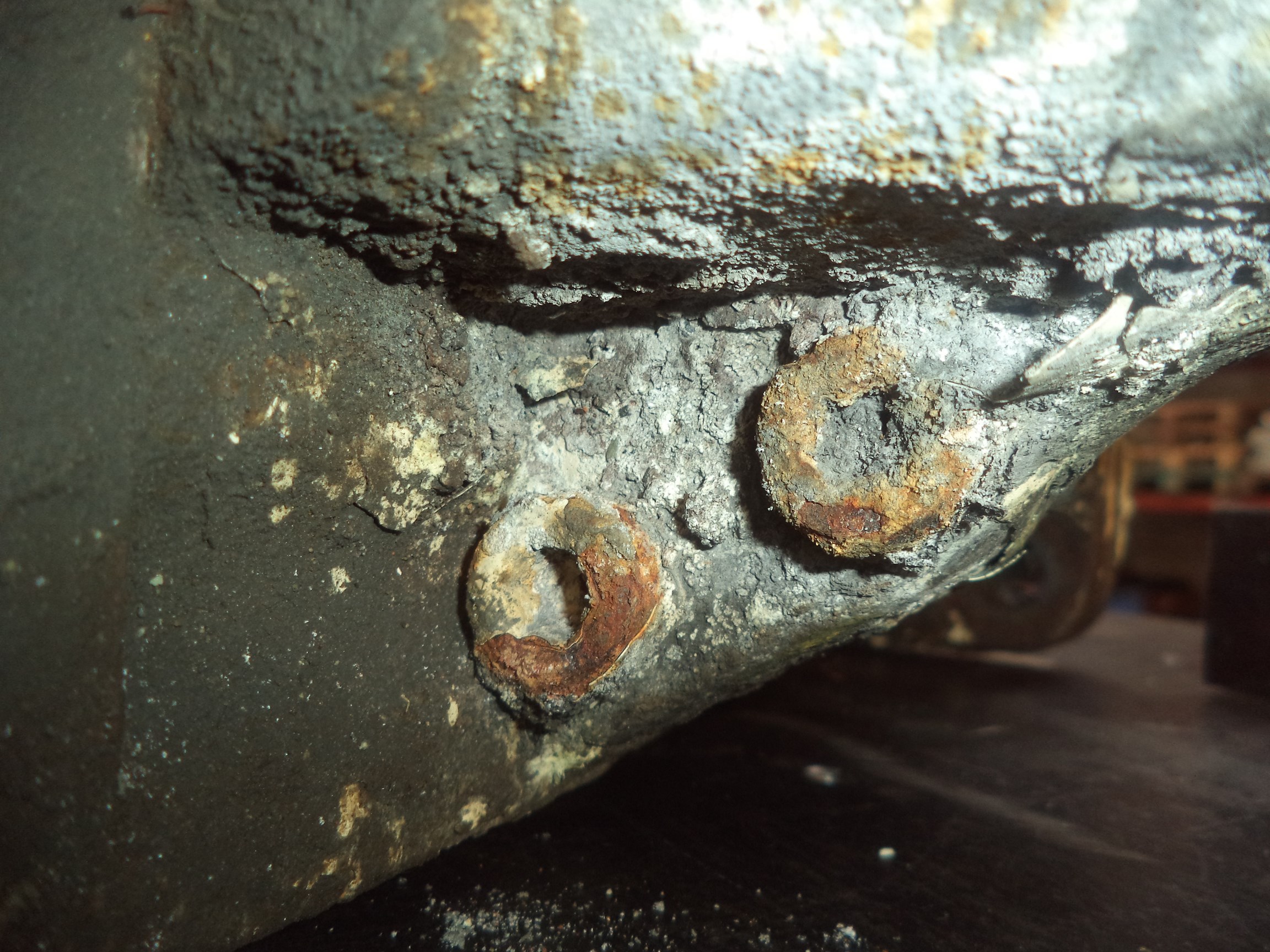
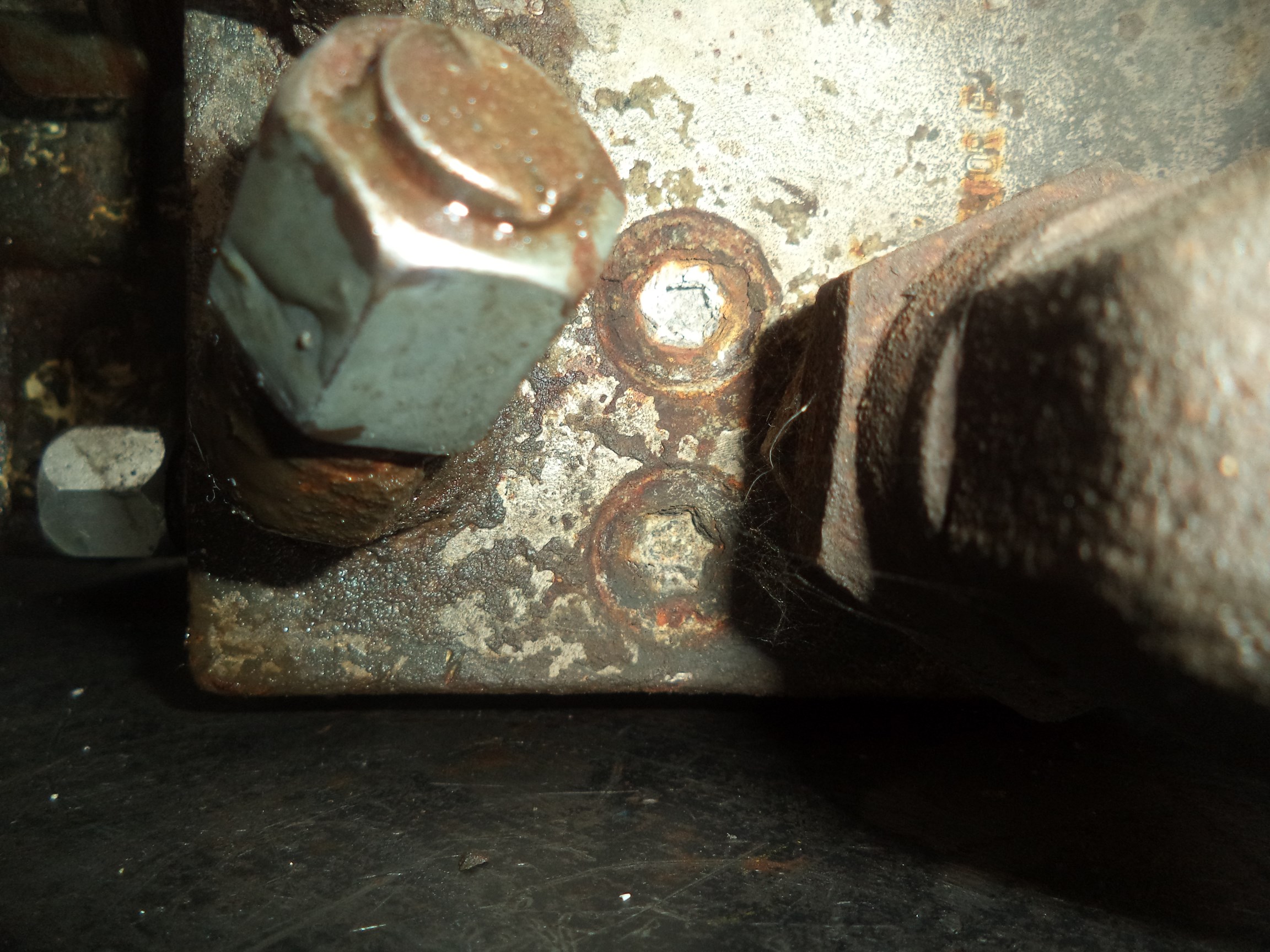
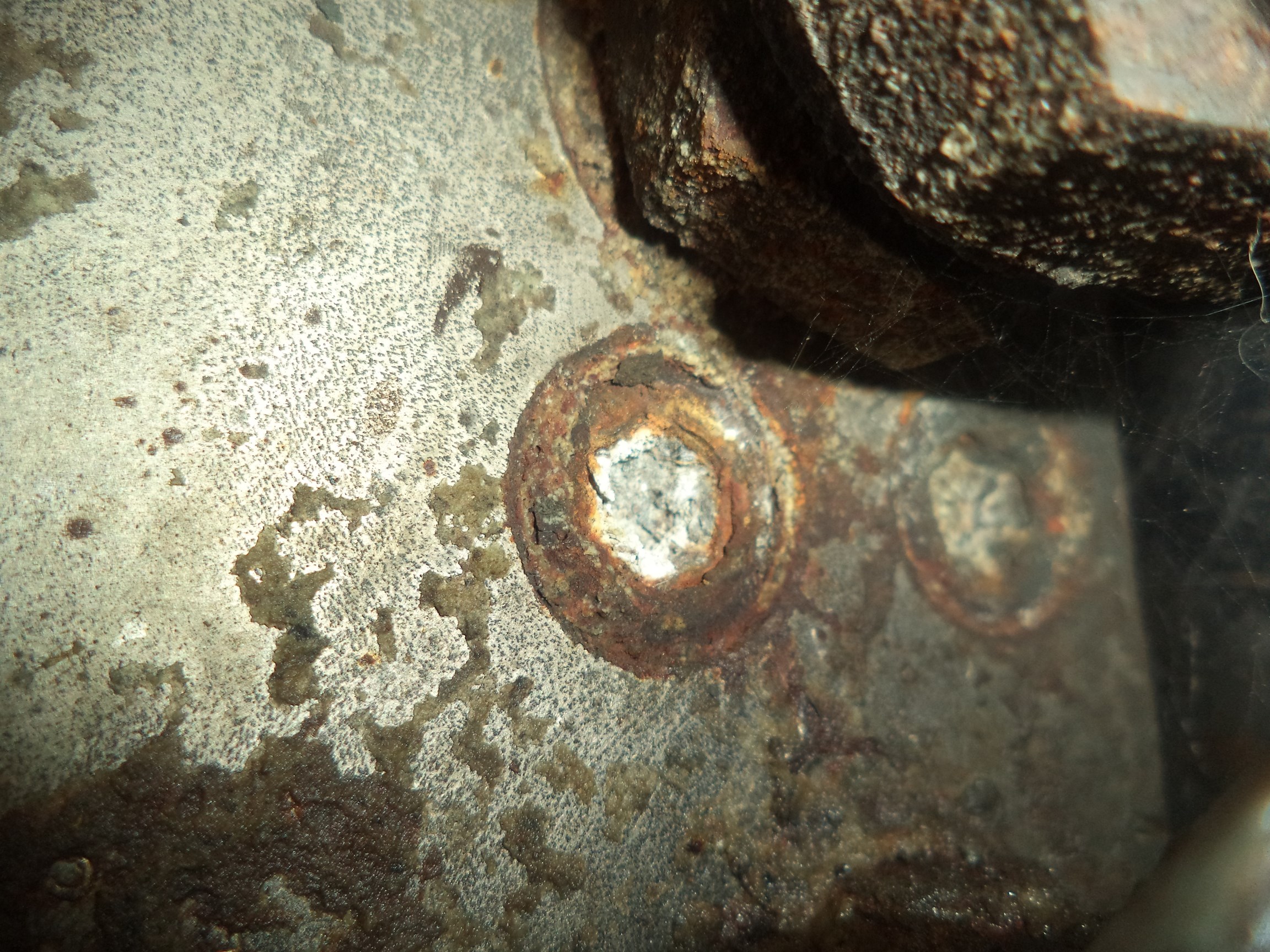
I decided to start with the A6VM107 from the core-drilling rig because removing the 8 bolts that secure the manifold on its back is usually very tough - just look at these hex sockets! And yes - I am aware of the fact that things could be a lot easier if someone had filled them with silicone sealant - but we get them as we get them - sometimes with silicone, most of the times - without it...
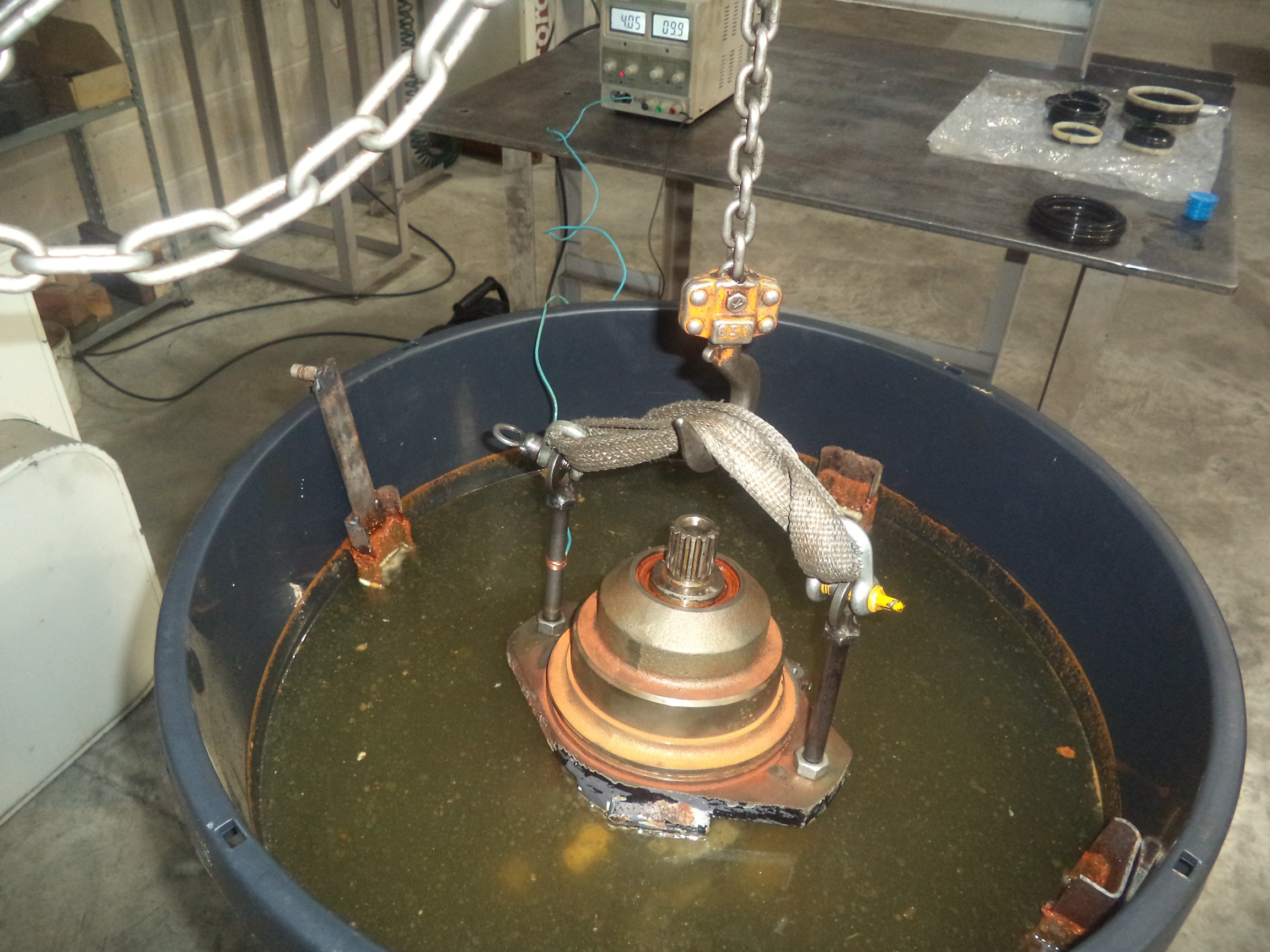
Anyhow, just to recap the electrolytic rust-conversion process real quick - you get yourself a plastic container and fill it with sodium carbonate (Na2CO3) solution (a.k.a. washing soda or PH+ for pools), put some iron electrodes around the perimeter and the bottom, submerge you rusted part in the middle, and then run DC through this contraption, connecting the positive to the iron electrodes, and the negative to the rusted work. The red rust (Fe2O3) gets converted into black rust (Fe3O4), which later can be removed mechanically with great ease.
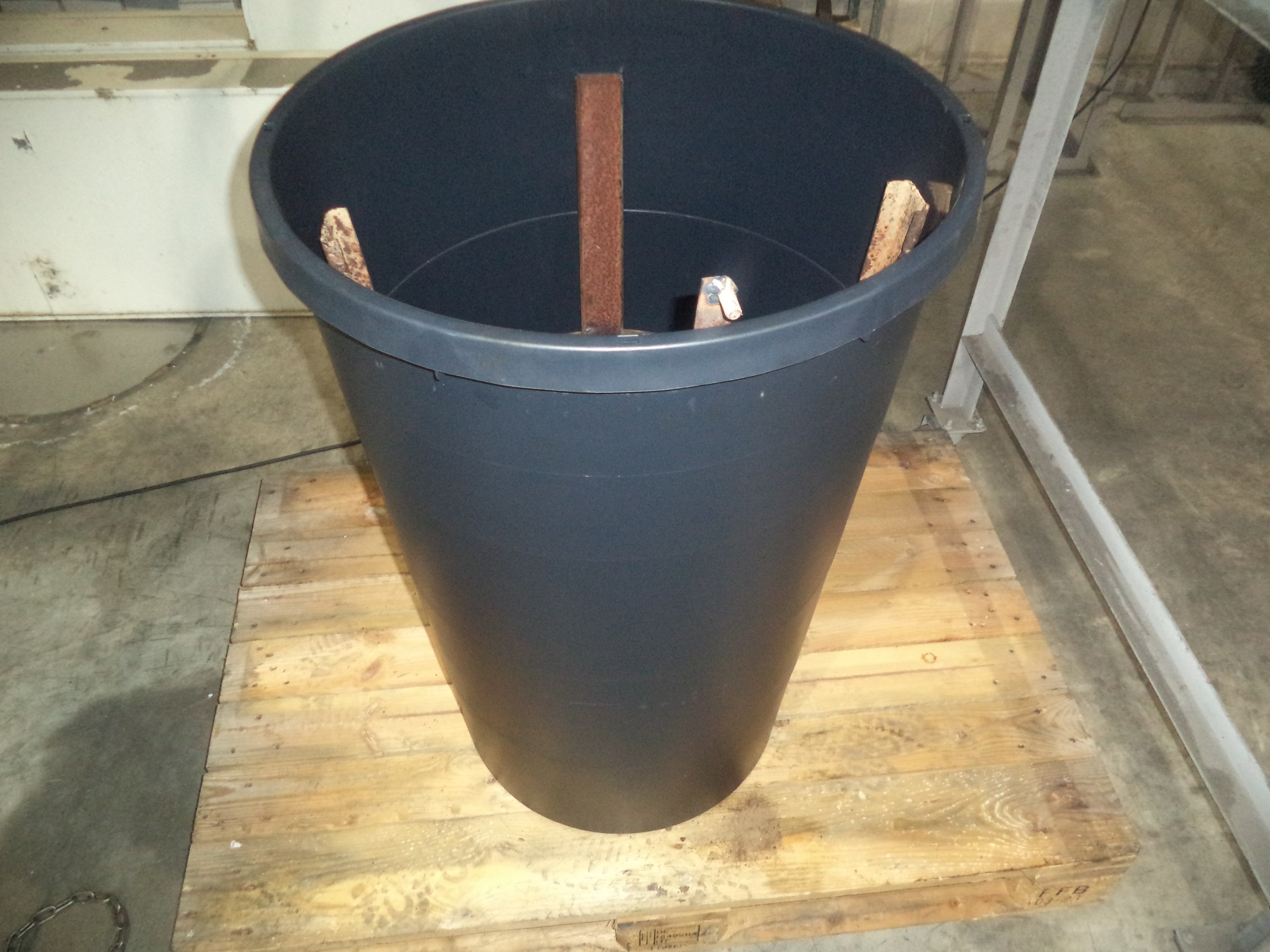
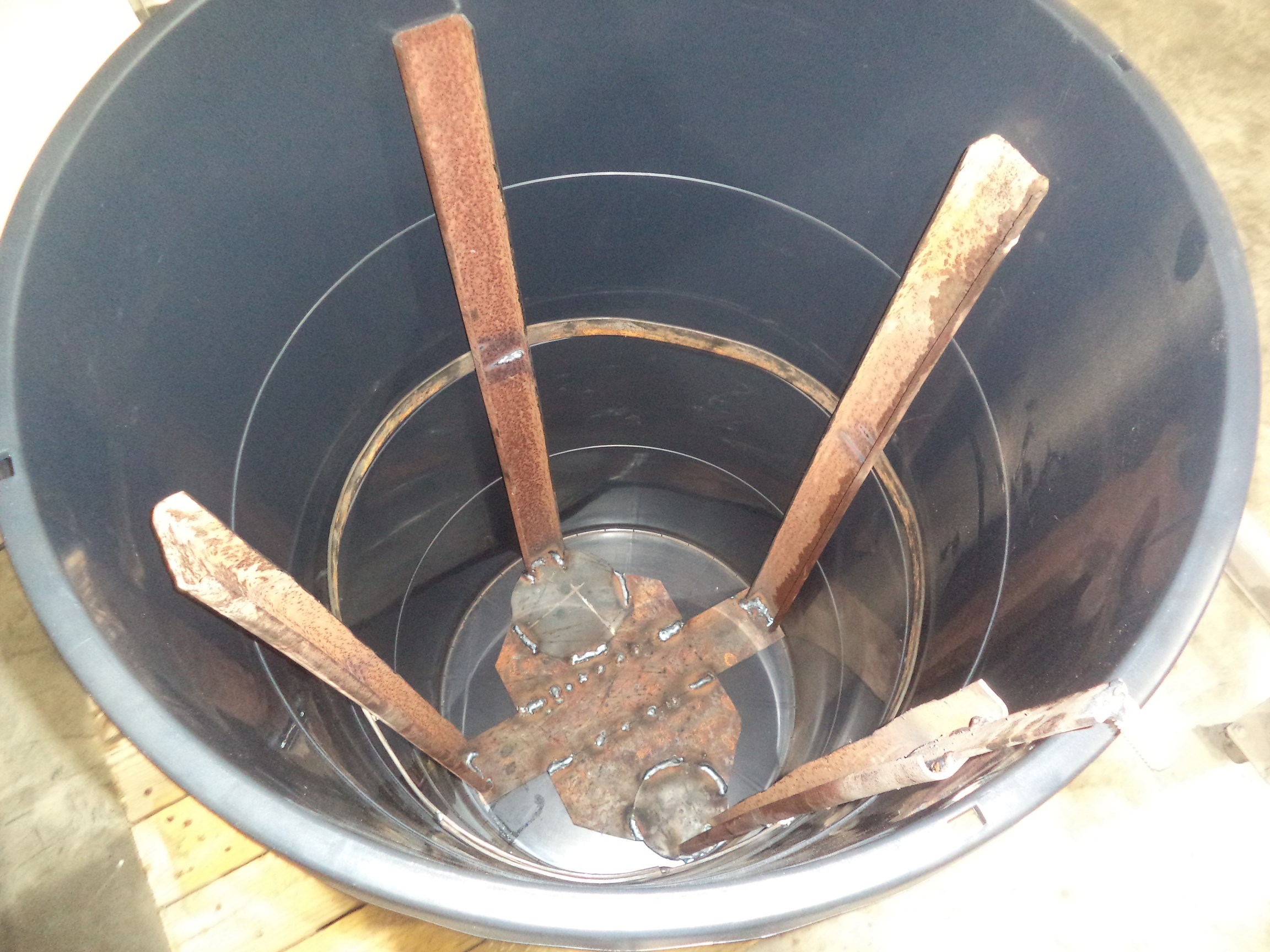
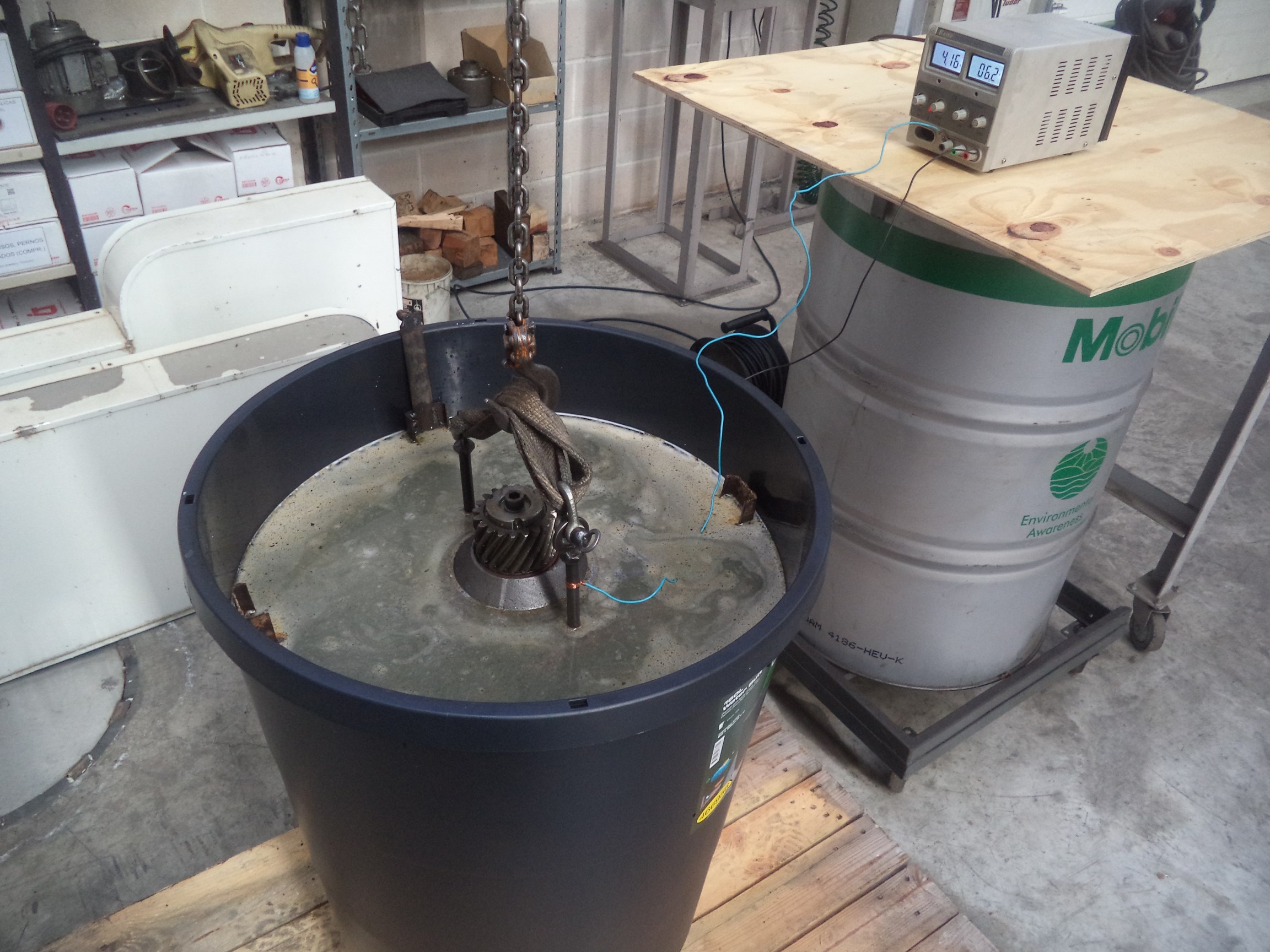
So, here's my newest electrolytic bath and the sacrificial electrode made from scrap, and also the drilling motor soaking in it at 4 amps:
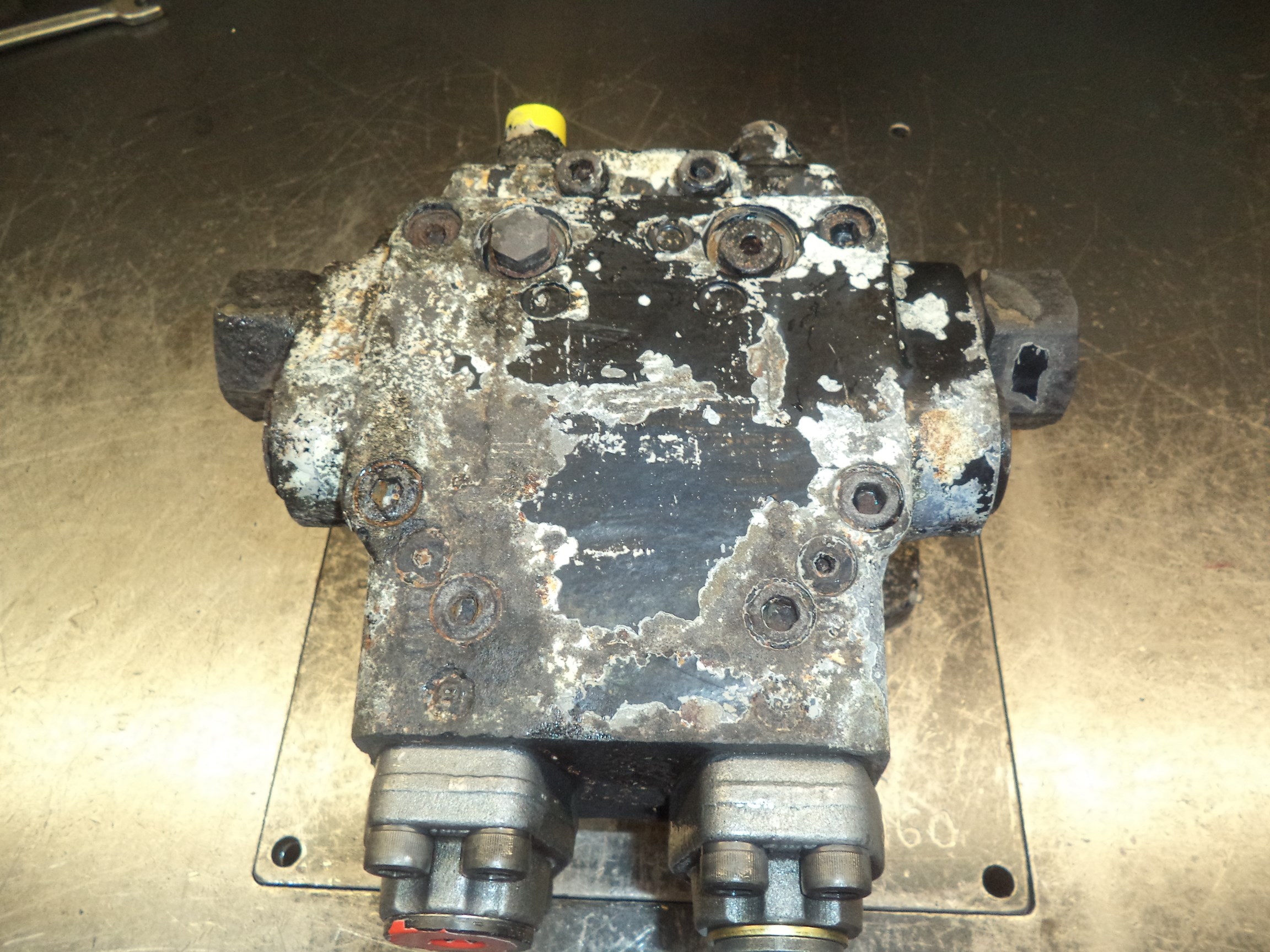
I let it simmer for about a day, and here's how the motor looked when I pulled it out and gave it a wash with a pressure washer:
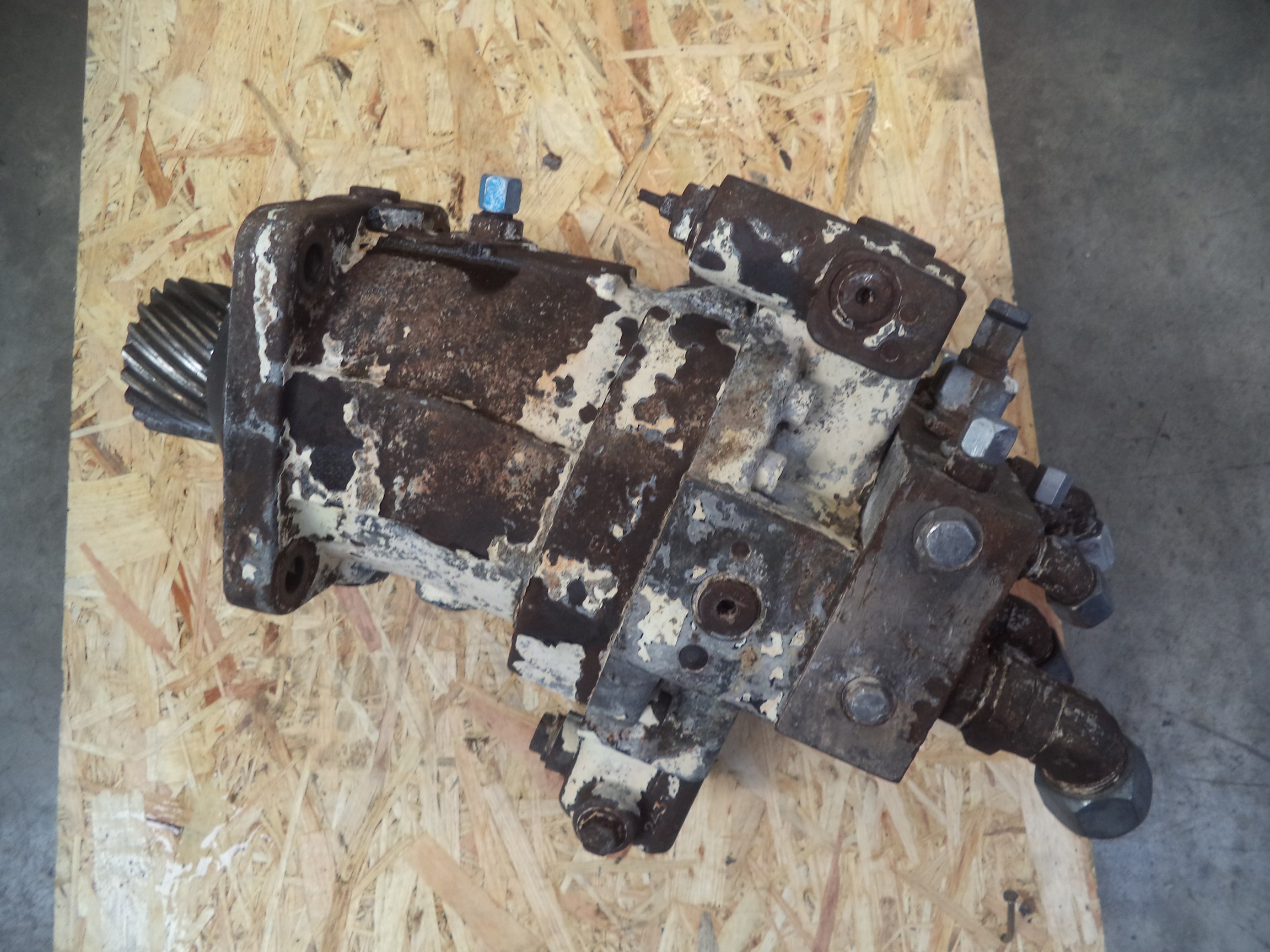
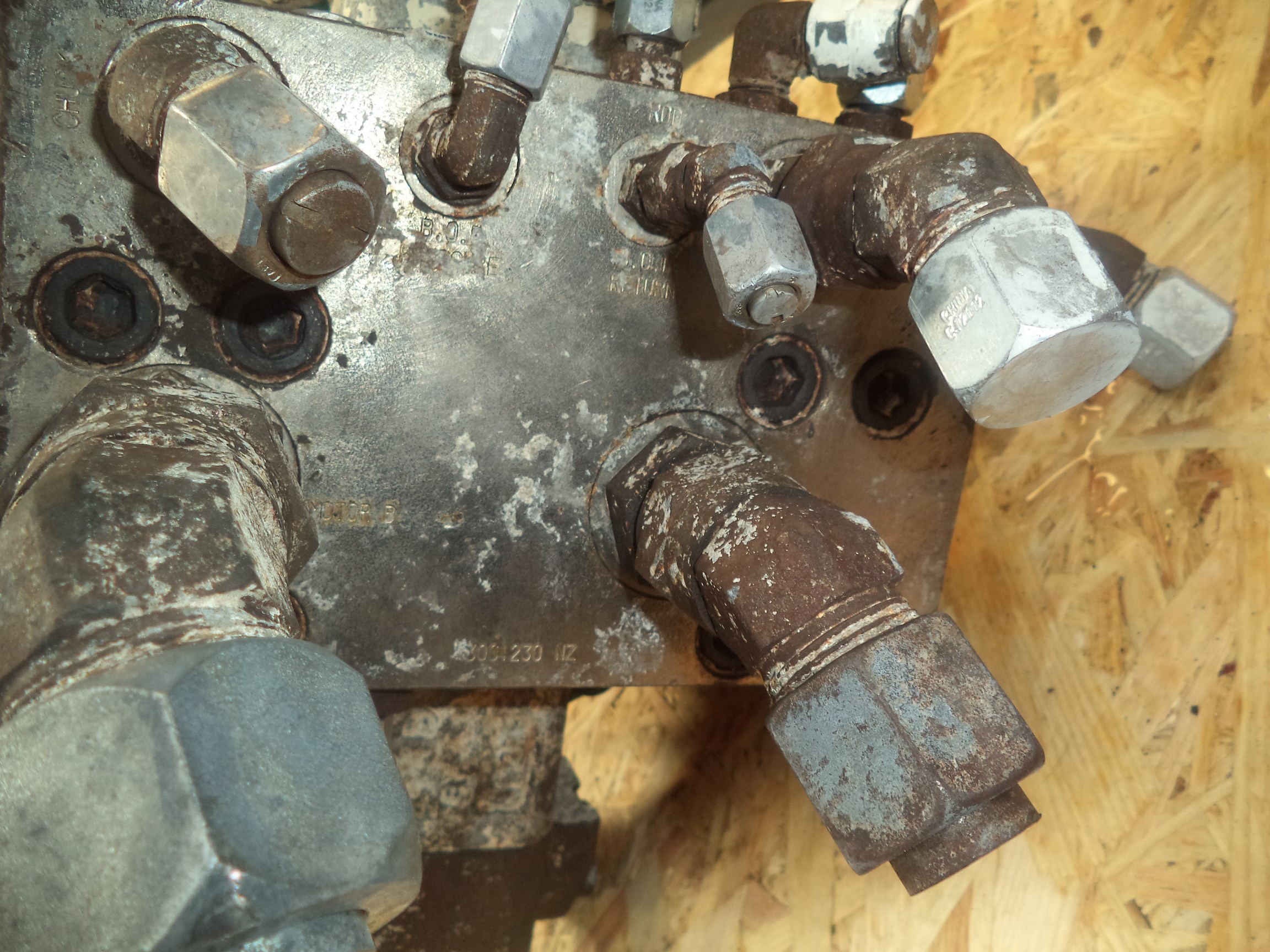
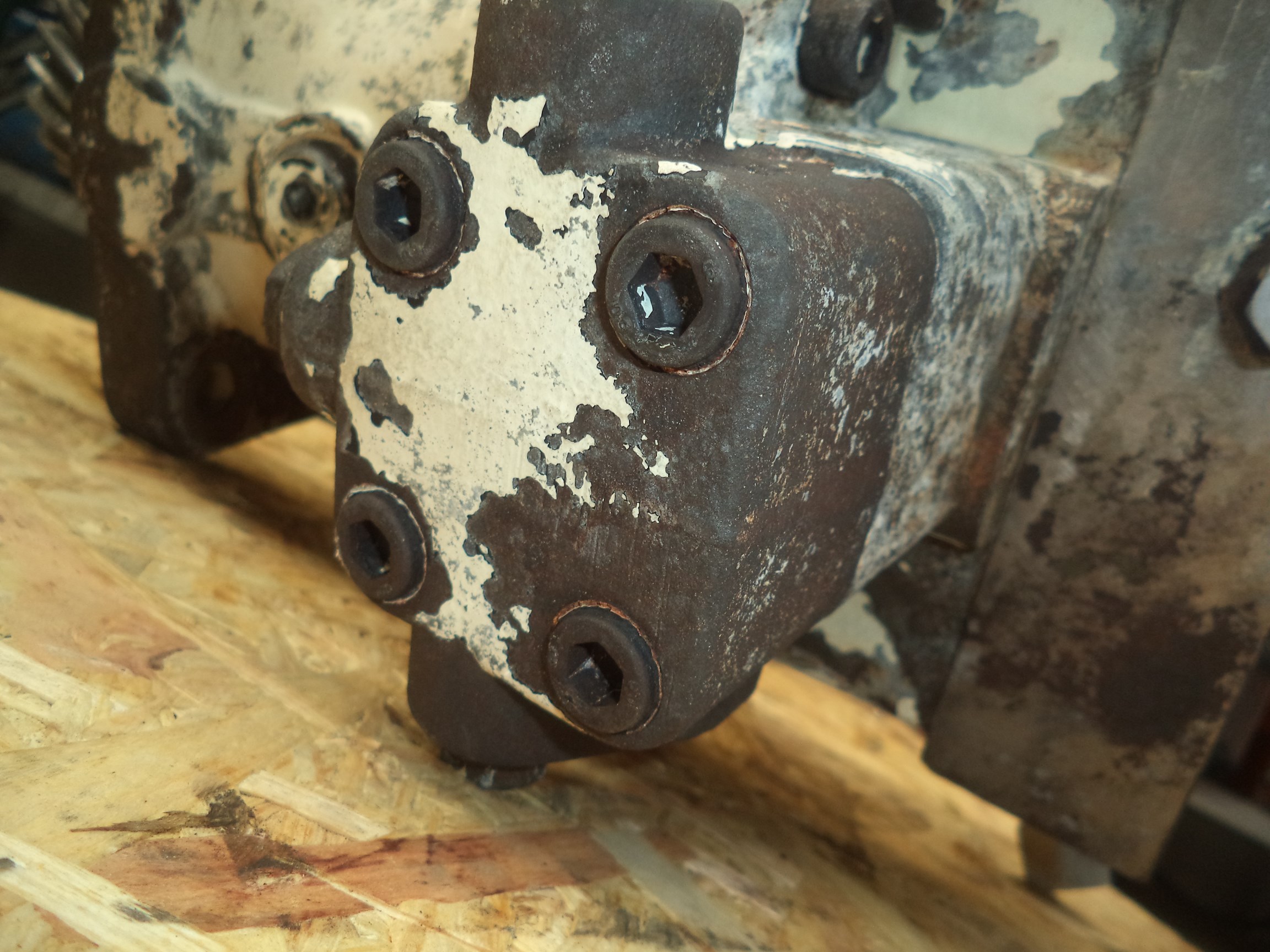
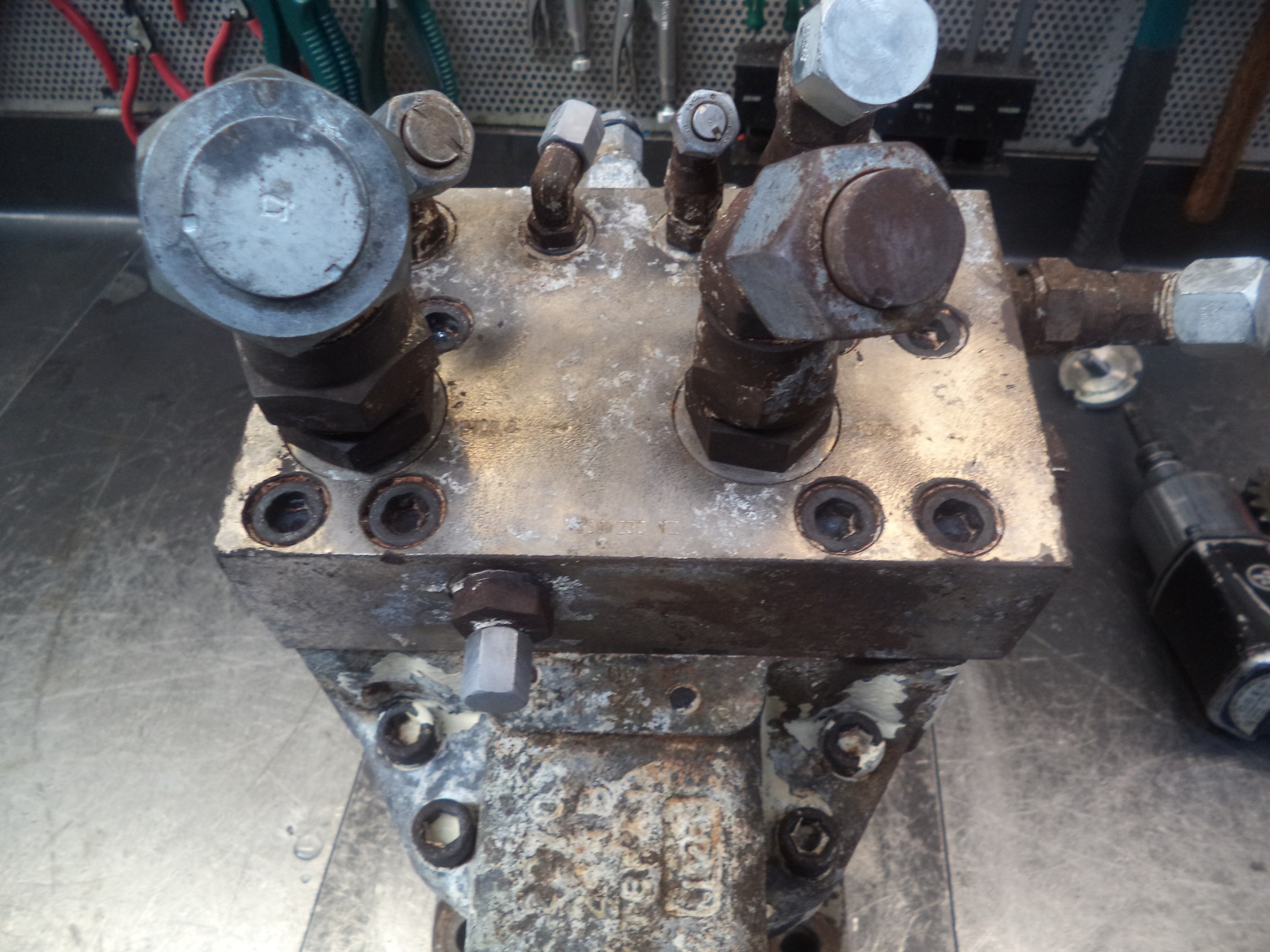
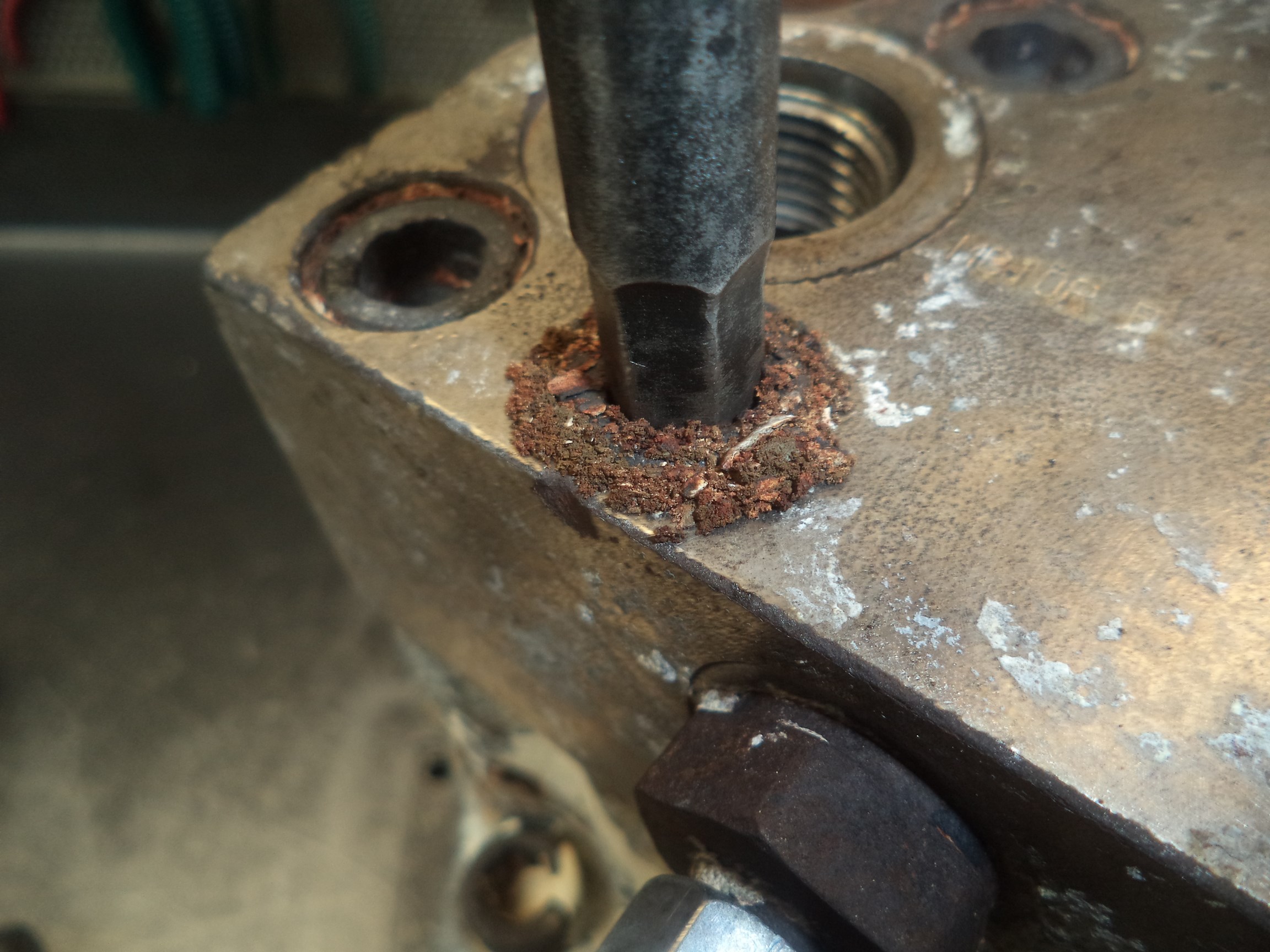
Looks much better now, doesn't it? But the big question is - did the electrolytic bath make removing the bolts easier? Well - it totally did! I was prepared for a fight, as usual, but I removed the manifold and disassembled the motor in a quarter of an hour, and not once did I reach for the torch or the can of WD-40! Not once! Some of the hex holes were hopelessly rounded by corrosion, so I did have to use the hammer + Torx bit trick on them, but they all came out "just like that!" It seems that the rust packed in the counter-bore gap was somehow weakened by the process. As soon I turned the heads it would disintegrate and "crawl" out of the counter-bore like dry sand, even though the rust still looked red, which means that no chemical conversion took place, so, to be honest, I am not sure what exactly made the disassembly easier, but my motto is "if it works - it works":
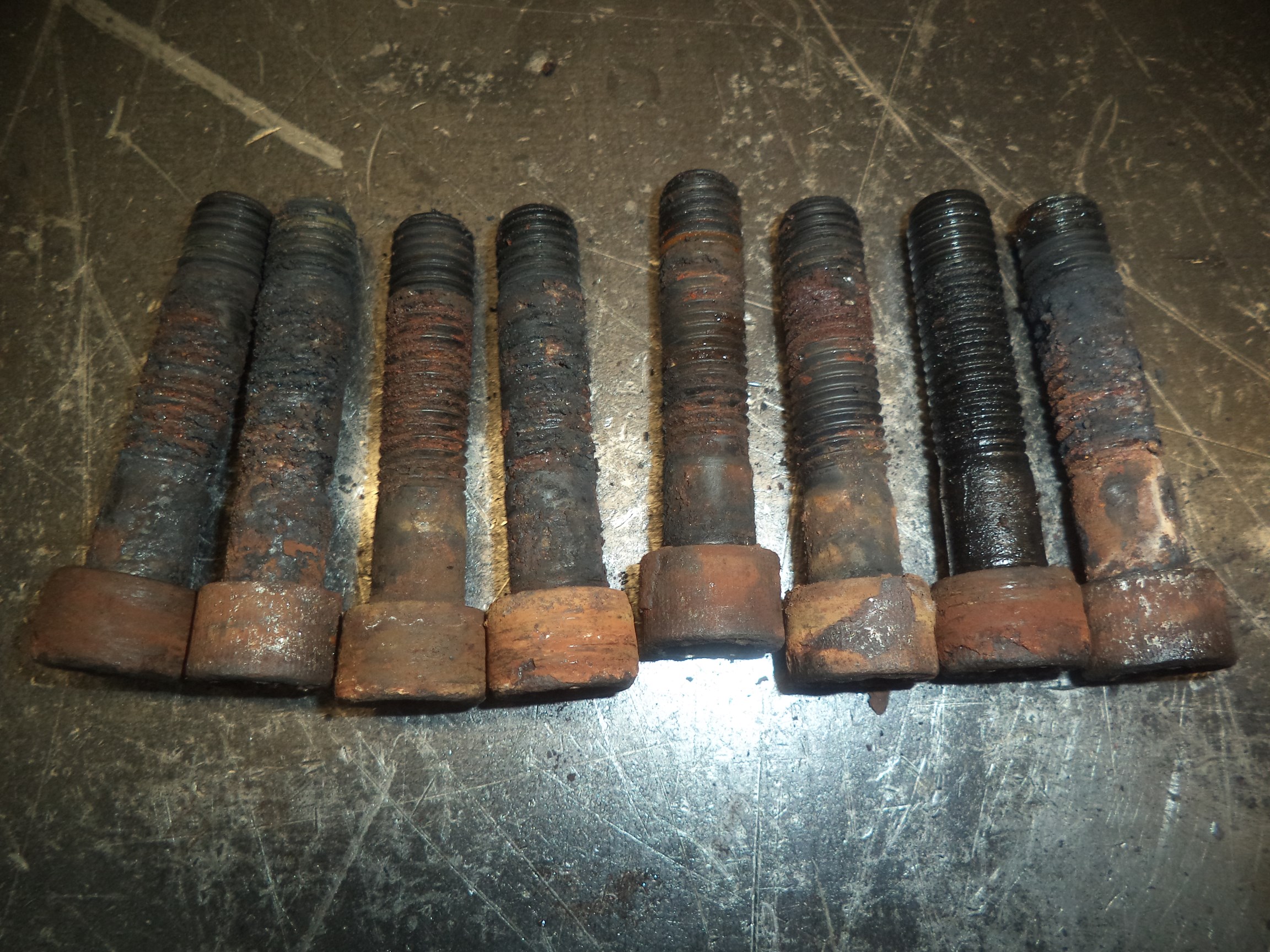

Then I did the same for the worst of the track motors:
Once again - it came out looking much cleaner than before:
The bolt heads were pretty bad on this one, but I still was able to undo several screws without any help from Mr. Torch or WD-40. Once again, I found the the rust layer packed in the tiny counter-bore gap much more brittle than I would normally expect it to be:

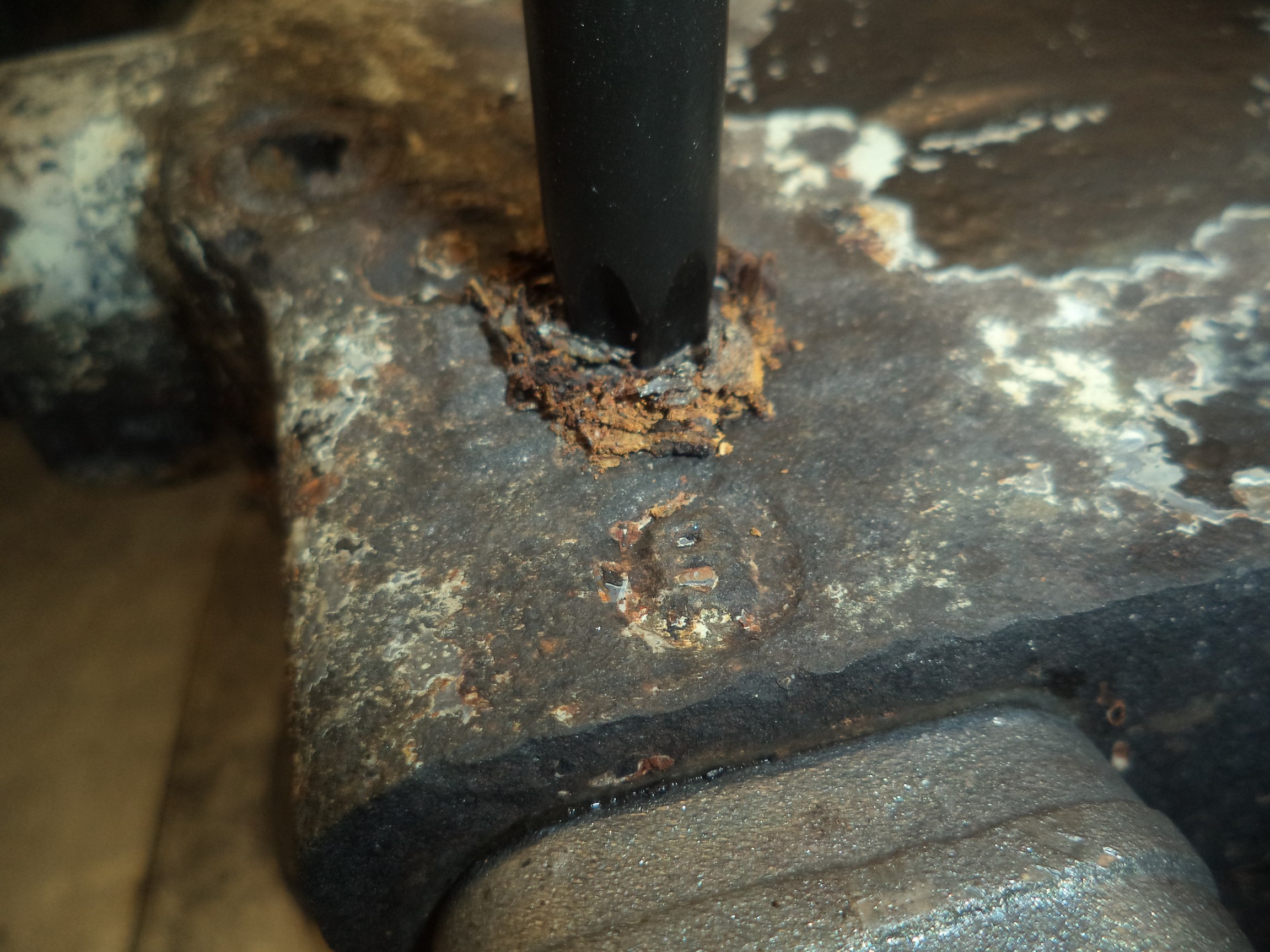
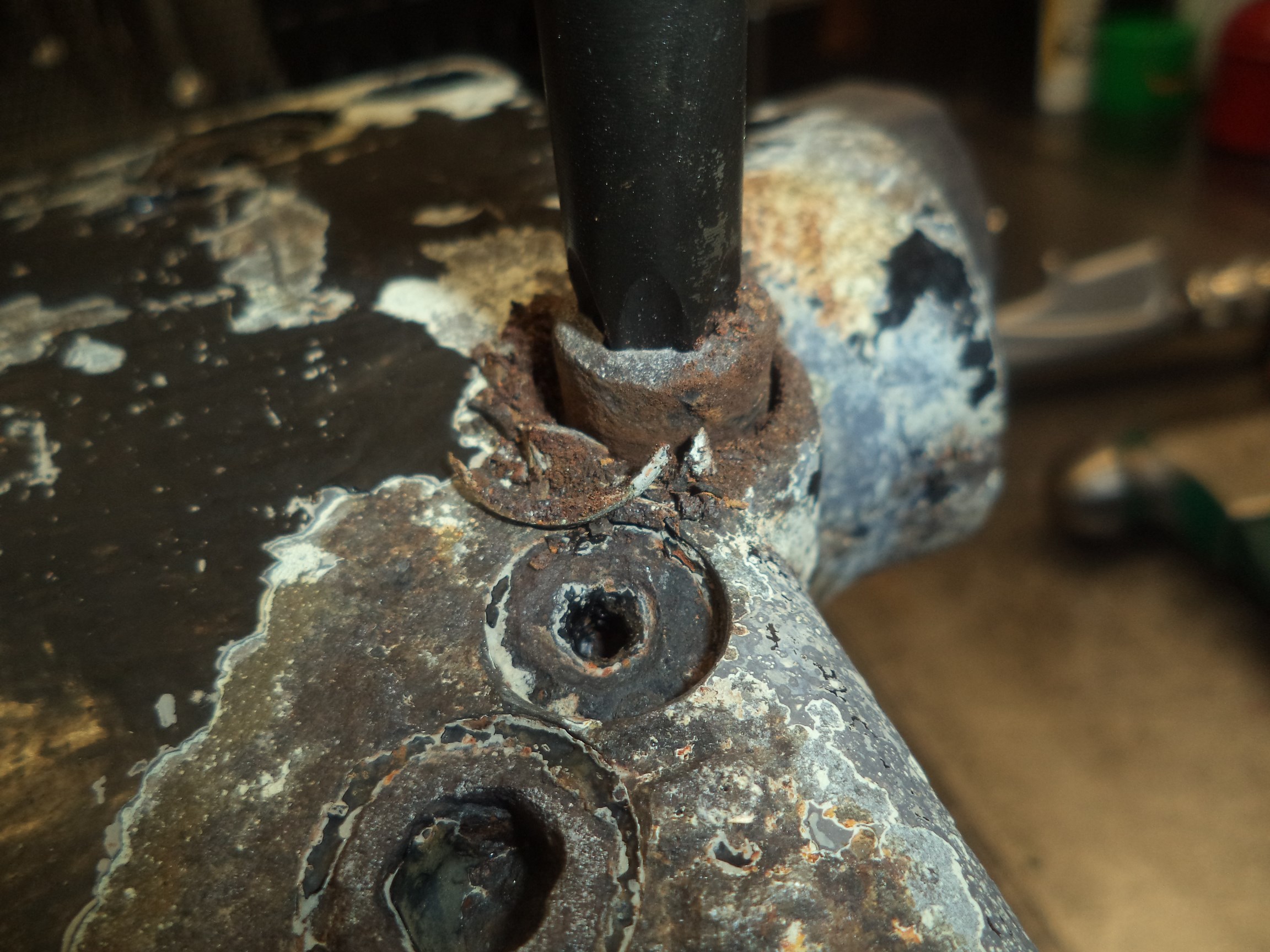
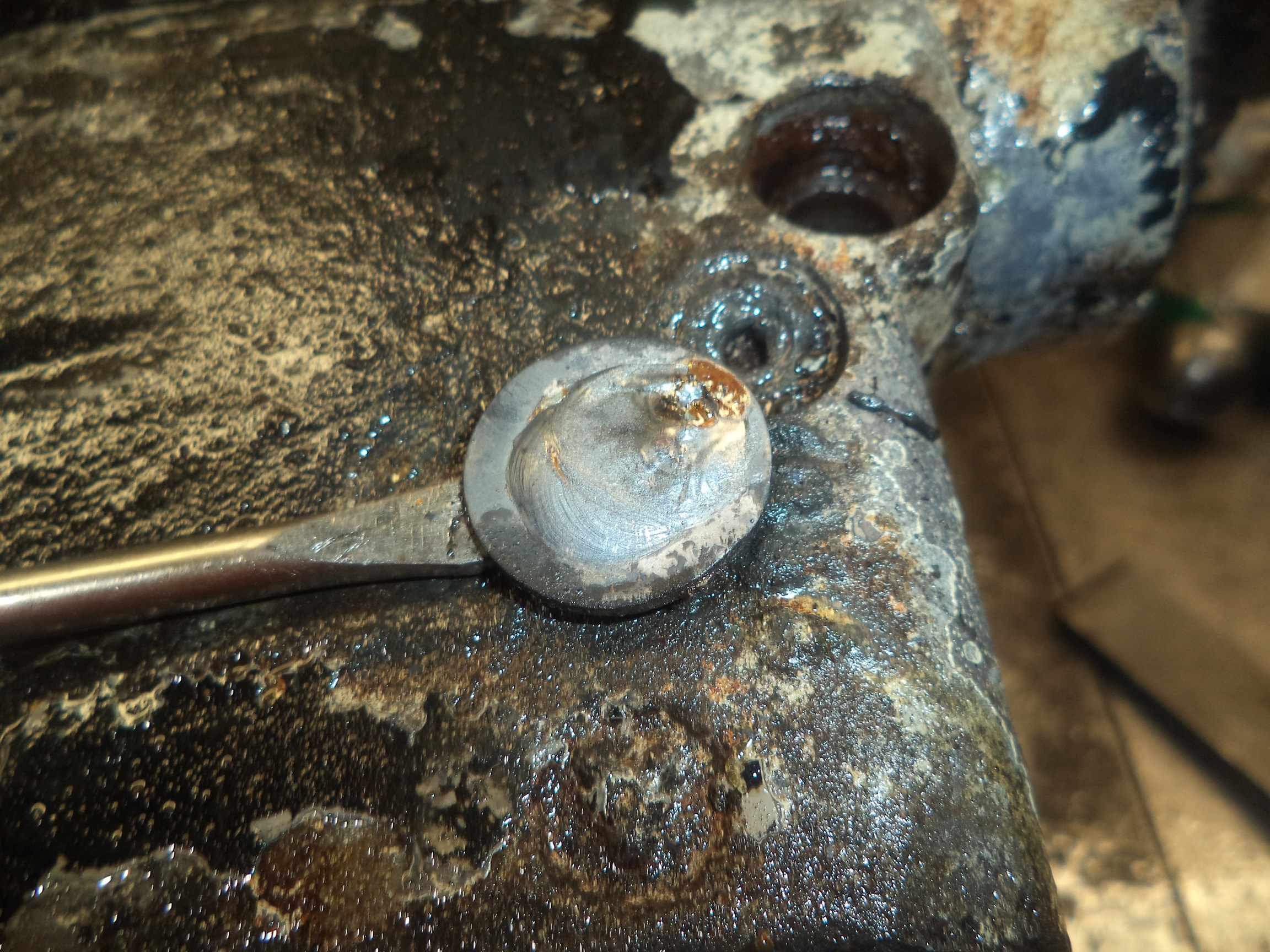
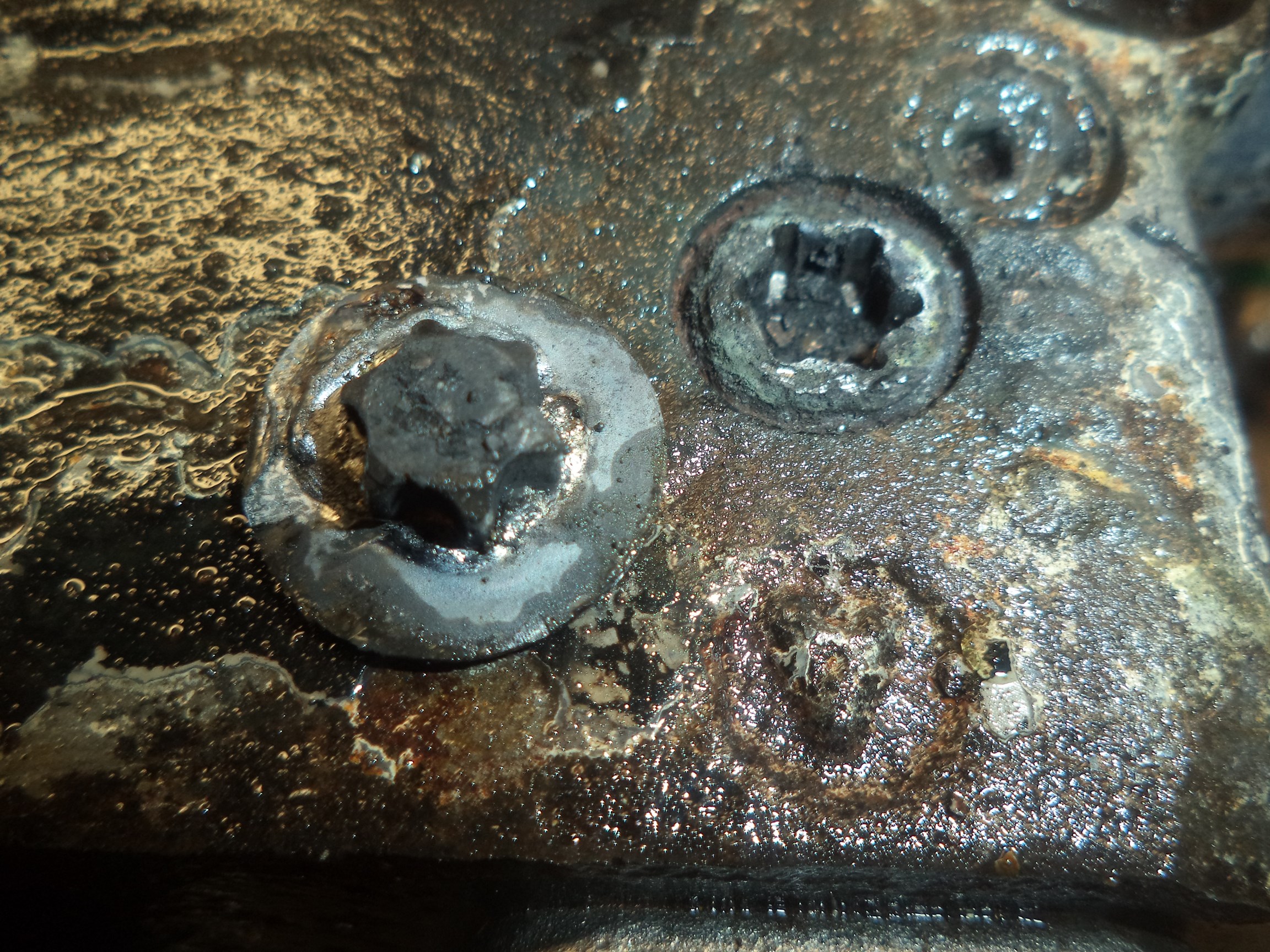
Unfortunately, I didn't manage to open this motor, though, and let me tell you why. It was already late, it was a Friday night, and I had just arrived from the mine - so, as you can imagine, I wanted to open this motor fast and be done with it for the week. Normally when you apply torque to a "stubborn" fastener, you do it gradually - so that you feel the moment when either the socket head or your tool is about to give up, at which point you stop to apply another round of the "bolt-coaxing technique" of your preference, but I felt so empowered by the apparent success of the revolutionary bolt-loosening technique that I thought to myself - "To hell with being careful, them bolts are coming out smooth all right!" And when I reached the bolt that, apparently, wasn't "entirely convinced" by the electrolytic procedures, and pulled on the wrench as if I was trying to start a diesel engine, the Torx bit said: "Not today, Sir!" and sheered off leaving me, pretty much, disarmed (bottom right):
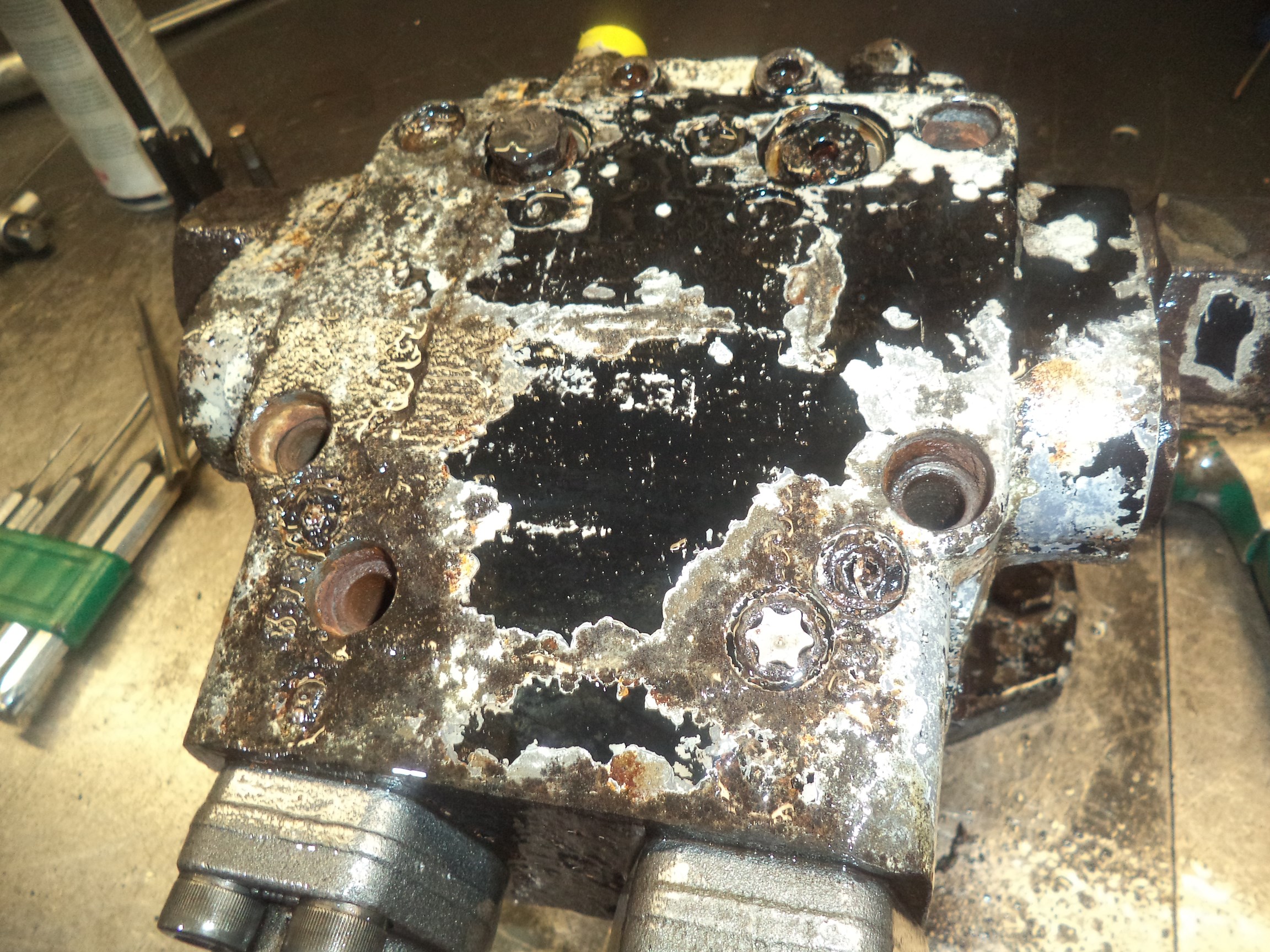
I don't mind the broken bit - we get these bits in bulk from Jonnesway for cheap, and since I often use them for such "indecent" purposes - they are but a consumable at this point, but it turned out that it was my last bit of that size, so I decided that I was the universe's way of telling me that it was time to call it a day.
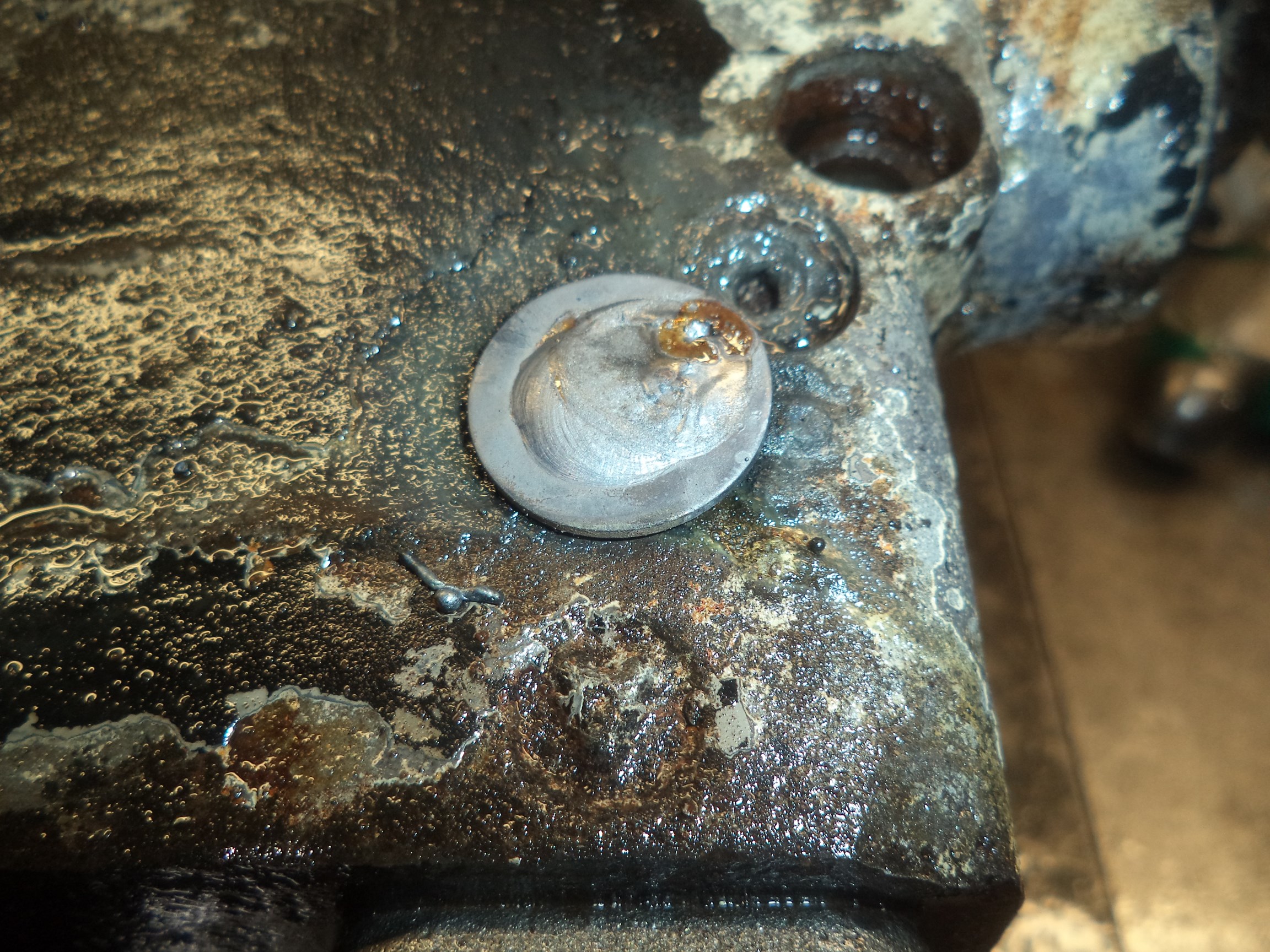
By the way, here's one way to remove the broken off bit from the crew head - all you need is a steel washer, a MIG welder, an a little bit of patience:
Now let me tell you what my current conclusions are in regards to using electrolytic rust cleaning to make the job of disassembly of rusted hydraulic motors (and, presumably, other types of hydraulic components) easier:
It works, and it does make the disassembly much more pleasant, but it has drawbacks:
First - it takes a lot of time. I would say that to make a difference for a component that's rusted like in the examples above you'd need at least 24-48 hours at 3-5 amps (for a normally-sized motor). This process does not require much monitoring, though - you flip the switch and pretty much let it be - and I am totally OK with waiting for a day or two and not having to drill through the stubborn bot heads, but it's not applicable for urgent repairs.
Second - it takes effort. When I say effort, I mean preparing a component for the bath because you do need to plug the open ports, and sometimes this can be a hassle.
Third - it takes space. The tank, especially a large one, will occupy some estate in your shop, and you will not be able to move it around with ease, especially after the process is started.
Fourth - you need to have a place where you can power-wash your parts (and also the sacrificial electrodes at the end of the cleaning session). If you don't have one - do not bother trying this technique out.
But if you can work past these negative points - the final result feels like magic, especially when you suddenly discover that a component that you used to fight with for a good afternoon can now be cracked open in a quarter of an hour.
I'll start using the large tank for such "endeavours" now - and I'll make sure to report should my opinion somehow change. And I can also tell you another thing - this technique has a very low barrier to entry. All you need is a large plastic bucket, a DC power source, and some scrap (and, preferably, a place where you can use a pressure washer) - so if you find yourself occasionally having to fight with rusted bolts, do give it a try and see for yourself if it works or not.