
Insane Hydraulics
Bold and audacious blog about fluid power
I had an unexpected battle with a real Viking the other day - and a big one, for that matter (the Viking, not the battle):


This, my friends, is a Hagglunds Viking radial-piston hydraulic motor (series 84) - a ton-and-a-half 25-liters-per-revolution monster that broke several of my "good" pallets before I managed to haul it next to my workbench.
The motor was pretty old, but since it was only used as a tool for turning drums of copper ore ball mills during annual maintenance stops - it had a very low amount of hours on it. Had the hour counter not been broken I would be giving you the exact number, but it is very likely it had less than a thousand hours in total (which for these motors barely counts as running-in). The motor was driven by a classic cabinet-style Hagglunds closed loop drive, which employed a beautiful Denison Goldcup P6, along with other "vintage" components.
Following tradition, the breakdown appended on a Friday afternoon, when as soon as I finished making plans for the weekend, I got a call about "a big hydraulic motor that wouldn't turn." I am no stranger to Hagglunds CAs, but the Viking series was new to me, and I went to the mine secretly hoping that I would come about a disconnected fast coupling or something similar.
No luck with that, though. I got to the site, ran some tests, and quickly saw that it was, indeed, the motor. No signs of a catastrophic failure, no contamination, all connections and controls solid - and yet the Viking wouldn't turn at all, with the loop stalling at 280bar. Usually, when I find a damaged hydraulic motor of normal size, I can transport it in my service car, but when a unit weighs north of 1500 kilograms logistics becomes challenging. But with the help of "powers that be" a boom truck was eventually "found" and the next afternoon the beast was already entering our shop.
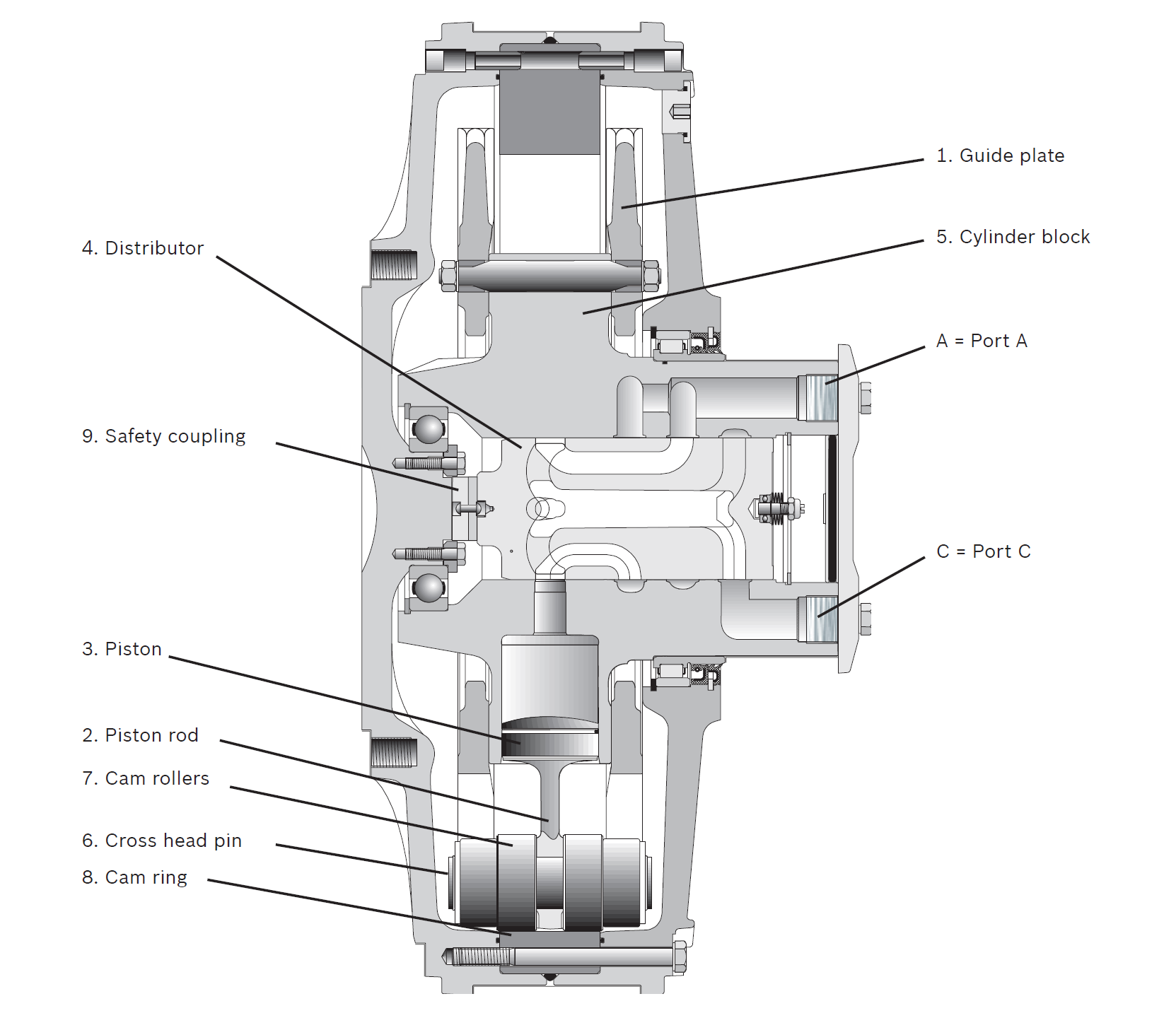
I actually didn't mind the transport delay because it gave me some time to look through what Viking manuals I managed to find on the web. My first "mechanical instinct" told me that I would be taking lots of pictures for the Kaboom section because the motor seemed to have locked solid - but as I went through the product manual and the installation and maintenance manual, I found an interesting detail in the fault finding section - every failure of the type "no operation/erratic movement/noise in the motor" indicated the same probable case - the part called "safety coupling," which connected the distributor to the housing, and secured its correct position (in these motors the whole housing rotates):
So, having discovered that - my initial plan of "let us crack it open and see what's inside" was replaced with - "let us pull the distributor out and see if that safety coupling thing is OK or not." As it turned out - removing the distributor was super easy:

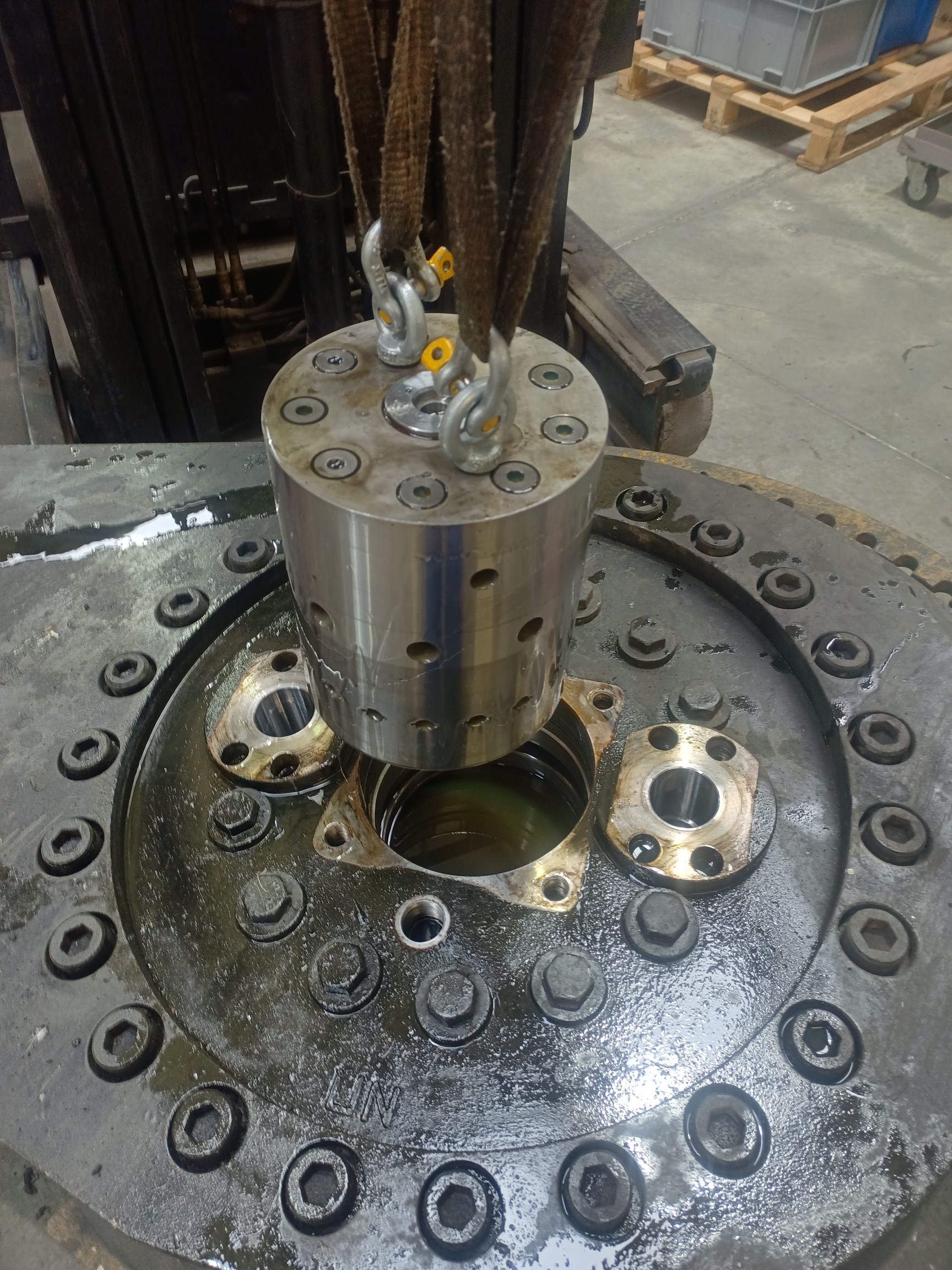
And there it was - the safety coupling - sitting right under the massive distributor:

By the way, as I removed the distributor and drained three full pails of oil from the casing - I didn't find anything alarming - no contamination, particles, or any other signs of mechanical damage, and the distributor itself didn't have a single scratch.
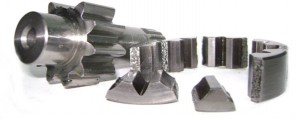
The manual stated that the halves of the safety coupling should be aligned using the 3mm indication hole, but when I pulled it out - I saw that the four steel pins securing the two halves in alignment were sheared, and the halves rotated 90 degrees in relation to the correct position. My mind was set on finishing the repair fast rather than taking detailed pictures, so I didn't take a pic of the coupling when I pulled it out, but you can still see the sheered-off pins here:


So, the distributor got misaligned and locked the motor hydraulically. Since we have a lathe in the shop - it was an easy fix. I made four new pins and press-fit them in the holes:


This, apparently, goes against the recommendations found in the maintenance manual, which states: "...If the coupling halves have been moved in respect to each other, reset them to original position using the indication hole (Ø3 mm /0.118 in). Then fit new pins: ... CP 8 x 19 mm (0.315 x 0.709 in) for 84-series by drilling on the same radius as the original pins..." Sounds like they are suggesting drilling new holes, but I honestly saw nothing wrong with the old holes - so I re-used them. I did have the advantage of making my own pins - so I made sure they were tight. Maybe they were worried that new pins could become loose in already used/possibly damaged holes?
Then I reassembled and tested the motor - and off it went to the mine - just in time to finish the maintenance operations.
So, as I said, it was an easy fix, and once again, spending time going through a catalog before working on a component proved to be super valuable - but this case left me with a question that I, honestly, can not answer: "What caused the pins to shear?"
You need a pretty big torque to sheer off four 8-mm steel pins - and the only way to do this is by somehow "grabbing" the cylindrical distributor. I carefully inspected both the distributor and the hole it works in - and I saw no signs of binding or wear.
If some contamination were to jam the distributor that badly - it would have left marks. It could have been a thermal issue - like hot oil hitting a cold motor, and causing the distributor to expand before the body does, but with our warm climate, this is highly unlikely.
The fact that this malfunction is mentioned in the maintenance manual means it's a common failure for this motor, but I would really like to know the true (or most common) cause of it. If any of you know or can suggest something - please share!