
Insane Hydraulics
Bold and audacious blog about fluid power
Today I want to show you a cylinder that can push and pull with only a single line connected to it.
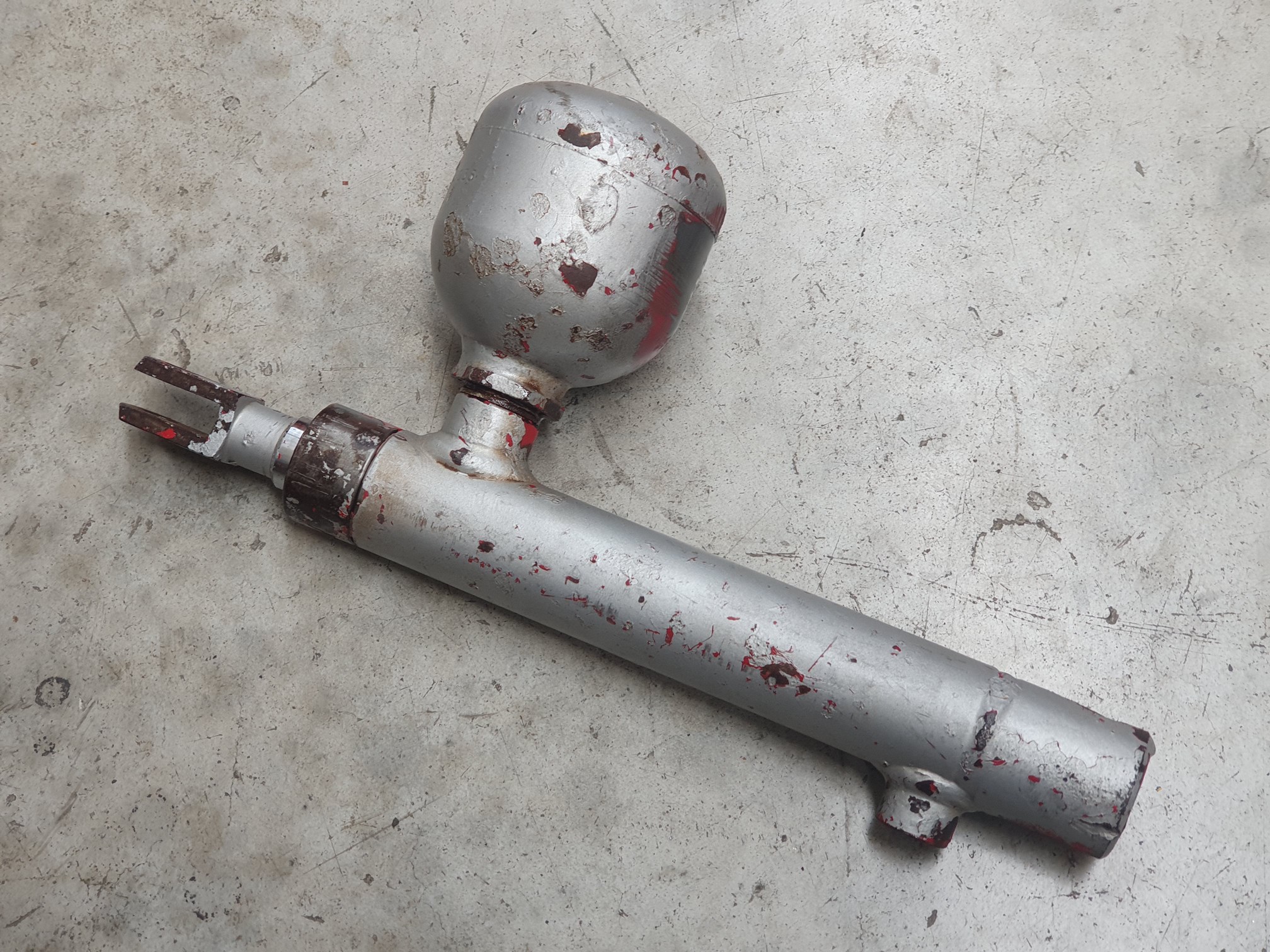
This tiny cylinder comes from a Vicon fertilizer spreader, where it allows the user to remotely control the amount of the spread stuff with a standard single-acting outlet of the tractor. I got it with the complaint that it stopped retracting, and when I disassembled it, I found its construction super simple and yet, super functional, and I love simple and functional!
Now, it is quite obvious that the retraction is achieved via the action of the hydro-pneumatic accumulator, which essentially functions as a better equivalent of a mechanical spring, but I really like how the designers created a self-filling accumulator-based hydraulic spring using nothing but a simple check valve built into the piston. Let us have a look at what's inside:
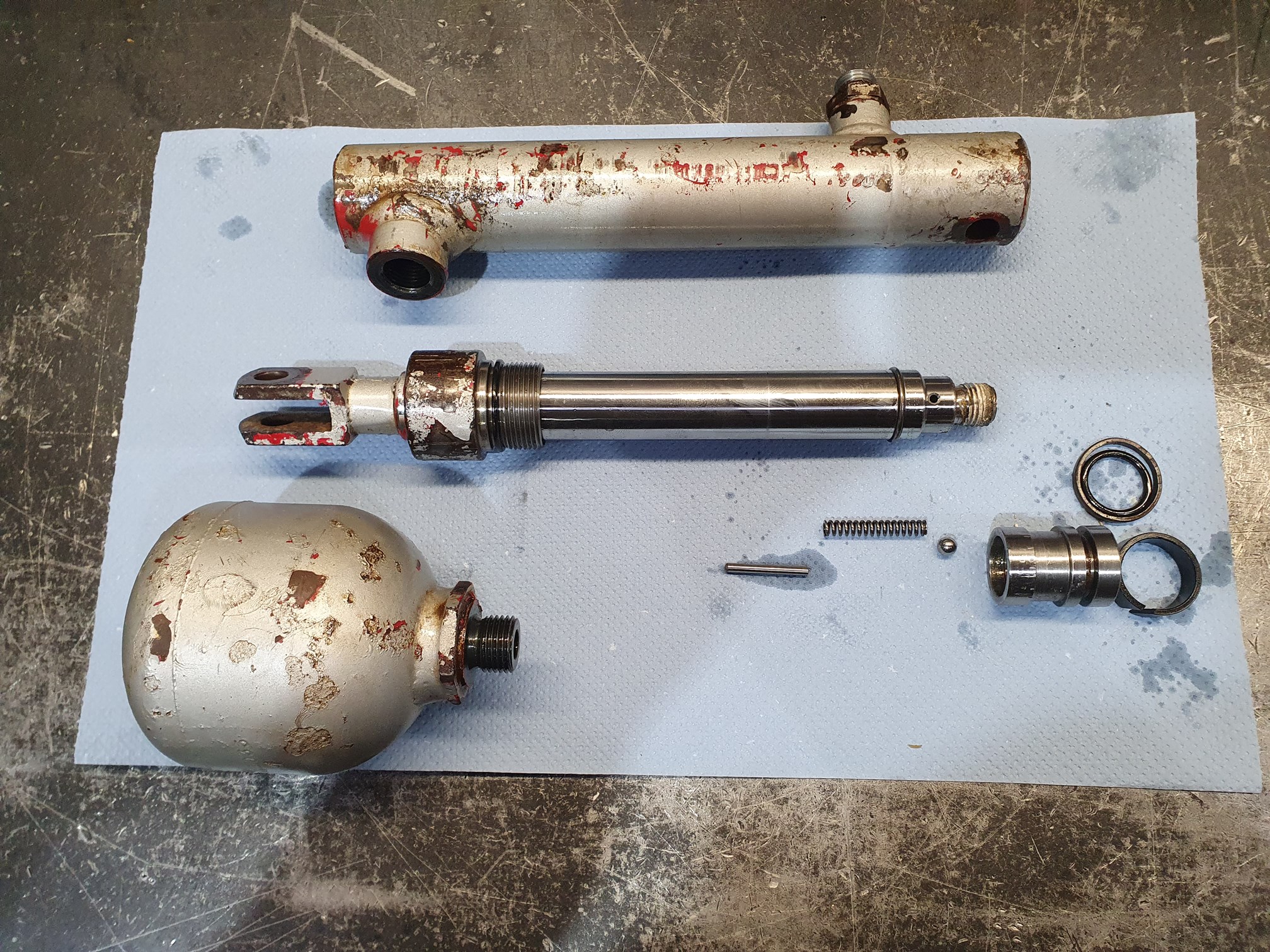
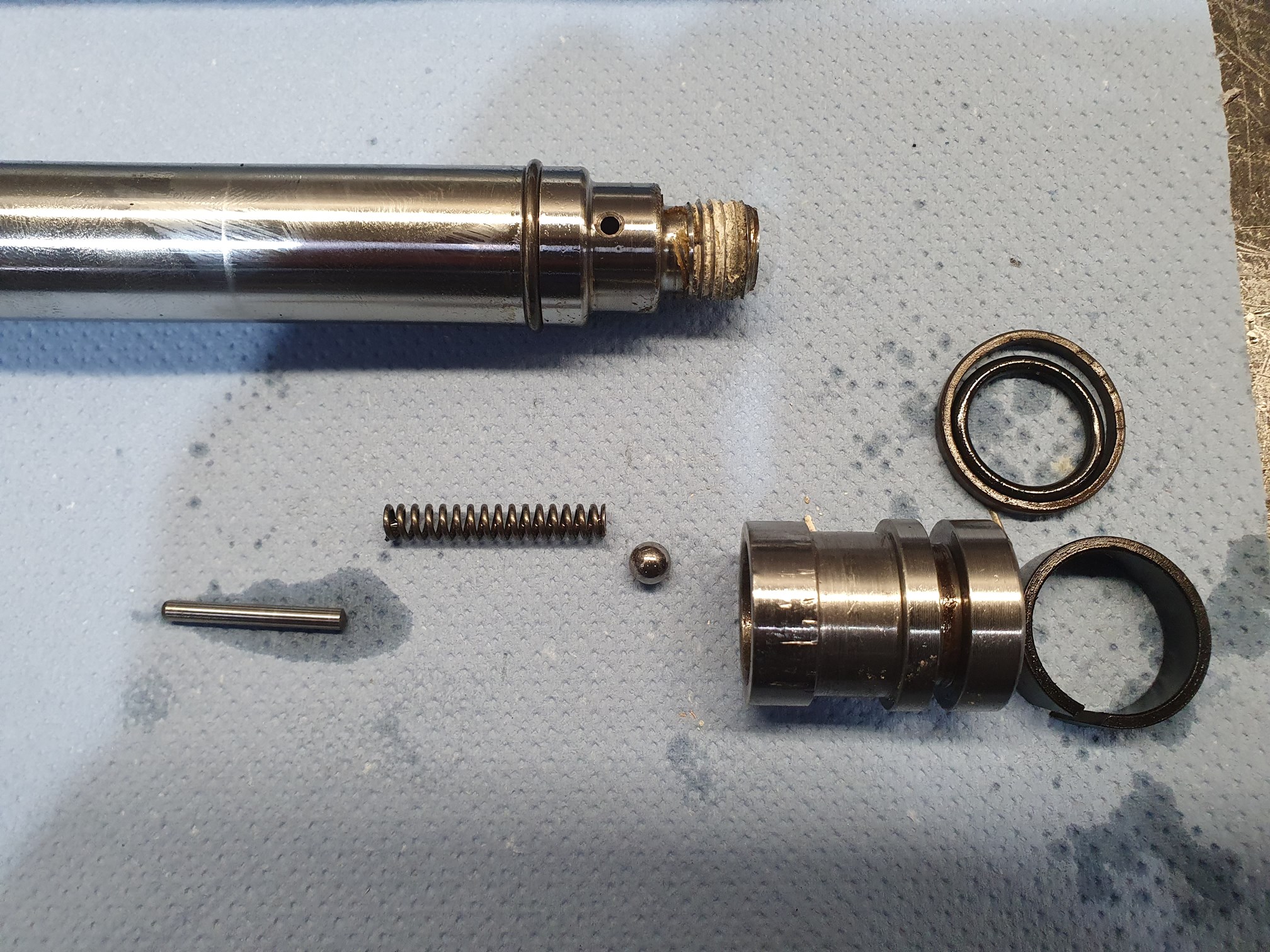
The 0.16L accumulator was completely busted, by the way - the reason why the cylinder stopped retracting. I made this model to better demonstrate how the parts fit together:
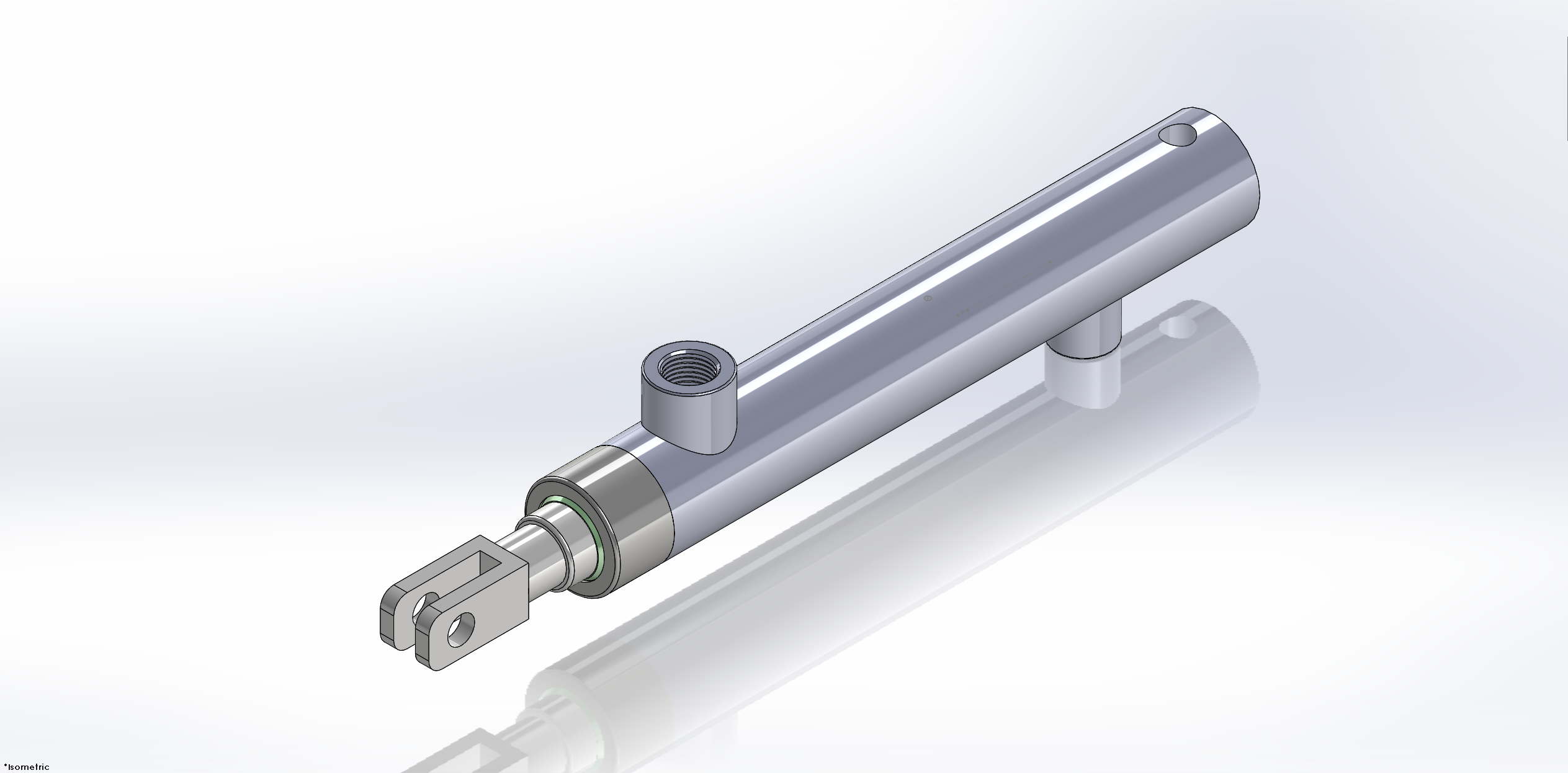
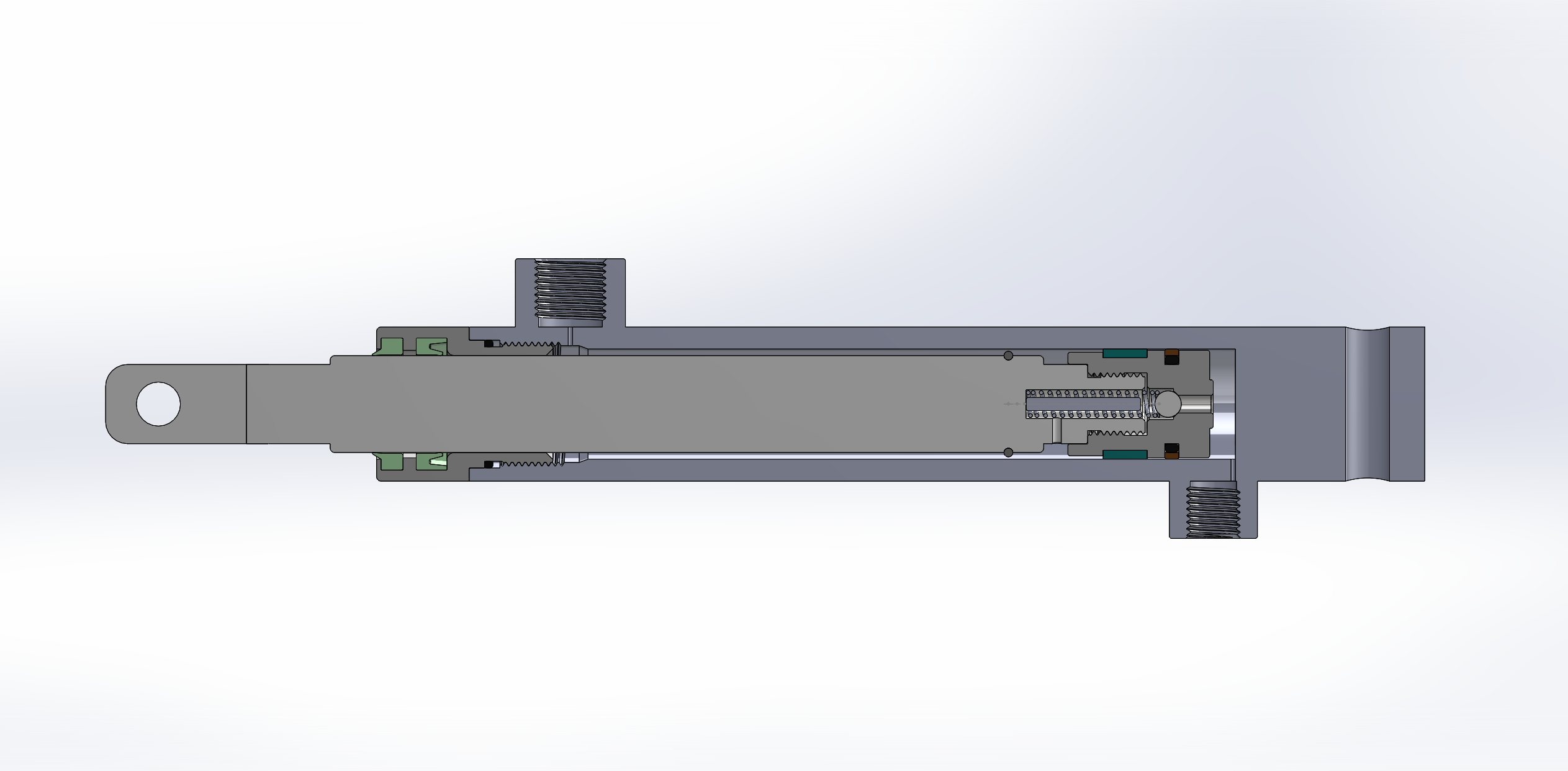
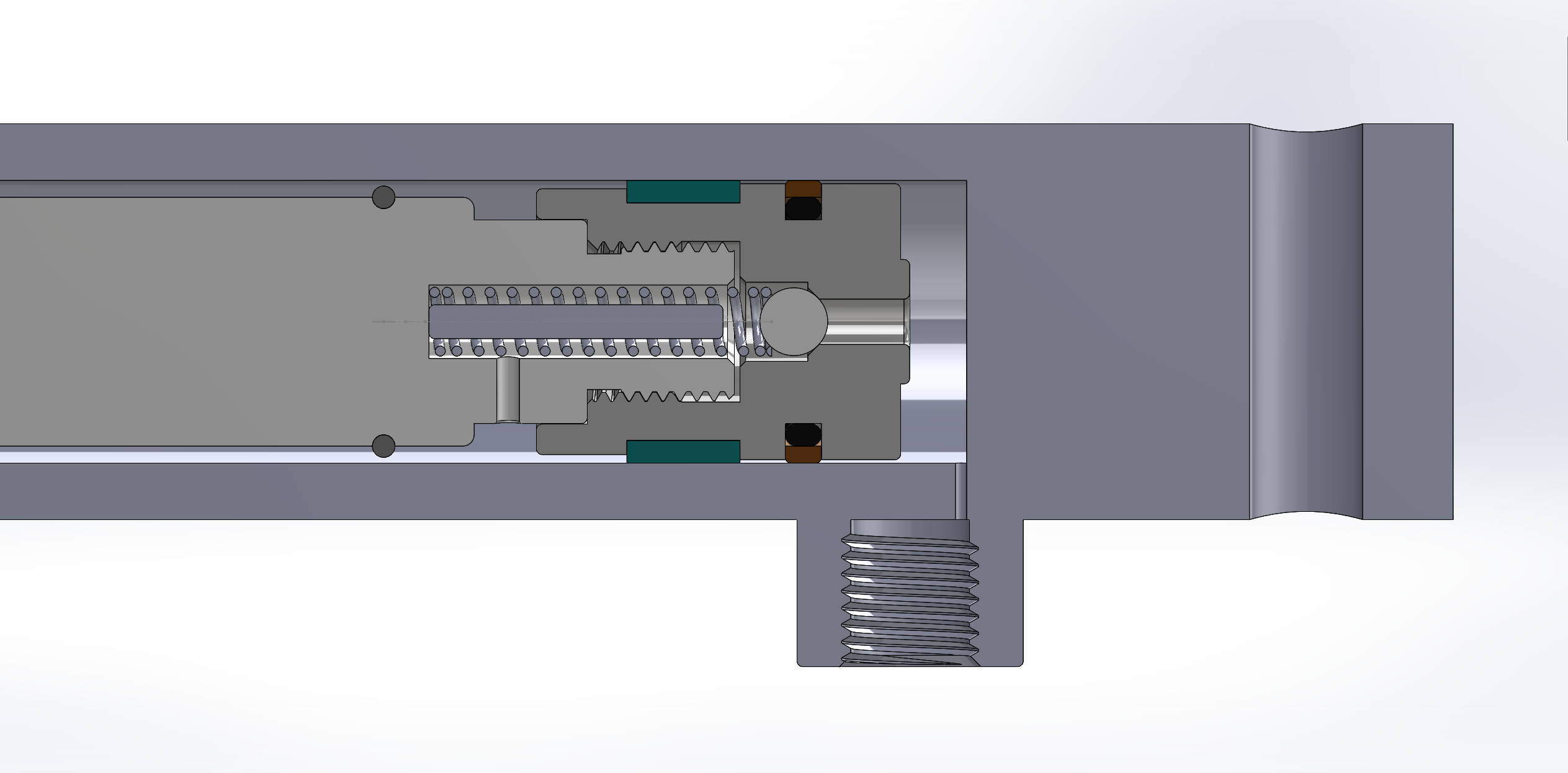
Pretty neat, right? Of course, this construction has its drawbacks, and I am sure that a lot of you already envision what could happen if the check valve leaked, or if the accumulator lost its charge, but the key phrase in such designs is "functional enough." In other words, it may not be ideal, but it is cheap to manufacture and it works for years.
The rod is 22 mm in diameter, and the tube is 25 mm, which gives this cylinder about 1.1 cm² for the gland area and 4.9 cm² for the piston, and makes for the impressive 1:4.5 area ratio! Given the 11 cm travel, the rod end displaces a mere 12 cm³ of fluid, so the 160 cm³ accumulator turns it, essentially, into a constant force spring. The pre-charge pressure (marked on the side of the accumulator) is 80 bar, and after it is pumped up to some 180 bar by the hydraulics, the pulling force gets to almost 2,000 N, which is pretty respectable for such a small actuator, and is completely out of reach of any mechanical spring capable of providing equal travel distance and force, and fitting into the same form factor.
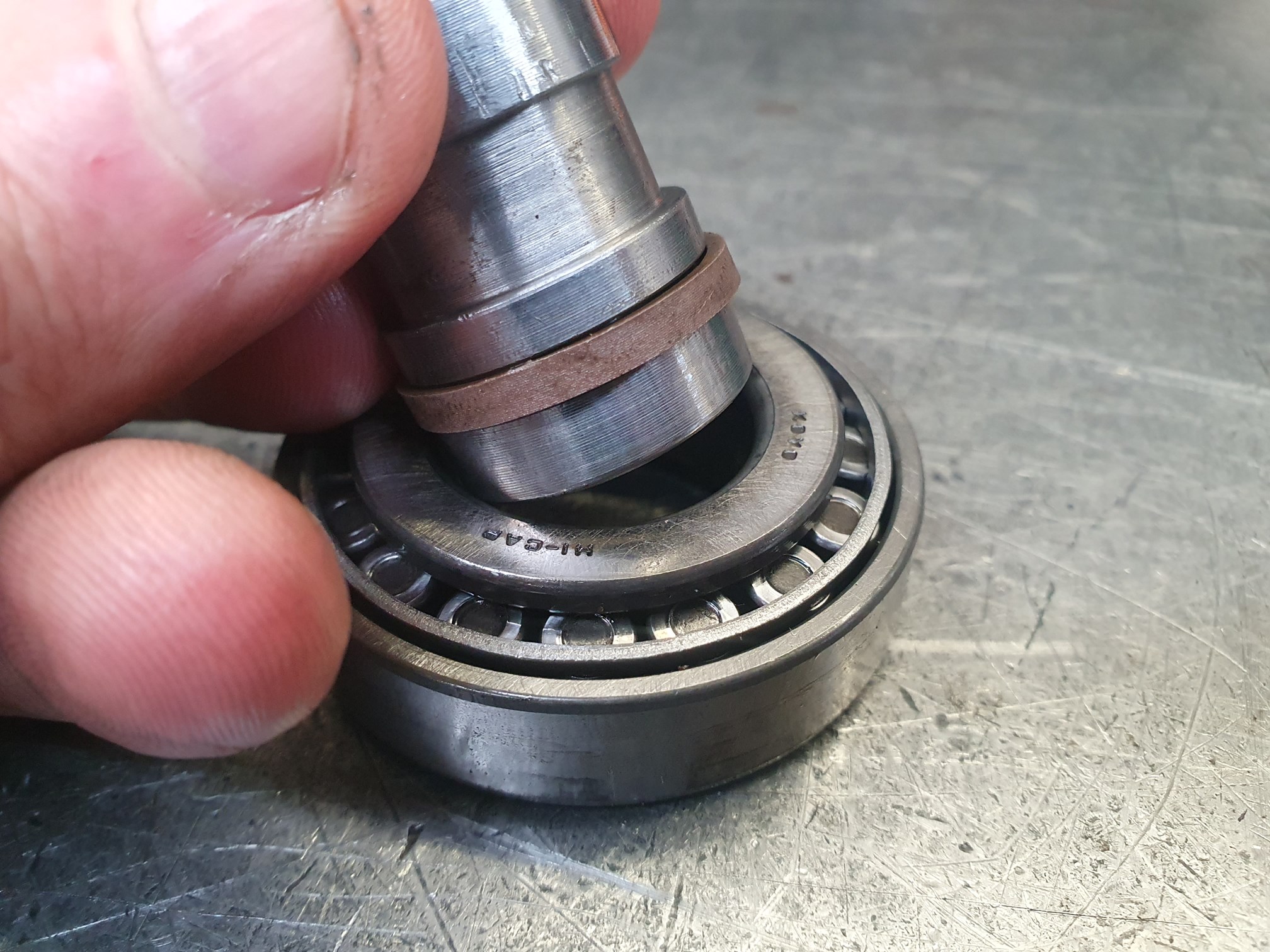
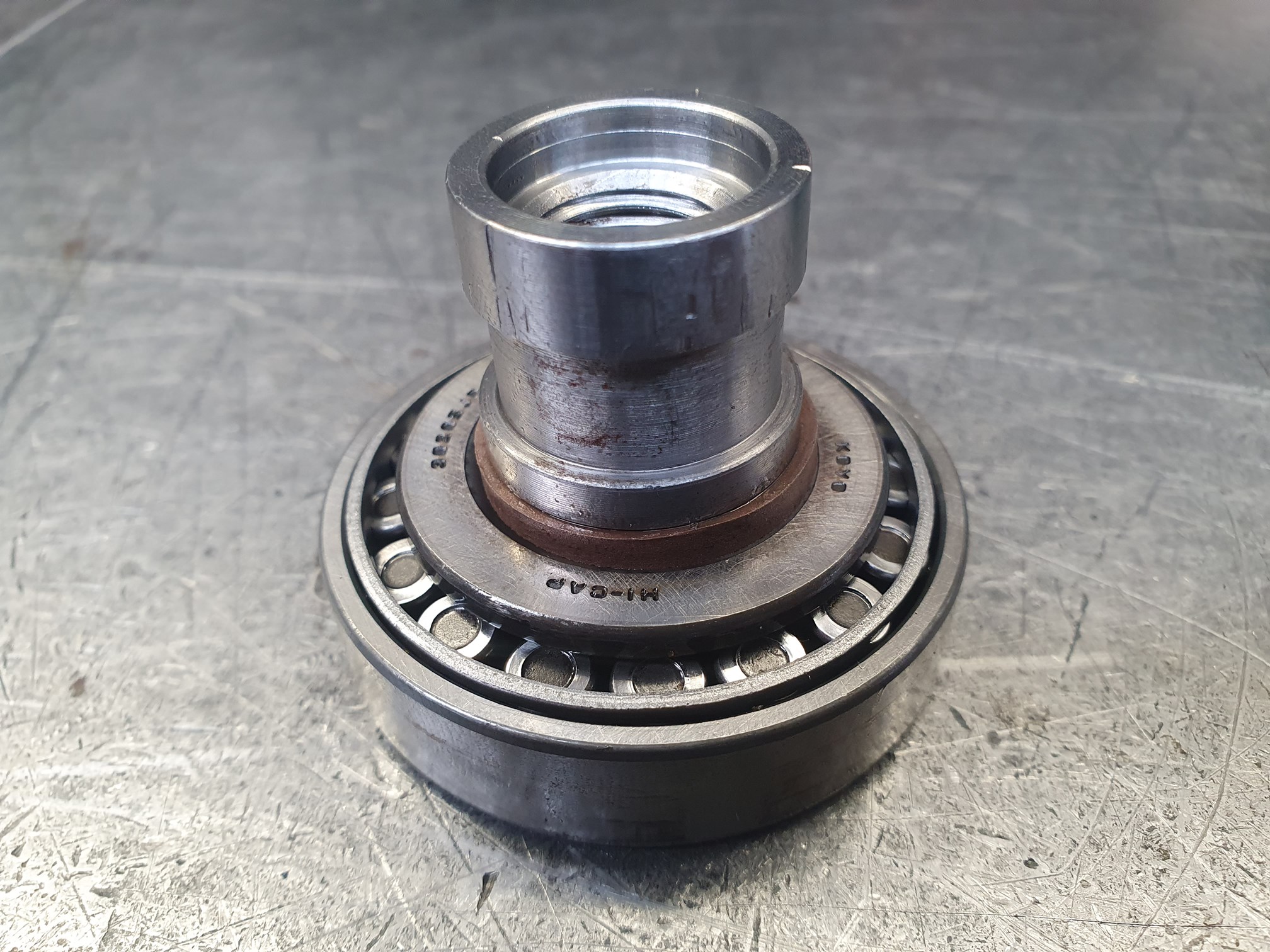
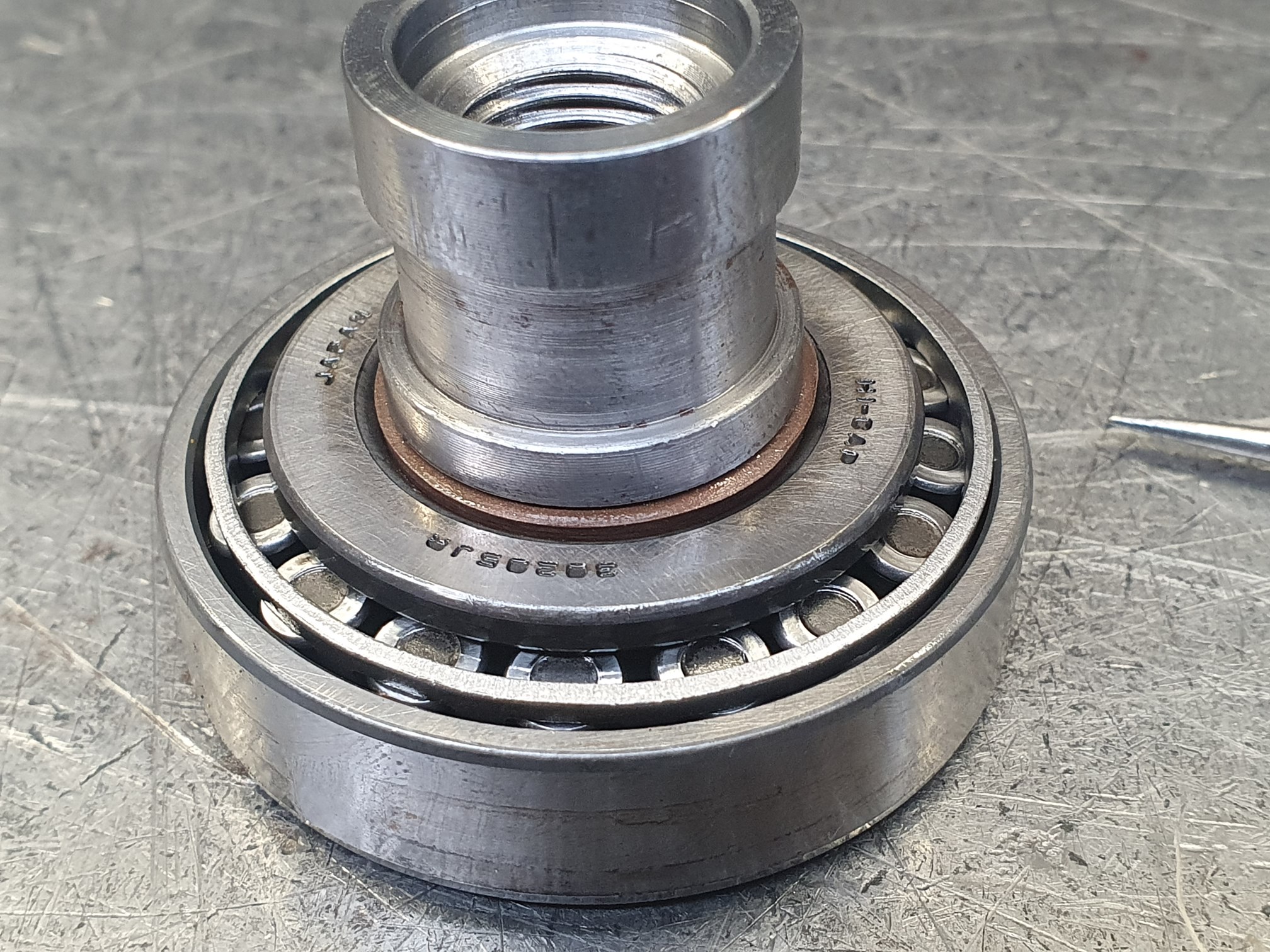
Let me show you a couple of shop tricks as I am resealing it. The bi-directional bronze-filled PTFE piston seal expands when it is stretched over the groove, and you need to find a way to compress it back to its original size. I have chamfered cuts of cylinder tubes of all sizes for that, but for small diameter seals, common bearings make excellent compression sleeves - they are polished, and they have nicely filleted holes:
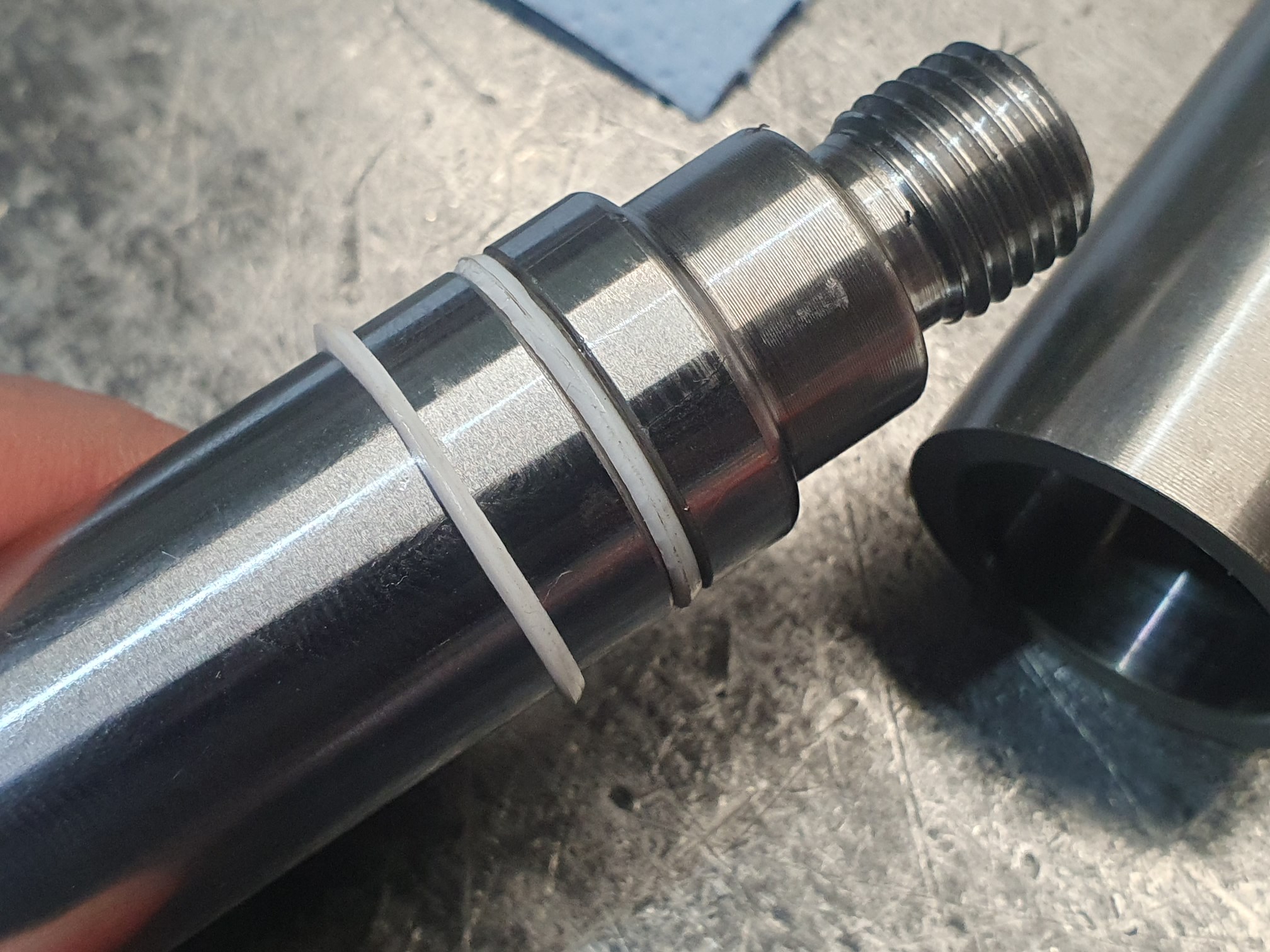
The rod has a semi-circular groove for the wire circlip, and the edges are pretty sharp. Even if you dull them, the new rod seal and the scraper still "catch" and can be easily damaged if you force the rod in. Here is one way to fill the groove for a safer assembly - you can stretch a back-up ring over it (I never throw away leftover or old back-up rings) and then cut the excess plastic with anything that can slide tightly over the rod. In my case, I used an old servo-piston sleeve that happened to have an internal diameter of 22 mm. This will leave you with a plastic ring that fills the groove just enough to support the seals as they slide across.
So, there you have it - a linear actuator with a self-filling hydro-pneumatic spring can push and pull with but a single line.