
Insane Hydraulics
Bold and audacious blog about fluid power
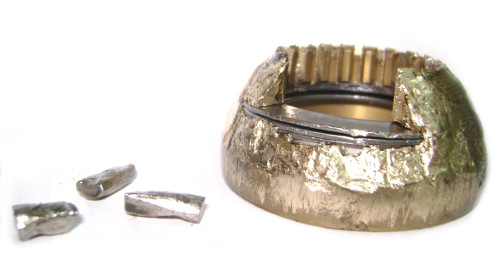
The problem I am going to address in this article is related to the hydraulic systems powered by diesel engines with mechanical fuel injection pumps.
Purely mechanical injectors are gradually becoming history, and there is no doubt that electronic injection is more efficient in transforming fuel into useful work. However, the ability of mechanical fuel injection systems to withstand all sorts of abuse and harsh environments made these engines everlasting, and there are quite a few of these older diesels still in operation, so if you are a hydraulic technician, there is a good chance that at some point you will have to deal with the hydraulics of such an "old-timer-mobile". This post is a "heads-up" to those who don't know it yet - old diesel engines can be much easier to start than to stop!
Being purely mechanical devices, these babies require no electricity to operate, and there lies their strength and their weakness - because if there's a failure in the stopping mechanism (or if you don't know how to activate it) these engines will not stop once they've started turning, which can be a pickle when you have a large hydraulic pump coupled directly to the output shaft and you are "bringing the hydraulics back to life".
When you diagnose or commission a hydraulic system, with lines reconnected and components swapped out (usually in a high-stress environment and on a tight schedule) it is very easy to "work into" loose hose ends or bad connections, which can spell all kinds of trouble, from major oil leaks to unwanted equipment movement as soon as the pump starts turning. Even during well-planned start-ups, hundreds of things can go wrong and require an immediate engine stop - which is why you must be sure that you can stop the prime mover before you start it. And stopping a mechanically injected diesel engine can all of a sudden get a lot trickier than turning a key or pushing a button.
Of course, in the case of more or less regularly maintained equipment, not being able to stop the engine you've just started will hardly be an issue, but I have seen enough to be warning you about the real possibility of such situations, and the disastrous consequences they can bring. Allow me to illustrate with a short industrial tale, unfortunately, based on a real-life accident.
Imagine...
You have just replaced the main pump of an old excavator. It was a large and heavy tandem gear pump, and your back is hurting, but you are grateful that life has given you the opportunity to work on an excavator that has a gear pump driven hydraulic system. You even chuckle at your thoughts about what would modern hydraulic engineers say if they saw it. "Load sensing when?!." You chuckle even louder as you imagine their faces, and then signal to the operator to start the engine.
The operator looks at you and thinks to himself "I'll crank it fo'ya all right, you giggling bastard!" and pushes on the starter button. The engine wakes up, with puffs of thick black smoke shooting up from under the teetering exhaust flapper, and before you get a chance to admire the fact that it took the old diesel less than half a turn to start, you realize that a pressure hose is disconnected. Not again!
The oil fountain is washing over the cabin, and since the windows shielding the operator's space are missing, the operator gets a dose of hydraulic oil directly in the face. He jumps out and runs away screaming "My eyes!!! My beautiful eyes!!!" You're on your own now.
You climb the slippery stairs and rush to turn the ignition key, but the engine doesn't stop... Oops! Now, where's that damned decompressor cord? Oh, here it is! Covering yourself from the oil rain with one hand, you give the cord a vigorous pull and activate an outdated yet extremely powerful pneumatic horn. There are no windows to protect you from the blast and you feel every one of those 160 decibels set your hair on fire.
Dazzled by the honk and blinded by the hydraulic oil, in your heroic attempts to stop the mechanical monster you pull at something else and end up with a round object in your hand. The sound of the engine revving up tells you that you just yanked out the throttle lever. The rain turns into a flash flood.
As you bail out of the cabin, you slip on the glistening floor and stop yourself from falling by grabbing on the joystick (with one hand, as you are still holding the broken off throttle lever in the other hand) setting something in motion. You are a trained hydraulic technician, and, naturally, you can only think about how the hell it is possible for the excavator to move when a pump hose is disconnected.
As the boom rotates, and you are thrown out of the cabin by the centrifugal force - it hits you - "Yeah, Right!.. It is a tandem pump!.." While you are flying through the oil mist, you hear the boom hit something and the operator's cries come to a sudden stop...
Not a pretty scenario to be a part of, don't you agree? The next story is from my own practice:
I was once asked to assist a start-up of a rebuilt hydrostatic transmission from an old front loader, powered by a two-cylinder air-cooled diesel engine, which once started, only stopped when we untightened the injector fuel line fittings. The transmission had a badly adjusted null, and the loader began to creep, which caused a couple of "extra agitated moments", as all the attempts to stop the engine "by the book" failed. (By the way, a small video of this machine is used as an example of the correct null adjustment technique in the second part of the Finding Zero series).
Allow me to add one last industrial tale. A client of ours had the diesel engine of his O&K excavator rebuilt. The engine stopping system was not original and consisted of a small pneumatic cylinder that closed the fuel valve. The valve did have a manual override, but it "wasn't there". The first time the engine started after the (very expensive) overhaul, one of the two screw-on oil filters was blown away by the oil pressure (the pressure limiting valve had been assembled incorrectly), and the engine lost oil pressure immediately. The pneumatic "invention" didn't work as there was no air pressure in the system yet, so the engine ran dry for around five minutes before the operator came up with an "alternative" stopping solution - all too late. The motor had to be rebuilt one more time... Since then a piece of wire was attached to the pneumatic piston rod as a doubtfully aesthetic but perfectly functional fail-safe device.
When dealing with old machinery, powered by mechanically injected diesel engines, you should always take some extra care to check if the engine stopping system is working. Take a minute to inspect the engine and define where the fuel injecting pump is and if there is an alternative to manually cut the fuel supply or activate the decompressor. Don't start these engines unless you are sure you can stop them.
Here's a couple of hints for you:
Diesel engines can be stopped by
Being prepared for "surprises" is what differs a great hydraulics technician from a good one.