
Insane Hydraulics
Bold and audacious blog about fluid power



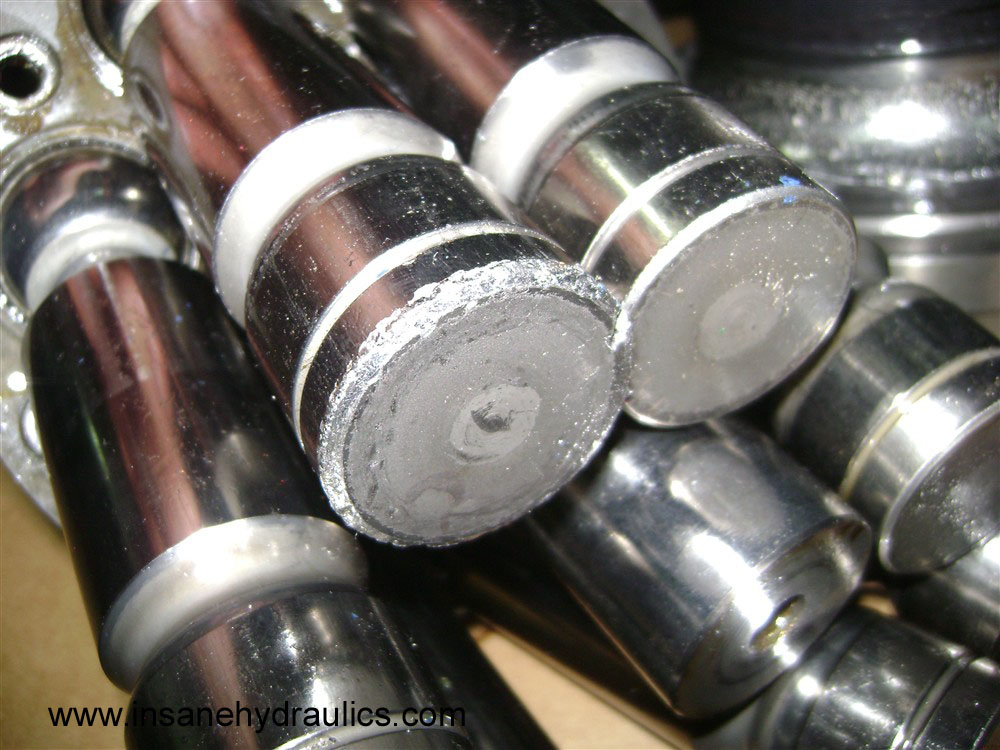
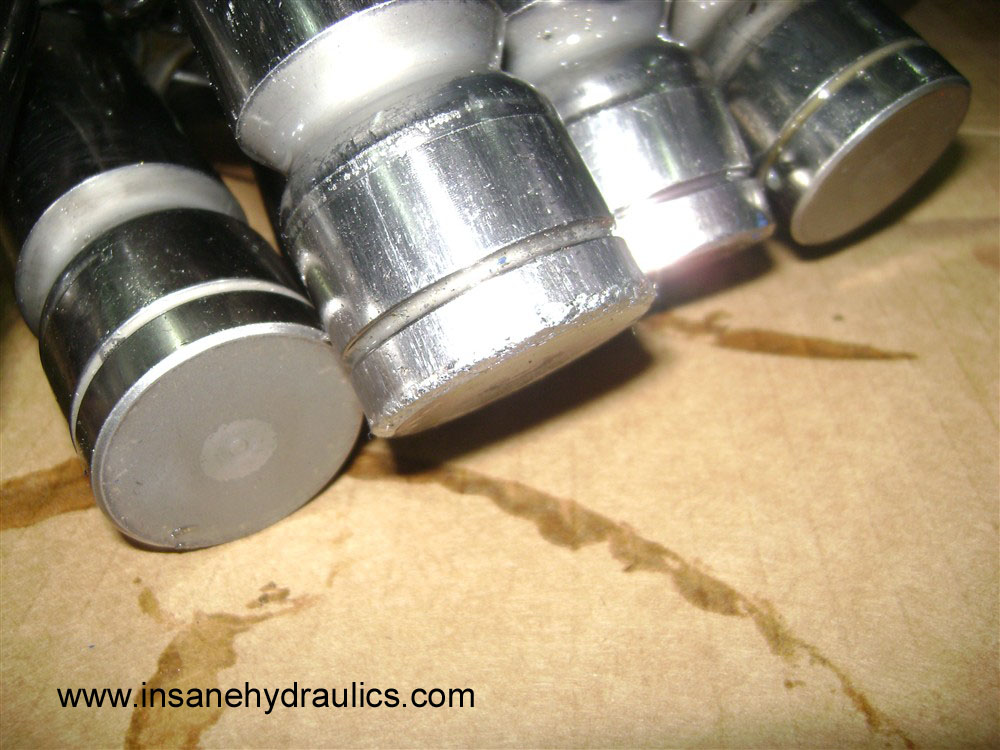
Many equipment owners believe that they can evaluate the condition of their hydraulic pump by flow testing it (preferably without removing it from the respective machine) and they often ask us for such assistance. I perfectly understand the desire of an owner to know how long his pump will live, but the truth about "standard" pump tests (i.e. monitoring the flow and pressure under load and comparing the readings against nominal values for a given pump model) is - such tests only provide the information about the volumetric efficiency of the tested pump, which can label a pump "bad" when the efficiency is low, but can not serve as a guarantee of the longevity of the unit when the efficiency is high or acceptable! Now, this is something many people find hard to believe in - how can it be that a perfectly working pump can have an unpredictable life span?
The reason for this is simple - aside from "pressure making" components pumps have other parts inside that don't influence the volumetric efficiency when they wear out. I am referring to stuff like shaft bearings, swash-plate bearings, piston shoes (which can gain enormous play and be virtually slipping off of the pistons without lowering the volumetric efficiency much) servo-pistons and the respective links, feedback links, etc...
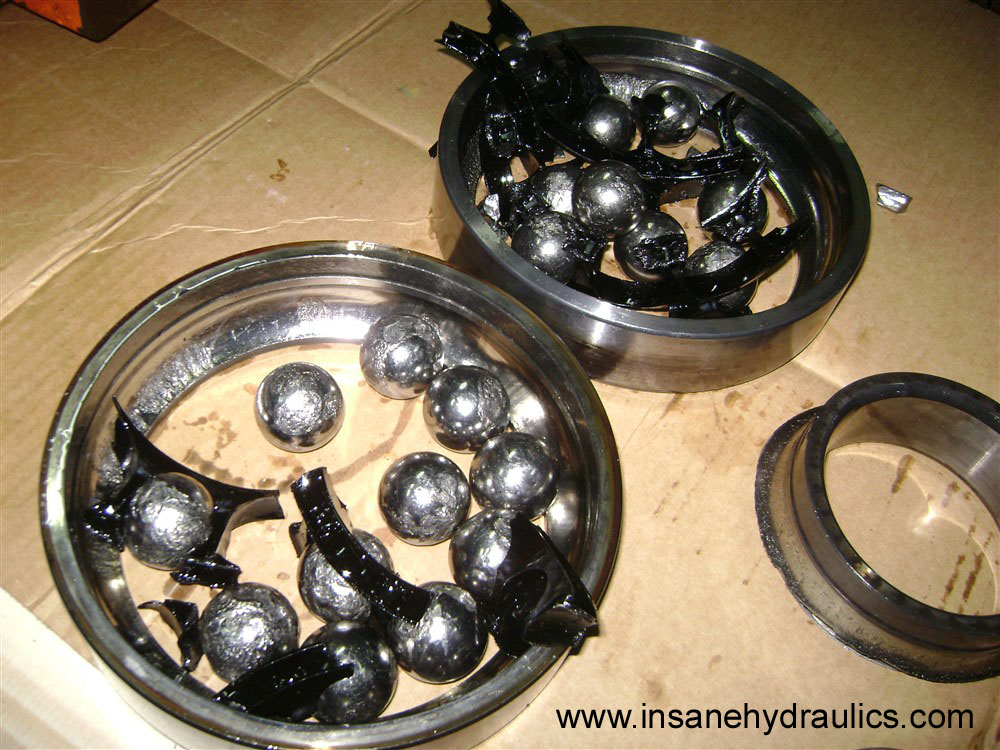
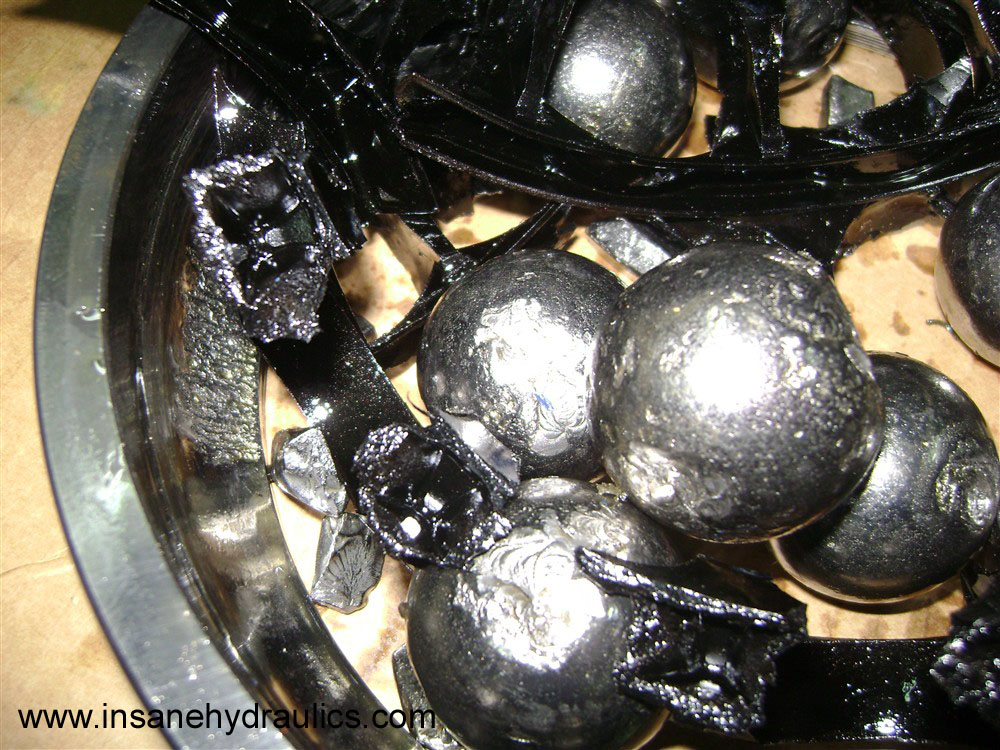
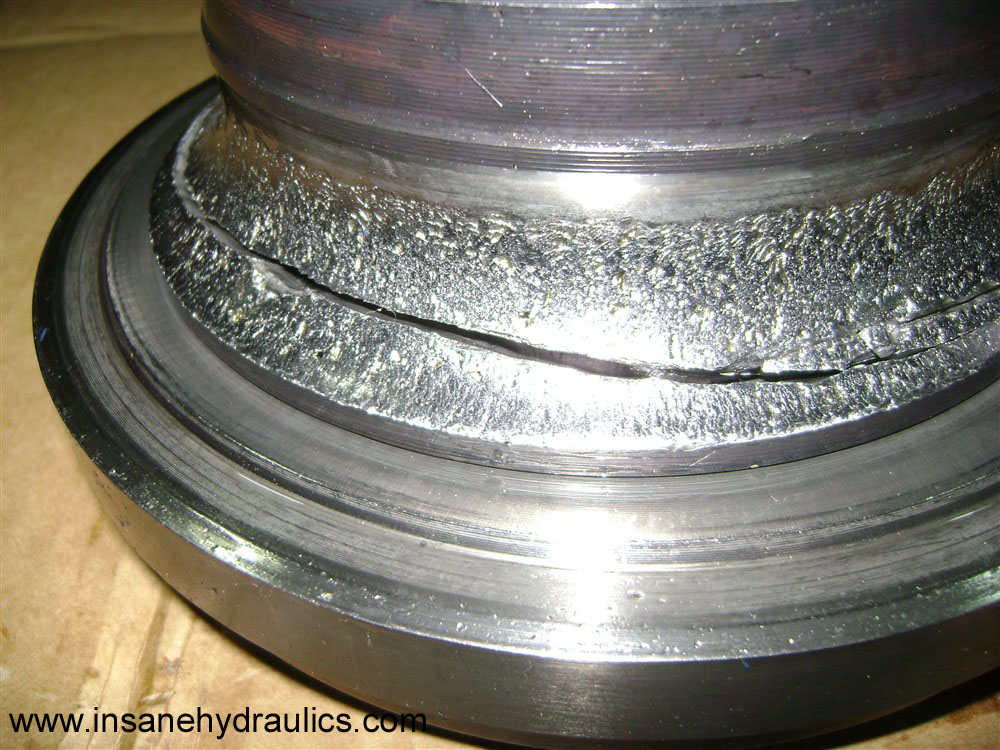
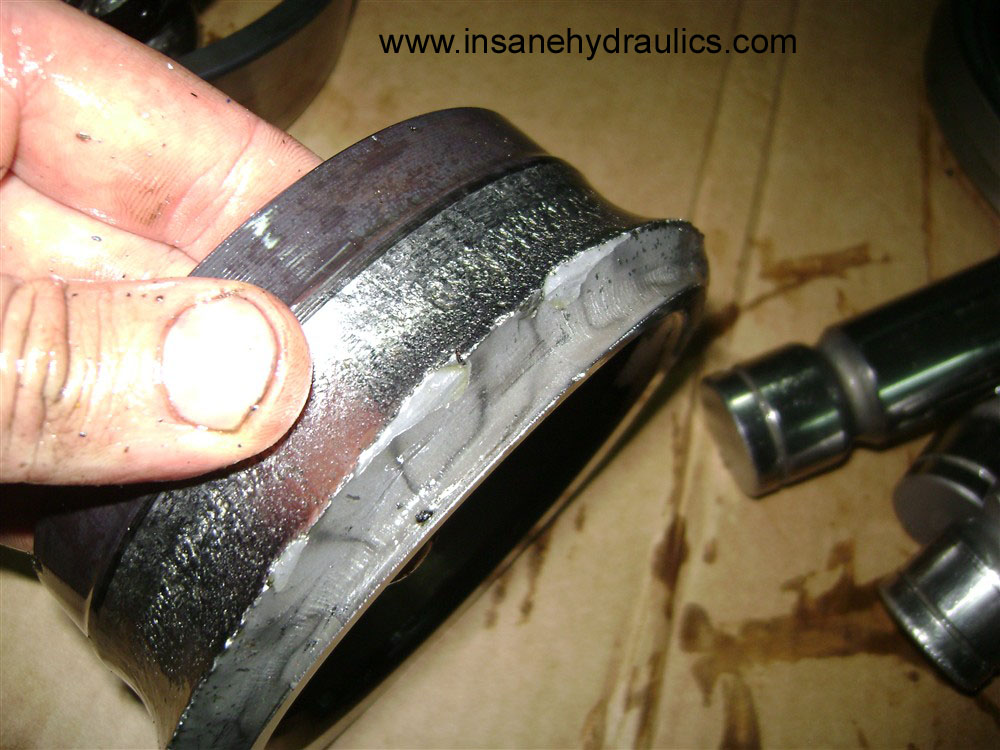
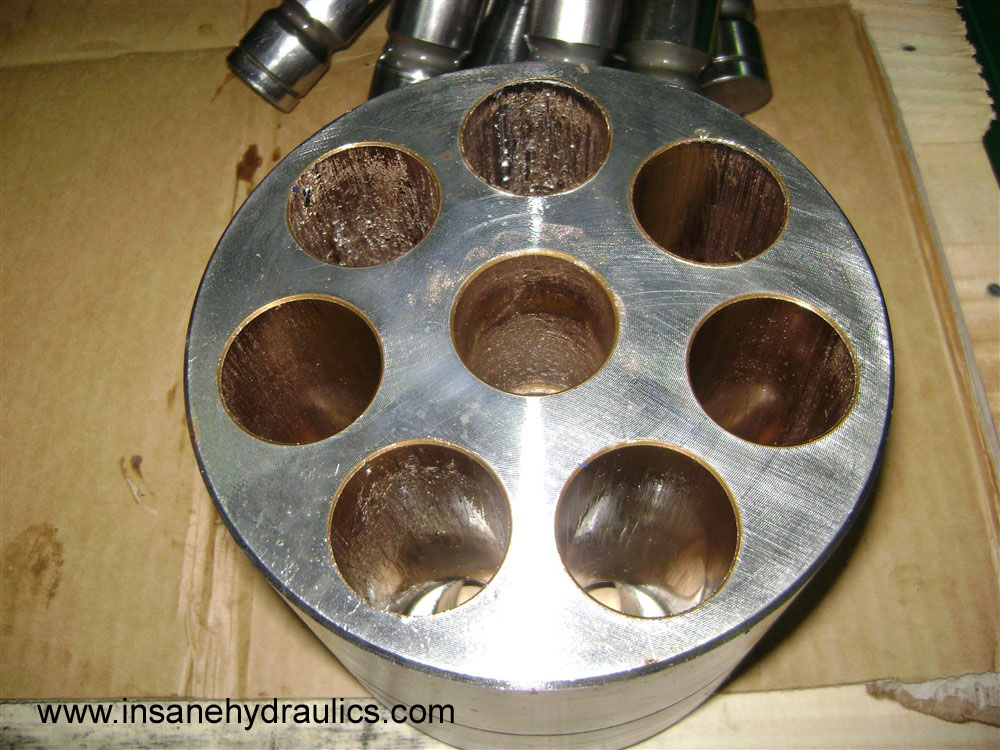
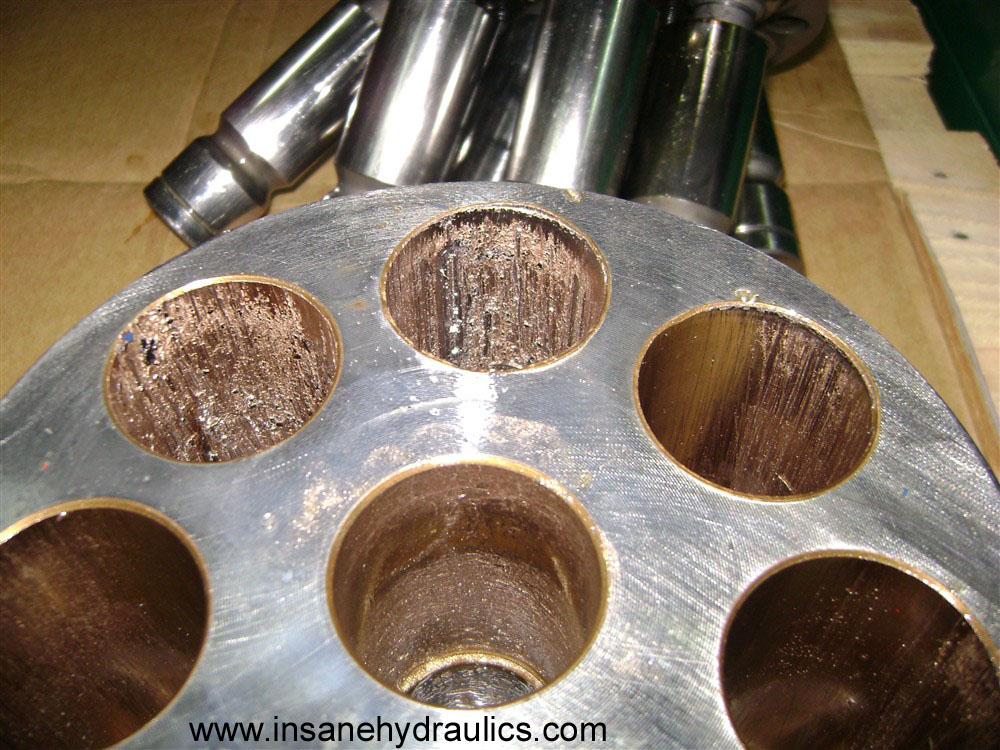
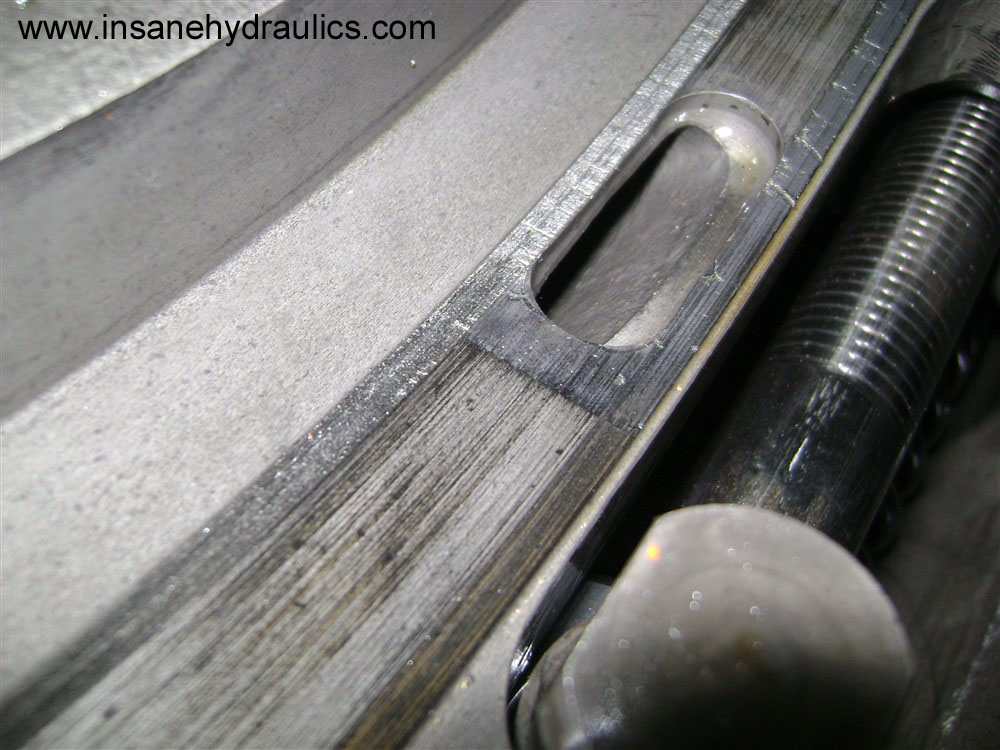
They say that a picture is worth a thousand words, which is why I am putting these pics here (and not in the Kaboom section) - to serve as a perfect illustration to my point.
These pictures contain parts from an A7V355 Hydromatik open-loop pump, and they were taken just four days after I performed exhaustive tests on the unit without opening it or dismounting it from the respective powerpack. Under all situations and at maximum oil temperatures the pump showed excellent volumetric efficiency (above 94%) and controllability, the surface temperature of the pump never rose over 70 C during the tests, and yet four days later it suffered bearing failure which led to the destruction of the unit. This pump model has the suction line connected internally to the casing, therefore all the contamination from the breaking bearing was being immediately sucked into the inlet and then pumped through the system, so when the pump "expired", it took along two recently rebuilt A6VM200 motors and a huge Rexroth directional control valve. The operators did notice a change in the noise of the pump in the last two days of operation, but the change of noise was attributed to the already loud gearbox, which was scheduled to be overhauled in a couple of weeks. The breakdown was virtually instantaneous - according to the operator the machine did "f-z-z-z-z-z-i-i-u -k-h-k-h" and stopped...
So, on-site pump flow tests are good, they provide valuable information about volumetric efficiency and controllability of the pump, and they can tell you if the pump needs repairs, BUT - they can not predict the lifespan of the pump or serve as any guarantee of longevity when they return positive results.
History, my friends, what you need is detailed history - hours and work conditions since the last overhaul. If you don't have this information - your best bet to evaluate your pump's condition and to predict how long it will last is to open it and look inside.
To conclude - a very important tip to all, both hydraulic equipment owners and mechanics:
With hydraulic pumps, especially large ones, abrupt change of normal noise when not caused by air or bad adjustments, is a serious "heads up" which reads "trouble and soon". Normally the only person that can confirm that the noise is changing is the usual operator of the machine, so give him a chance to speak up. Continuing operation with the changed noise can easily end up in a nasty major failure and the following "whose fault is it?" witch-hunt nobody wants to be a part of.