
Insane Hydraulics
Bold and audacious blog about fluid power
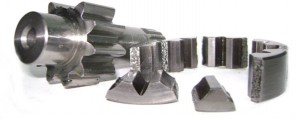
Small diameter (under 1 mm) orifices (a.k.a. gigleurs) mounted in threaded holes are a common part of hydraulic pump and motor controls. I always salvage all the orifices I can find when I scrap stuff, but still, sometimes I find myself in a need to make one from a set screw. I've seen techs experience certain "bit-breaking" difficulties when they try to drill a set screw, so I decided to share a couple of tips on DIY-ing small-diameter calibrated orifices for "hydraulic purposes". The techniques I am describing here have worked for me, but if you by any chance know better ones, please do tell! I am not a professional machinist, you know.
So, to DIY a gigleur what you need is:
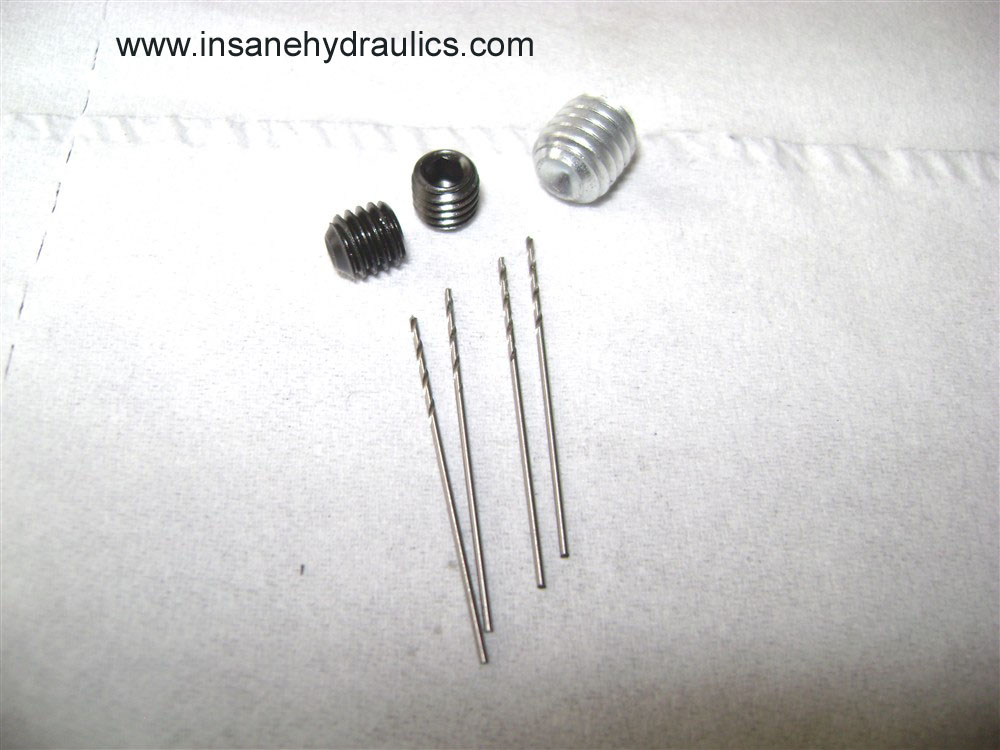
a) a quality HSS drill bit set - don't buy cheap sets, don't buy sets that have one bit of every size, buy the separate one-size ten-bit sets - you will break bits, especially in the beginning. Don't go for carbide bits - they're very brittle, and a normal press drill or a lathe doesn't have enough speed to drill efficiently with these bits anyway. A Dremel tool might work, but common HSS bits are easy to find, relatively inexpensive, and do the job just fine.
b) a lathe or a drill press with an adequate chuck. I prefer the lathe, but a good drill press will do. Hand drills are not good for this task.
c) a quality center drill or a spotting drill.
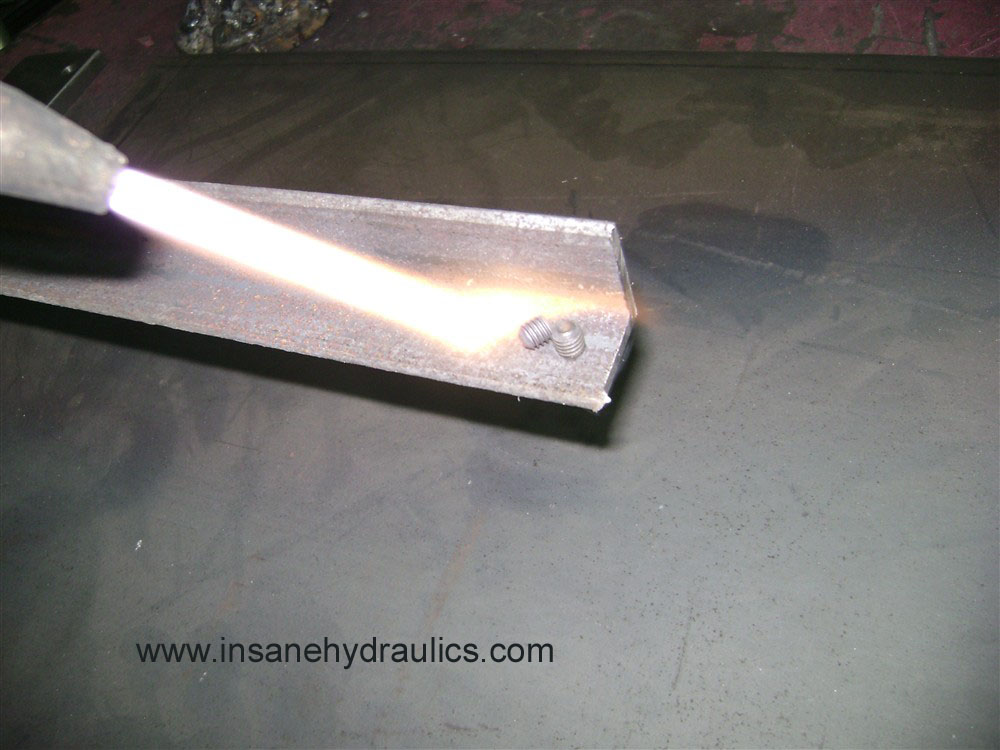
d) a set of steel socket set screws (or grub screws, as some call them). You need to look for the lowest steel grade you can get. You can use bronze set screws if you find them, they indeed are much easier to work with, but I prefer steel screws because they are stronger, and therefore there's a smaller chance of the socket head "passing" when you are removing a "stubborn" or a glued screw. If you don't manage to find low-grade steel set screws - you can try to lower the steel hardness through "redneck annealing" - just put all the screws on a thick steel plate, and heat the whole thing up with a torch till everything is glowing red, then let it cool down naturally - now the screws should (probably) be soft enough to drill. Some set screws can remain very hard even after the annealing. What you can do is anneal several screws, and then simply choose a different one if you see that the one you're drilling is too hard.
Now for the drilling itself:
a) Wear protective eyewear, if you don't want a broken-off bit end in your eye. You will break bits. This's why you bought ten of each size - remember?
b) Center the set screw in the lathe chuck (or clamp it in the press drill vice), make sure it is well secured.
c) Make a small starting point with a center drill (or a spotting drill) - very important! If you don't have a well-centered starting point - most surely the bit will break.
d) About the drilling speed - I've been successfully drilling small orifices (0.5mm to 1mm) at 1500 rpm (my lathe can go up to 1800), and even lower, even though the "rule of 10000" says that you can go up to 10000 rpm for a 1 mm bit. In case you don't know - the "rule of 10000" says that you can find the max. drilling speed for mild steel if you divide 10000 by the bit's diameter in mm (for example - 2000 rpm for a 5-mm bit).
e) When you drill the small hole, the most important thing is the pressure you're applying to your bit. If you're bending it (like many will do) - you're applying too much pressure! The key word here is - patience! Don't rush it, apply very light pressure, and drill in short "pokes" to clear the chips. It may be hard to feel the amount of pressure you are applying with a standard lathe tailstock - you'll have to experiment with it. There are special attachments for small bit drilling, that fit into the standard tailstock with a Morse Taper and allow you to feel the amount of force you are applying to your bit very precisely. These are very nice, and I surely will make one for myself, but so far I've learned to use the standard tailstock quite successfully - it's not easy, but it is doable.

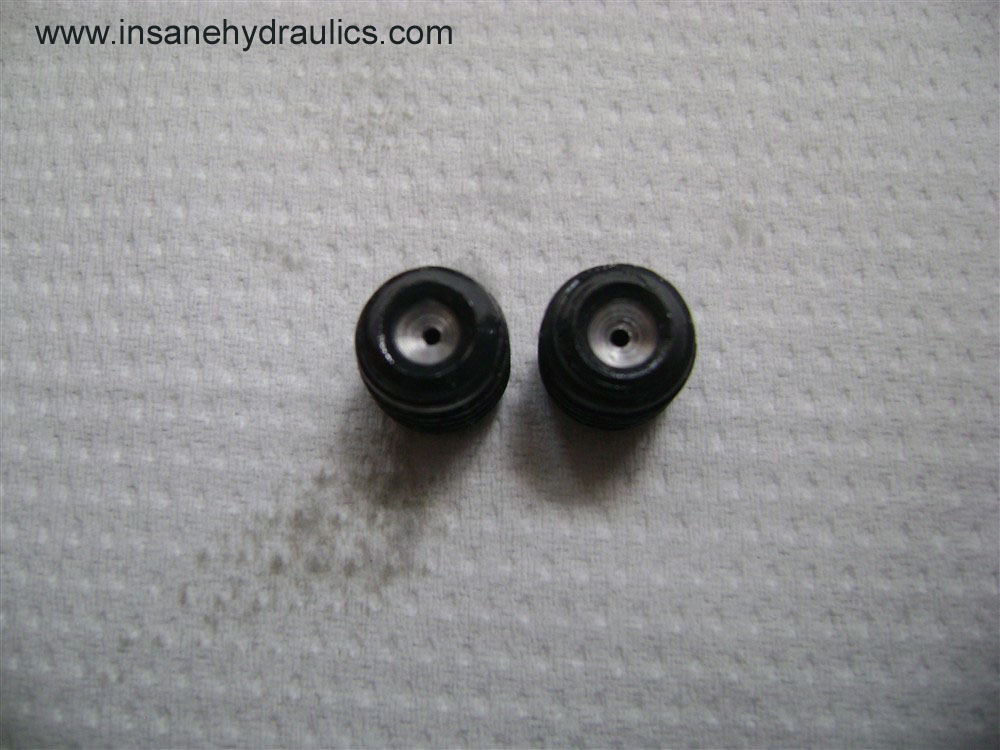
In all - making small-sized orifices for hydraulic purposes is not hard. Get the right tools, get the right screws (or anneal the hard ones), and drill in small pokes with little pressure - and you will never have to look for orifices again!!! This here is a very old video of me drilling a hard M6 set screw (redneck annealed) with a 0.8 mm bit at 1000 rpm.