
Insane Hydraulics
Bold and audacious blog about fluid power
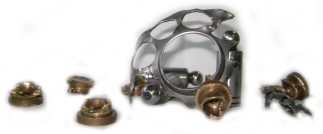
One hot summer day, a client asked me to have a look at a tomato harvester that was making “strange and excessive” noise. Indeed, it was - when I arrived at the site and was driving over the field, I could already hear the loud buzzing sound from far away. Apart from the annoying noise, the machine seemed to operate fine.
The harvester itself looked pretty neat. It was one of those rare cases when the owner actually took preventive measures to make sure his hydraulic equipment would last. The machine was kept clean, oil leaks were taken care of as soon as they appeared, maintenance was done “by the book” and, as an enormous plus, the machine had always worked with the same operator. The operator was no mechanic, but was very familiar with the machine and had “an ear” for things, so he could immediately tell when something “didn’t sound right”. To top it off, the owner didn’t like quick-and-dirty fixes, and always called for professional help whenever an unusual situation popped up. I think it was one of very few Portuguese tomato harvesters that completed campaigns without unplanned stops.
A quick check of the pressures confirmed the simple open circuit load sensing system was OK. The operator said that the pump would operate with its normal noise in the morning and also after the lunch break, with the “buzz” turning up in a matter of half an hour. This symptom alone suggested oil aeration as the most probable cause of the noise, since air bubbles coming out of the oil during the breaks would explain its disappearing and reappearing. To confirm this theory, I took an oil sample from the tank at the time of “noisy” operation, and as I was expecting, it turned out “foamy and creamy”. All I needed now was to find where exactly the air was entering the circuit.
Fortunately for me, the operator remembered they had an additional piece of equipment installed recently, and wondered if it could be causing the problem. The add-on consisted of a Danfoss OMM hydraulic motor and a three-way flow regulator to control its speed. The small motor required little flow to operate, and so the flow regulator was set to send most of the oil to the excess flow port. Following the respective hose revealed that the mechanic mounted an additional fitting on top of the oil tank to connect the excess flow line, and when I peeked inside the tank with a flashlight, I saw the oil being discharged above the fluid level in a needle-like jet. To make things even worse, the fitting was placed directly above the suction inlet! One couldn’t possibly create a better layout to inject air directly into the suction line!
Teeing the excess flow into the return line, as it should have been, solved the noise issue for good.
It wasn’t a tricky troubleshooting case, but I am describing it here because:
a) I’ve seen this “failure” (with variations) many times - someone installing an add-on to a hydraulic system and “band-aiding” an additional tank line above the oil level, and then facing all the “benefits” of aeration.
b) A lot of equipment users find it difficult to believe that presence of oil bubbles in oil can notably change the sound of a hydraulic system (as well as reduce the life span of a pump).
It is very important to pay attention to all unusual noises in a hydraulic system to detect aeration at an early stage.
Another thing this experience highlights so well is the benefit of the “single operator use”. As a rule, the fewer operators a machine has, the better it is for its “health”, because unusual situations get detected at early stages, and there’s less chance for the “it’s the next shift’s problem” mindset. When you make troubleshooting decisions, it is very important to gather as much information as possible, and the operator, who is supposed to be the first person to talk to, can only help if he’s “not random”.