
Insane Hydraulics
Bold and audacious blog about fluid power
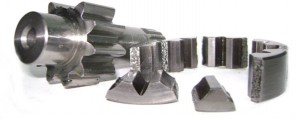
Earlier, I talked about the hydraulic balance and how it's used to reduce load on pump components. This article is a follow-up, focused on the piston assembly of a typical axial piston pump:
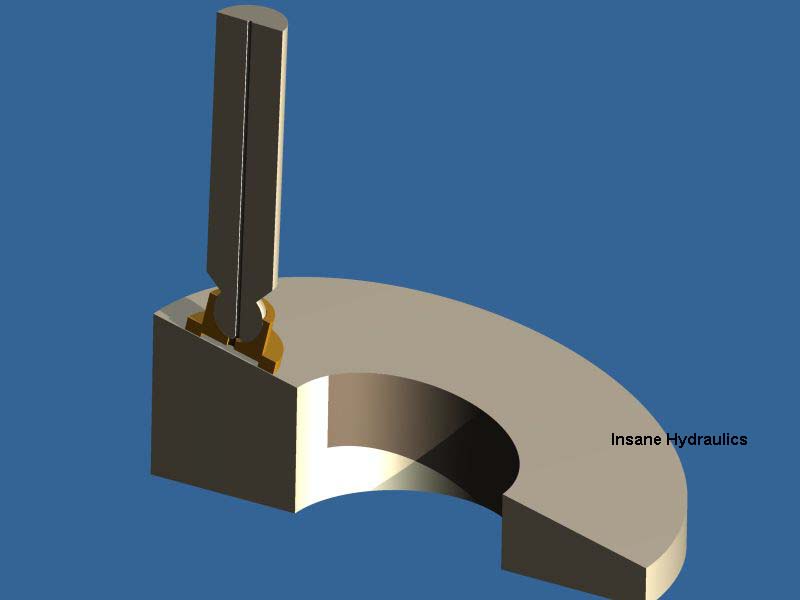

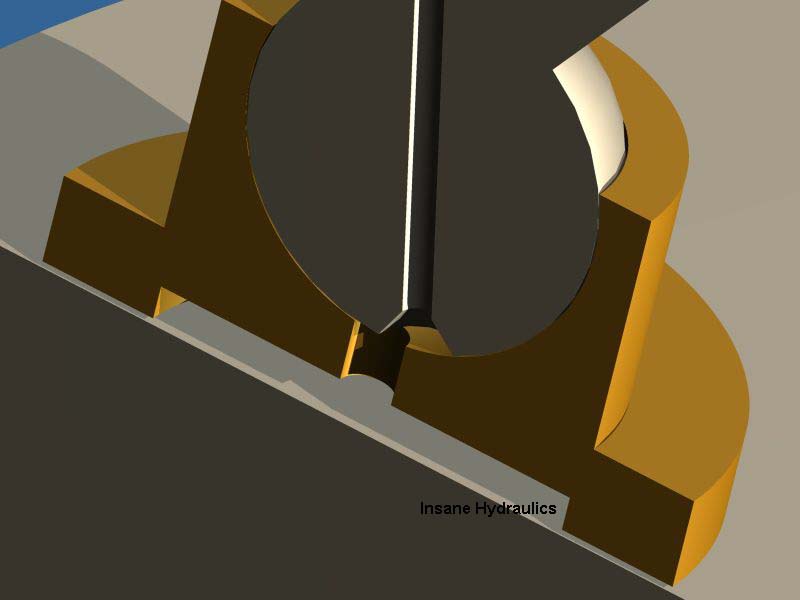
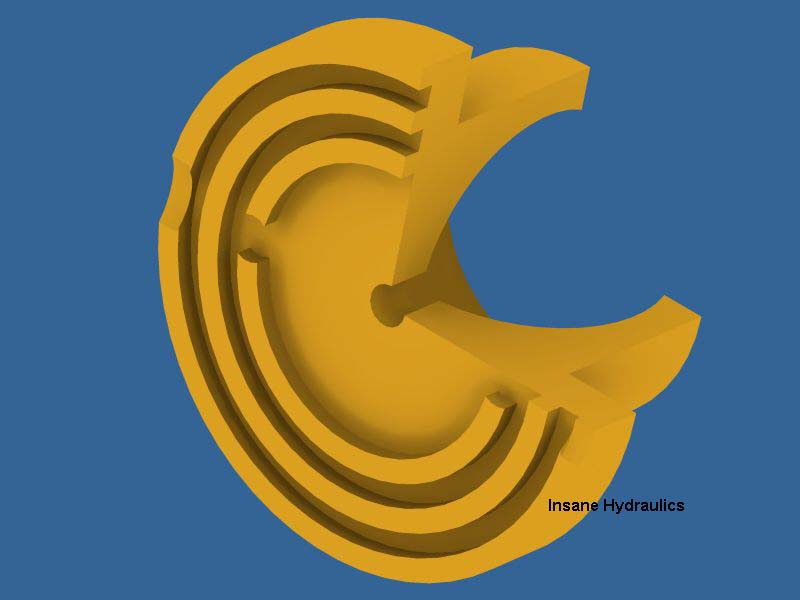
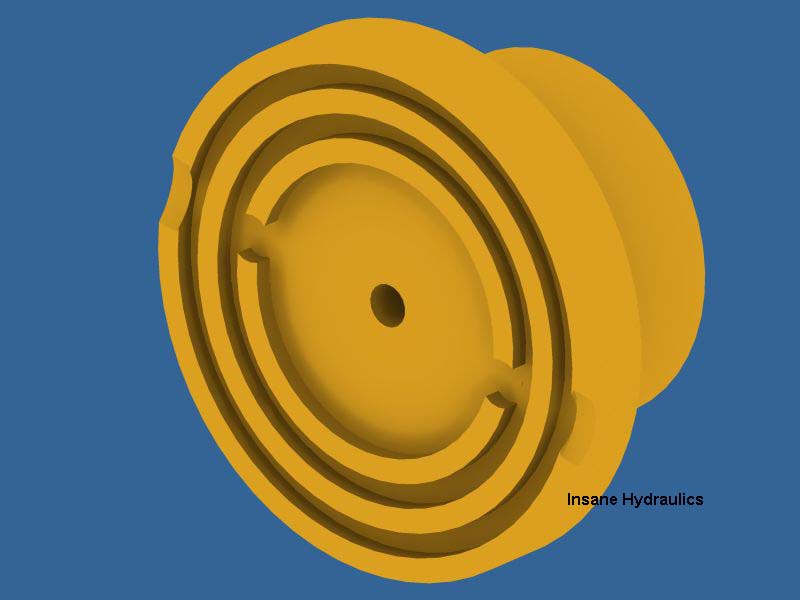

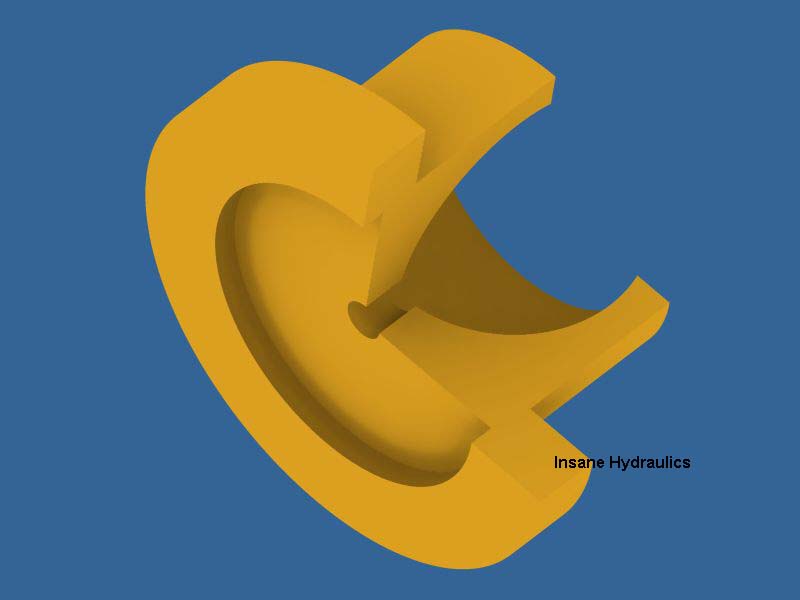
These images represent the classic piston shoe design, however, the hydraulic balance principle is equally applied to the "inverted" one, where the "ball" is part of the slipper (e.g. Linde, Komatsu...)
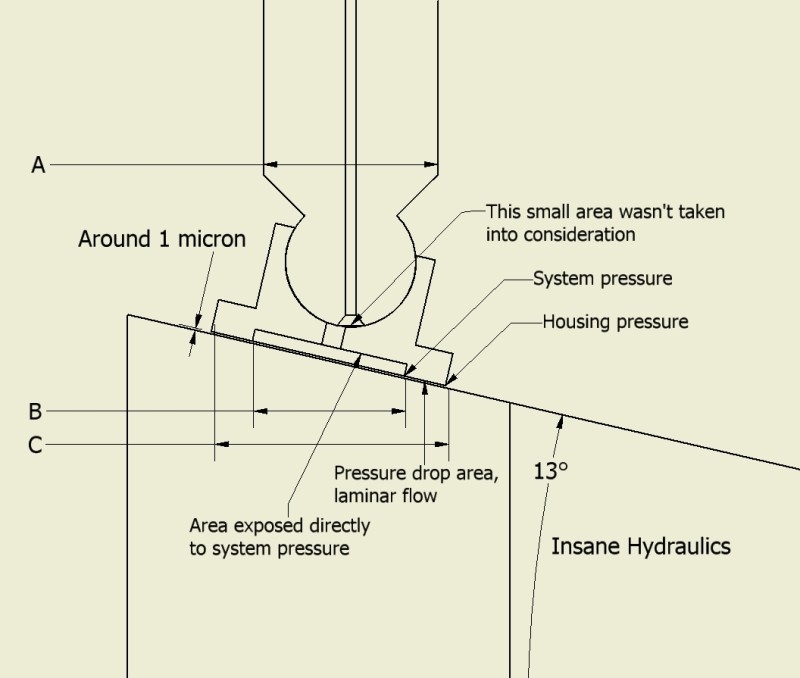
Let us take a closer look at how pressure-induced forces help a piston "keep its feet on the ground (i.e. - swahplate)" Obviously, there's the compressing force, resulting from system pressure acting on the piston's end, and the smaller separating force acting on the slipper's cavity. But besides these two obvious forces, there's more! The clearance between the contact surfaces of the slipper and the swashplate is tiny, but very real, which means there's still radial flow and, consequently, a pressure drop in the gap, too! So, the force-balancing area of the slipper is, in fact, a little bigger than the cavity area alone!
On a side note - there are two basic slipper designs - the simple design and the labyrinth design, and I always wonder why labyrinth slippers still exist. I truly do! The simple, single-cavity no-labyrinth slippers are cheaper and easier to manufacture, and their efficiency and reliability are time-proven on open and closed circuit pumps by many brands, so the "intricate" labyrinths make little sense to me.
Anyhow, since I (out of pure scientific curiosity, of course) wanted to find out the "average" piston balance ratio, I took measurements of some random pistons and then ran some calculations adding 30% of the outer ring area to the balancing cavity area, and then combined the results into this table. For the labyrinth design, the measurements were taken in the following manner:

| Pump Reference | Design | A, mm | B, mm | C, mm | Piston Area, cm² | Balancing Area, cm² | Balance Ratio |
| Sauer 90R075 | simple | 20.7 | 16.7 | 25.7 | 3.36 | 3.09 | 0.92 |
| SPV 23 | labyrinth | 20.6 | 18.5 | 22.4 | 3.33 | 3.06 | 0.92 |
| SPV 21 | labyrinth | 17.2 | 15.5 | 18.6 | 2.32 | 2.13 | 0.92 |
| A10VO028 | simple | 14.5 | 9.3 | 18.7 | 1.65 | 1.3 | 0.79 |
| A4VO125 | labyrinth | 24.7 | 22.4 | 27 | 4.79 | 4.47 | 0.93 |
| A11VO190 | labyrinth | 28 | 25.9 | 30 | 6.15 | 5.81 | 0.94 |
| A4V90 | labyrinth | 22 | 20.4 | 23.6 | 3.8 | 3.6 | 0.95 |
| A4VG125 | labyrinth | 22 | 19.3 | 24 | 3.8 | 3.4 | 0.90 |
| A10VSO100 | simple | 23 | 15.4 | 30.4 | 4.15 | 3.48 | 0.84 |
| HPR100 | labyrinth | 22.4 | 20.3 | 23.3 | 3.94 | 3.54 | 0.90 |
| BPV100 | labyrinth | 21.4 | 19 | 22.5 | 3.59 | 3.18 | 0.88 |
| K3V112 | labyrinth | 24 | 21.8 | 25.6 | 4.52 | 4.15 | 0.92 |
| Sauer 90R100 | simple | 22.6 | 18.4 | 28.1 | 4.01 | 3.72 | 0.93 |
As you can see, everyone seems to have picked the balance ratio of around 0.9 (the only exception being the A10VO28, with a smaller ratio of 0.8).
You can also see that the labyrinth shoe design prevails. I imagine the narrower outer ring of such a design, when scored by contaminant particles, affects the balance ratio to a smaller extent in comparison to the simple design with its relatively wide ring surface. But then - I recall the Danfoss series 90, which has been riding the simple cavity slippers for years and seem to have done just fine, so...
In any case - the universal piston balancing ratio that compensates for all the forces contributing to the slipper lift seems to be the "0.9" and I salute the engineers who most likely reached this figure through extensive trial and error!