
Insane Hydraulics
Bold and audacious blog about fluid power
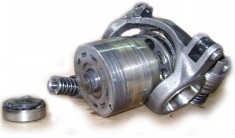
Many years passed, and yet I still recall the following chapter of my "hydraulic life" almost every day...
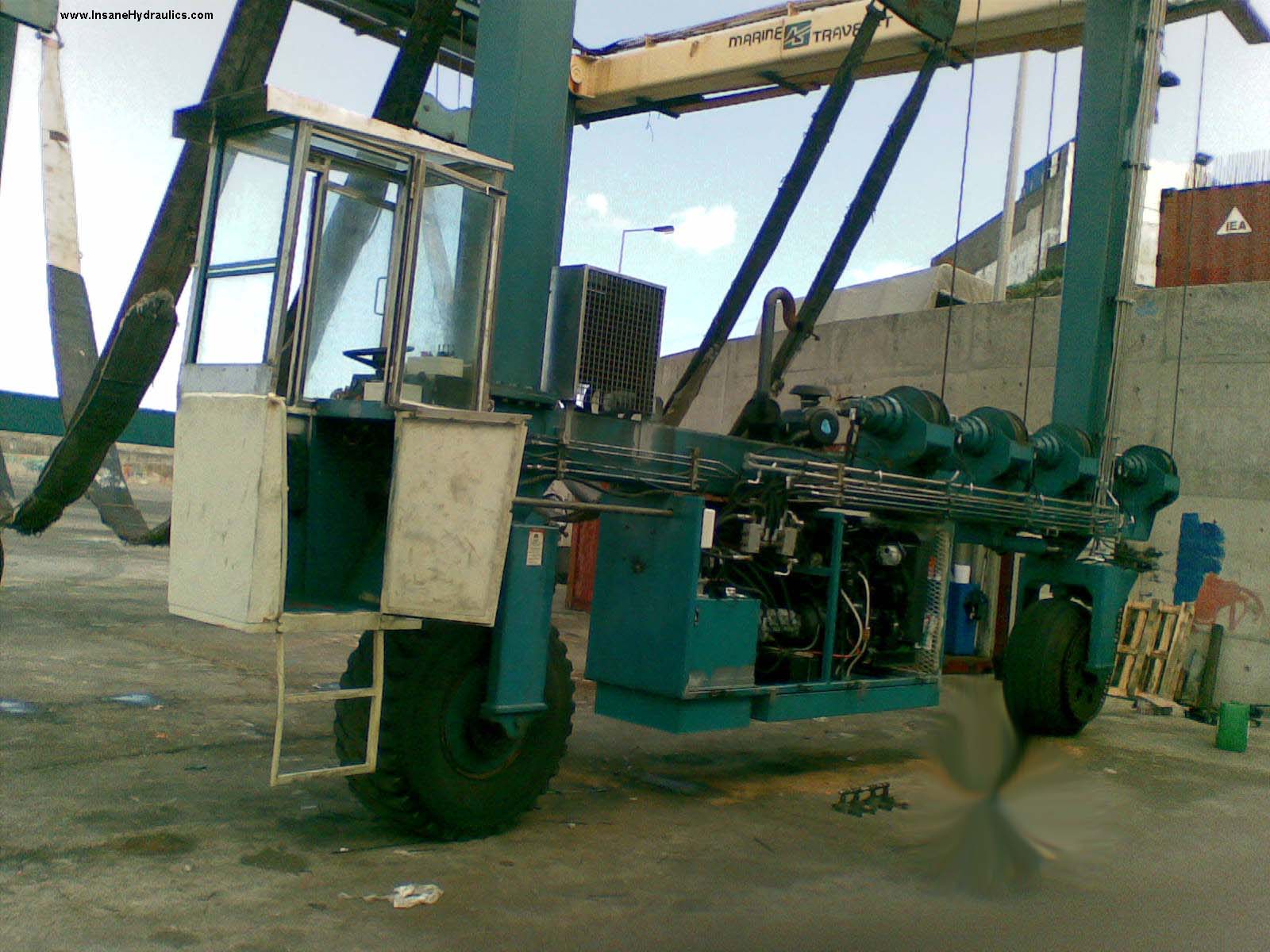
A good client of ours won a "total overhaul" contract for this nice little Marine Travelift 70 BFM rig - a ninety ton (rather small by marine standards) self-propelled boat hoisting machine, which for seven years of everyday "boat delivery" had been punished by the unpredictable Azorean weather, with the preventive maintenance boiled down to topping up the hydraulic oil and diesel "when needed", and the hydraulic hose replacement program based on the "not burst - still good" basis.
The Travelift (as the fishermen would say) eventually "got tired", and the hoist operations began to take much more time than usual, jeopardizing normal work of the local fishermen community. The matter demanded urgent attention, because the whole village literally depended on fishing for survival.
The machine was 100% hydraulic. Countless oil lines ran along the twelve-meter high frame, with dozens of hoses in every corner, all completely rusted and deteriorated by salt water. The circuit itself wasn't that complicated, but boy was it extensive! As you can imagine, most of the hydraulic components were damaged beyond repair, especially the manual ten-section directional control valve, which was leaking oil from everywhere as the spool ends were completely consumed by corrosion.
We did manage to get a price for the exact replacement, but the lead time was unacceptable, and therefore our only chance was to "make it work" with "what we had". The fastest solution was replacing the DCV with four PVG-32 Sauer Danfoss valves with electric controls, and the obsolete and extensively rusted manual levers with a nice looking panel carrying modern joysticks and buttons. I still prefer using good old hydraulic pilots for harsh environments, but the lack of time was a serious issue, and the electric control was indeed the fastest solution, plus electrically controlled valves would allow for future add-ons, like the wireless remote control, for example, which is a nice "extra" to have on a machine like that.
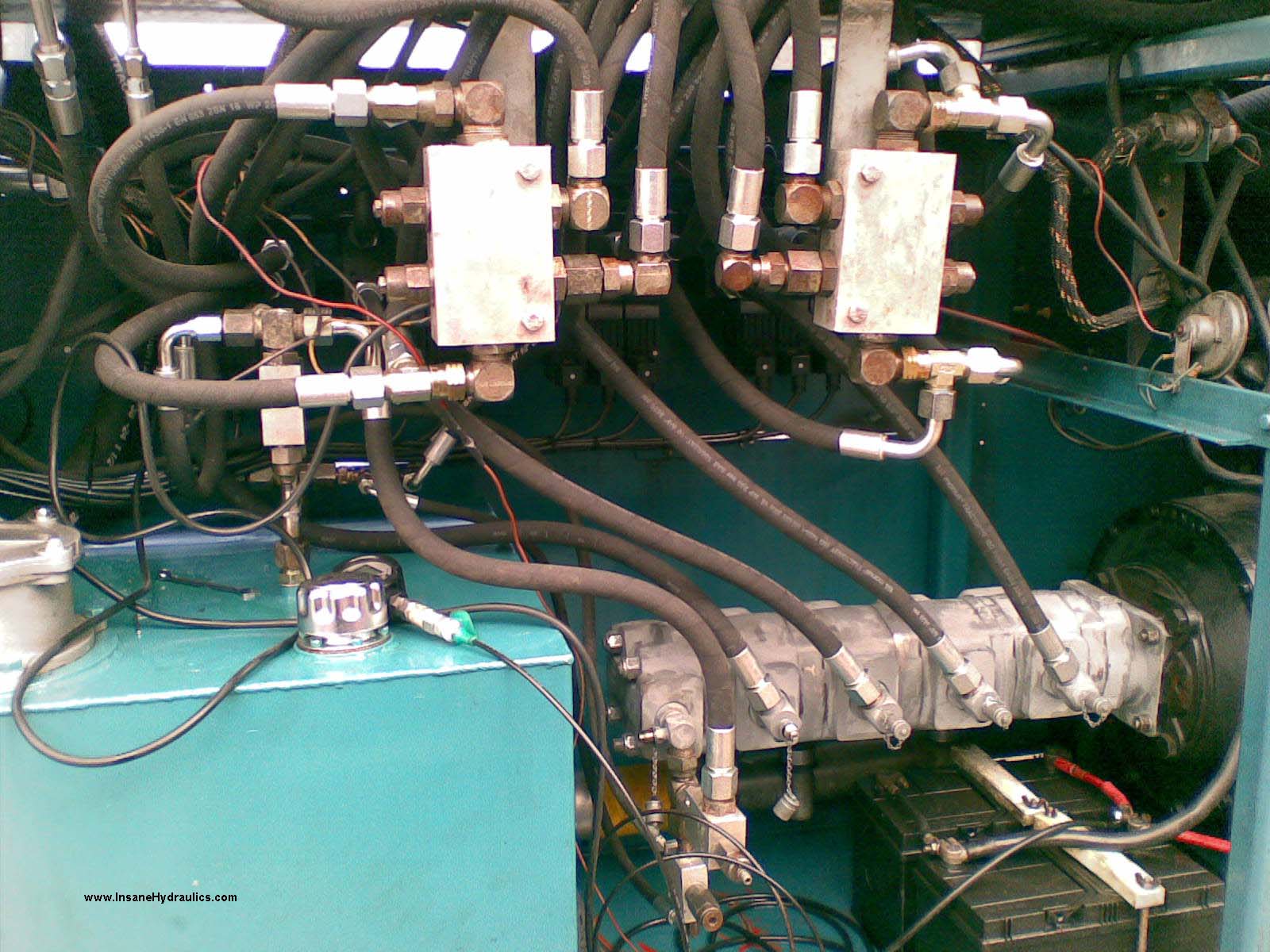
The system also got a new five-section gear pump, a bigger oil tank, new winch motors, new hoses, new power steering, improved filtration, upgraded oil cooler - everything. The mechanical components - the sheaves, the wire ropes, the diesel engine, etc... - were also overhauled or replaced.
The crew had to work in unbelievably difficult conditions, and the fact that the machine was situated in a remote region made the work even harder. The deadline was coming close and sixteen and eighteen-hour workdays became our routine, with "functional" solutions always chosen over "aesthetic". Through an enormous effort, the hydraulic system was assembled with only a minor delay, and the build entered the next phase - hydraulic system testing and adjustment.
As I said before, the whole village depended on the machine for survival, and so for the whole duration of the build about every hour, a fisherman would come around to ask when the Travelift would be ready. The reason for that was very simple - there was no other alternative way of getting the fishing boats in and out of the water, and the harbor couldn't protect the small boats from bad seas, so all the boats had to come ashore in bad weather, and go back into the water when the weather improved. Then, of course, there were about a hundred of other reasons (I could never possibly understand) for the boats to be constantly hoisted in and out of the water. The intervention period was carefully chosen to take place during a good weather stretch and all the village had been notified in advance, but still every day there was a boat owner who wondered if we could, well, just for that once and as a personal favor to him, close our eyes and let him use the rig "for a couple of minutes"...
No words can describe the "audience" that gathered around the machine as the first "real boat" test was about to begin. Hundreds of fishermen were curiously watching every step of "him hydraulic fellow" (yours truly) work his magic. The word in the village was - a "foreign engineer from far abroad" was "summoned" to repair the Travelift. Believe me, being that kind of a center of attention is all but comfortable.
As the machine had been run the night before (I reckon we went to sleep at around three a.m. that night ), I was pretty confident that the real-boat test would be just a matter of double-checking the pressures. How naive of me! The first small boat was lowered into the water in the smoothest and fastest of fashions! The crowd was roaring in approval because the folks had gotten used to the very low hoisting speeds and naturally were amazed by the agility of the reborn piece of machinery.
The rig made another trip to pick up a new boat that had just been built and hadn't yet "seen the water". As the vessel was being winched down, the massive five-section hydraulic gear pump suddenly started to "spit out" jets of oil from between the sections (along with extruded seals' remains)! I rubbed my eyes and blinked... Unfotunately I wasn't dreaming.
The boat was halfway down and already too low to roll the rig away, the attempt to lift it back up was unsuccessful - the poor pump would stream the oil out and the pressure wouldn't rise enough to lift the heavy boat. A decision was made to lower the boat, winch up the cables, take the machine to the repair spot, and see what can be done. However, to my great horror, as soon as the boat was lowered (remember that it was a new boat that'd never been in the water), it started TAKING IN WATER!!! At that moment the thought "I am so f'cked!" was one of the most decent thoughts that ran through my head...
The next ten minutes I spent in hell, explaining to the fishermen that the machine was physically incapable of hoisting the boat back up due to the malfunctioning pump and that the pump was the ONLY pump of that kind on the island... Thank God the men managed to repair the water leak, and I was able to sigh in relief. The crippled and bleeding machine slowly crept to the "ground zero" next to our portable workshop, leaving a sad-looking oil trail behind...
The aftermath - a person from Lisbon caught the first flight to the island and brought over a repair kit. I repaired the pump that very night and the machine was put back in service good as new. I can't remember exactly, but I think we slept for about five hours during these two days...
This (I am not afraid of this word) heroic story, besides the "almost sunk boat" predicament, brought up a couple of interesting hydraulic phenomena behind the "split" multi-section gear pump malfunction, which I am discussing here.
I you consider taking on this profession - know this - hydraulic technicians live a truly filled life...